Industrial Tissue Converting Equipment for Zarqa Operations
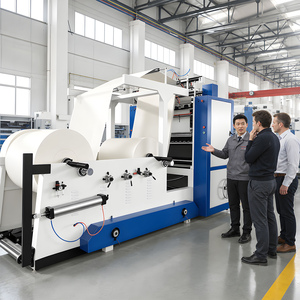
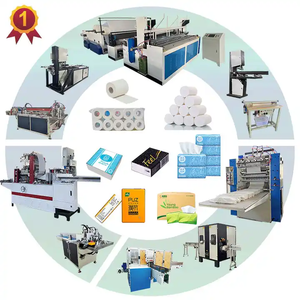
From high-speed V-fold facial tissue interfolders to complete heavy-duty toilet paper roll lines, our converting machinery delivers exceptional operational efficiency, minimal waste, and robust performance tailored for regional paper mills and converting plants in Zarqa, Jordan.
Technical Competencies for High-Output Manufacturing
Designed to mitigate bottlenecks in rewinding, log cutting, and packaging, our tissue machinery balances mechanical stability with electronic control.
Technical Industry Report: Tissue Converting Machinery Optimization for Zarqa's Manufacturing Ecosystem
The tissue manufacturing and converting sector in the Hashemite Kingdom of Jordan, particularly within the industrial zone of the Zarqa Governorate, is undergoing a significant transformation driven by rising regional demand for hygienic paper products. Positioned as Jordan’s primary industrial heartland, Zarqa provides manufacturers with strategic connectivity via the Amman-Zarqa industrial corridor, direct access to Highway 15, and streamlined shipping routes connecting through the Port of Aqaba. However, tissue paper converters operating in Zarqa face distinct technical and climate-driven operational requirements that necessitate specialized machinery engineering.
Key Insight for Local Plant Engineers: Tissue converting equipment operating in Zarqa must incorporate dual tension control, static dissipation bars, and heavy-duty dust collection to overcome ambient low humidity and varied parent roll density profiles common in imported tissue stock.
1. Microclimate Considerations and Raw Material Fiber Dynamics in Zarqa
Zarqa’s semi-arid industrial climate presents unique physical challenges during high-speed paper unwinding, folding, and slitting. Low ambient humidity often increases static electricity build-up along paper webs, leading to micro-tears, misaligned interfolding, and premature blade wear.
Our tissue manufacturing equipment built for the Zarqa market integrates active anti-static ionization bars along the unwinding path and prior to the folding heads. Furthermore, raw parent rolls imported into Jordan—ranging from 13.5 g/m² virgin wood pulp to 22 g/m² recycled fluff pulp—require precise, closed-loop tension regulation:
- Pneumatic Unwind Stands: Controlled via proportional valves and load cells to maintain constant web tension regardless of parent roll diameter decay.
- Static Dissipation Modules: High-voltage ion emitter bars neutralize static charge at unwind speeds up to 120–250 meters per minute.
- Slitting Precision: Hardened tungsten carbide rotary knives with dust-extraction shrouds ensure clean edge cutting without fiber release, preventing mechanical clogging.
2. Power Grid Alignment and Modular Electrical Architecture
Industrial facilities in Zarqa operates on a standard 380V/50Hz 3-phase electrical network. Voltage fluctuations in heavy industrial sub-districts can severely compromise sensitive electronic control circuits if not properly buffered. Our tissue paper making machines are equipped with premium industrial electronics as standard:
Utilizing Delta or Siemens Programmable Logic Controllers (PLCs) alongside multi-axis servo drives, our systems maintain exact synchronization between the embossing unit, perforating cylinder, and folding rollers. Human-Machine Interfaces (HMIs) feature multilingual touchscreen panels (including English and Arabic menu trees), allowing local operators to quickly configure perforation lengths, sheet counts, and emergency stop protocols without complex programming knowledge.
3. Application Scenarios Across Commercial and Institutional Sectors in Jordan
Market demand in Zarqa, Amman, and the broader Levant region is divided into three primary product categories, each requiring specific machine configurations:
A. Household Hygienic Products (Bathroom Tissue & Kitchen Towels):
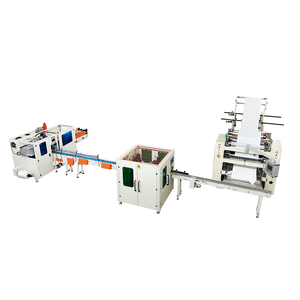
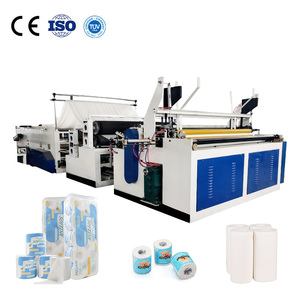
High-volume consumer retail demands soft, highly absorbent 2-ply and 3-ply toilet rolls. Complete automatic rewinding lines process parent rolls into perforated log rolls, which are automatically transferred to high-speed orbital log saws and flow-wrapping units. Steel-to-rubber or steel-to-steel embossing units impart decorative or point-to-point structural embossing to boost paper bulk and absorbency.
B. Commercial Away-From-Home (AFH) & Institutional Supplies:
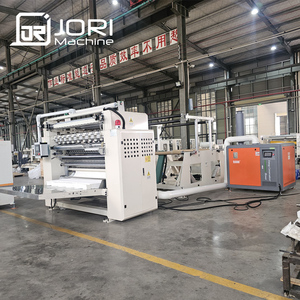
Zarqa’s industrial facilities, educational centers, and commercial complexes utilize high-capacity center-pull rolls, maxi rolls, and multifold (Z-fold / N-fold) hand towels. Our multifold paper towel machines utilize vacuum suction folding boards that reliably interlock sheets ranging from 35g to 42g virgin or recycled pulp, guaranteeing single-sheet dispensing in public dispensers.
C. Hospitality & Food Service Napkins:
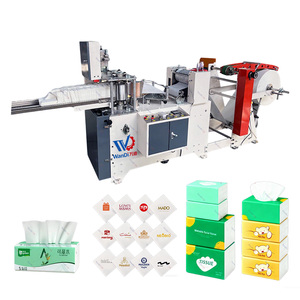
Jordan’s expanding hospitality sector requires branded, colored, and custom-embossed paper napkins. Our automatic 2-color napkin paper folding machines integrate flexographic printing stations using water-based inks, enabling converters to offer custom-printed logo napkins with clean 1/4 or 1/8 fold geometry.
4. Localized Growth Trends and ROI Mechanics for Jordan Tissue Converters
With shifting consumer awareness regarding personal hygiene, coupled with expanding institutional facilities throughout the Hashemite Kingdom, local tissue manufacturing yields superior profit margins compared to importing finished goods. Key economic metrics driving investment in Zarqa converting plants include:
- Lower Freight Overhead: Importing compact parent rolls from raw pulp mills significantly reduces maritime shipping costs compared to shipping low-density finished paper boxes.
- Duty Free Zone Incentives: Operations located within Zarqa’s Free Zones benefit from tax-exempt machinery imports and duty reliefs when exporting finished tissue products to neighbouring Middle Eastern markets.
- Reduced Scrap Yield: Automated core-loading and tail-gluing units reduce trim waste to under 1.5%, maximizing paper fiber conversion efficiency per ton.
Frequently Asked Questions by Zarqa Machinery Buyers
Detailed technical and logistical guidance for procurement managers and factory engineers planning tissue converting investments in Jordan.
Our tissue converting machines are engineered to handle a broad range of tissue paper stock, including 100% virgin wood pulp, bamboo pulp, mixed pulp, and 100% recycled fiber. Basis weights supported range from 13 g/m² up to 45 g/m² per ply. Web tension settings can be quickly adjusted via pneumatic regulator valves on the unwind stand to prevent web breakage when switching between delicate 1-ply tissue and heavy 3-ply towel paper.
All machines designated for dispatch to Zarqa and Jordanian markets are built custom to 380V, 3-Phase, 50Hz electrical specifications. Main drive motors, frequency inverters, heating elements for embossing rolls, and auxiliary vacuum pumps are selected specifically for 50Hz thermal duty cycles. Electrical cabinets feature Schneider or Siemens breakers and thermal relays designed for ambient industrial room temperatures up to 45°C.
Standard manufacturing lead time for single machines (such as facial tissue folders or napkin printers) is 30 to 45 calendar days. Complete automated production lines require 60 days for precision fabrication and testing. Shipments are packed in sea-worthy moisture-proof wooden crates and dispatched via container vessels to the Port of Aqaba, from where overland transit to Zarqa Free Zone or local factories typically takes 2 to 4 days.
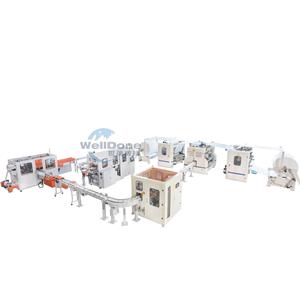
Yes. We specialize in matched-capacity line engineering. Instead of pairing a high-speed rewinder with an under-powered cutter, our engineering team calculates line balance based on your target finished product output per shift. We synchronize the rewinder speed, transfer storage table, orbital log saw cycle rate, and automatic packaging unit to operate at a unified design capacity, eliminating production bottlenecks and operator downtime.
We provide comprehensive technical documentation, foundation foundation diagrams, and wiring schematics with every machine. Overseas engineering commissioning, on-site mechanical installation, and operator training are available for client plants in Zarqa. Furthermore, wear-and-tear replacement parts (such as slitting blades, perforation knives, timing belts, and pneumatic seals) are provided in an initial spare kit and kept stocked for fast air-freight dispatch.
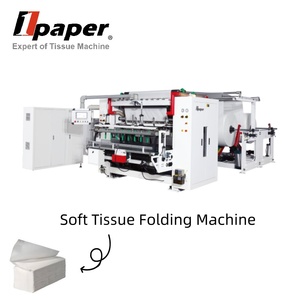
The choice depends on your target market channel in Jordan. V-fold (interfolded) systems are ideal for soft-pack facial tissue and boxed tissue retail products. Z-fold and N-fold configurations are standard for commercial hand towels placed in wall dispensers, as the interlocked structure pulls the next towel forward automatically. Our sales engineering team can assist you in conducting a market assessment based on regional buyer demand in Zarqa and Amman.
Why Partner with Arabia Industrial Tissue Equipment LLC
Arabia Industrial Tissue Equipment LLC stands as a premier manufacturing partner and specialist machinery exporter dedicated to the tissue paper converting sector. Operating with dedicated in-house precision processing machinery, we maintain full oversight over every stage of component fabrication, assembly, and testing.
Our design philosophy prioritizes operator safety, energy conservation, and intuitive maintenance access. By incorporating quick-change core adapters, accessible lubrication points, and dust containment guards, our machinery minimizes routine maintenance downtime and maximizes daily conversion throughput.
Ready to Upgrade or Establish Your Tissue Plant in Zarqa?
Consult with our senior machinery specialists today for a customized technical proposal, plant floor layout design, or direct equipment quotation suited to your target production capacity.