Engineering an High-OEE Automatic Toilet Paper Production Line
A comprehensive analysis of machine mechanics, web tension control, dynamic perforation, and capital efficiency for global tissue converters.
In the modern tissue converting industry, purchasing an Automatic Toilet Paper Production Line is no longer merely about acquiring standalone machinery—it is an strategic capital investment in overall equipment effectiveness (OEE), raw material yield optimization, and labor footprint reduction. Modern tissue paper converters operating in competitive global markets require production solutions capable of handling varying basis weights (from 13 g/m² 2-ply virgin pulp up to 22 g/m² recycled paper stock) while maintaining continuous line speeds of 180 to 300 meters per minute without web rupture.
At Arabia Industrial Tissue Equipment LLC, our engineering philosophy centers on synchronized multi-axis servo driving technology. By replacing traditional mechanical gear transmissions with independent PLC-controlled servo motors across parent roll unwinding, embossing, perforation, log rewinding, and tail sealing, we minimize mechanical vibration, extend blade longevity, and reduce changeover down-times by up to 65%.
Key Performance Metrics of Modern Automatic Toilet Roll Lines
An optimized converting line must balance mechanical speed with saleable roll yield. High theoretical machine speeds mean little if web breaks or bad log cuts create high reject rates. True efficiency is determined by net output per shift, sheet perforation precision, adhesive tail sealing consistency, and energy consumption per finished metric ton of tissue.
System Architecture of a Turnkey Automatic Toilet Paper Line
A standard industrial-grade automatic toilet roll machine setup engineered by Arabia Industrial Tissue Equipment LLC consists of five interconnected sub-systems, engineered to function as a unified operational ecosystem:
- Dual or Triple Parent Roll Unwinding Stands: Equipped with pneumatic flat-belt unwinding systems, automatic web tensioning sensors, and lateral alignment controls to ensure uniform tension regardless of parent roll diameter decay.
- Precision Embossing & Lamination Station: Featuring micro-embossing or point-to-point (nested) steel-to-rubber or steel-to-steel rollers. Optional glue lamination units bond 2-ply or 3-ply sheets to enhance product bulk and tactile softness.
- High-Speed Perforating & Rewinding Machine: Utilizes helical perforation blades with micro-gap adjustment to deliver crisp, easily tearable perforations. Automatic pneumatic core loading and automatic tail gluing, trimming, and sealing occur seamlessly without stopping the main drive.
- Log Accumulator & High-Speed Log Saw: The rewound tissue logs (up to 2800mm in length) are indexed into a multi-channel log accumulator for cooling and buffer storage before entering continuous-motion band saw or orbital log cutting machines.
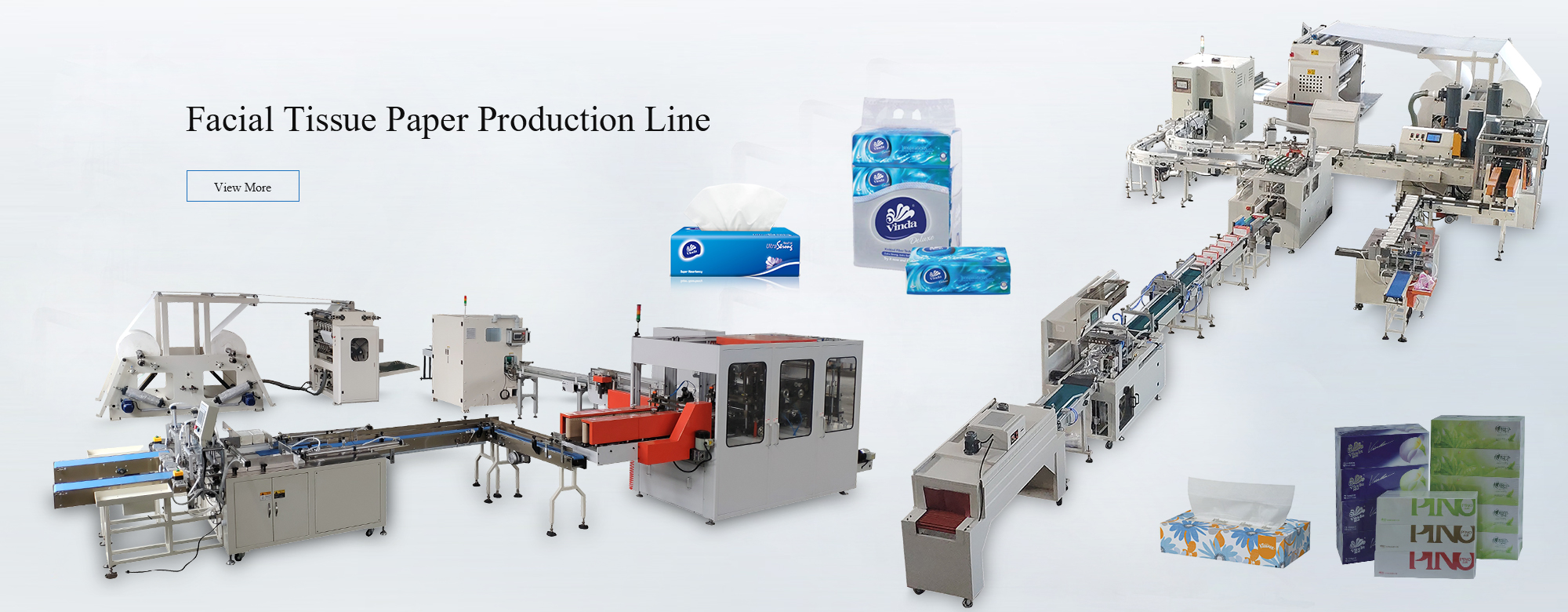
- Automated Primary & Secondary Packaging: Synchronized conveyers feed cut rolls into single-roll wrappers, 4/6/12-roll soft pack wrapping machinery, or heavy-duty bundle shrink wrappers.
Recommended Equipment Configurations
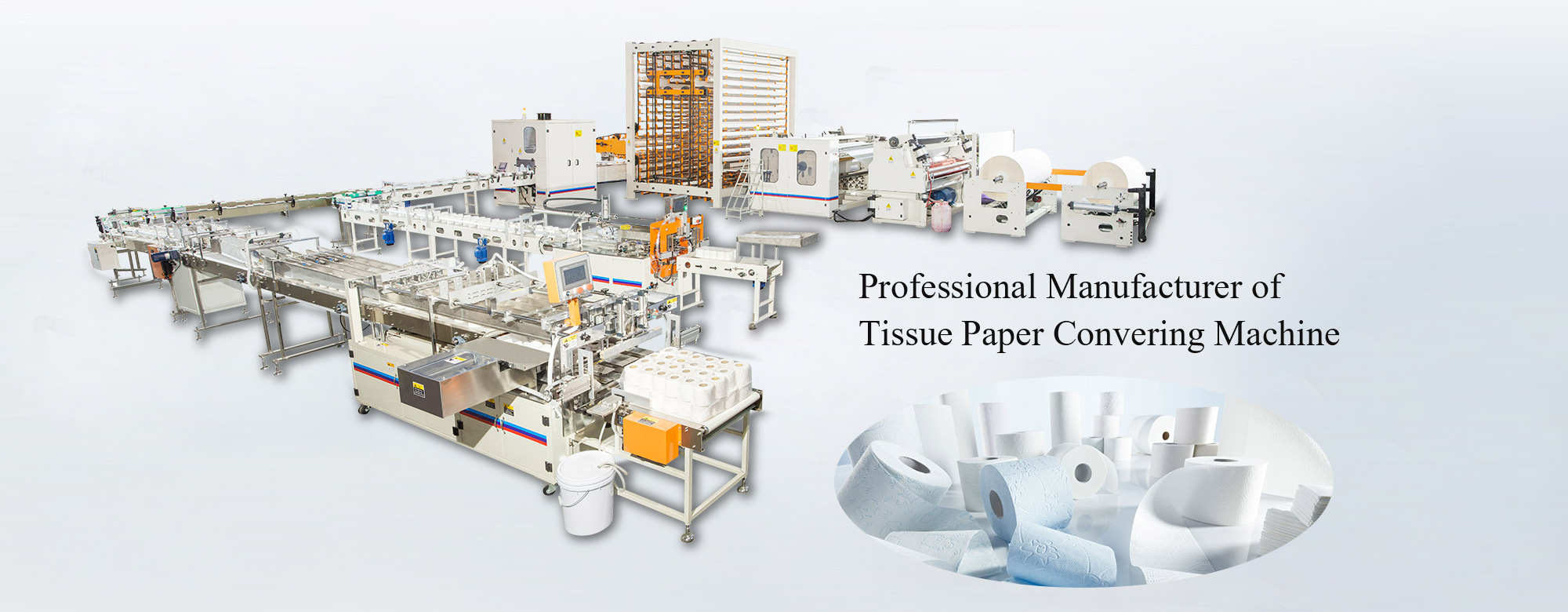
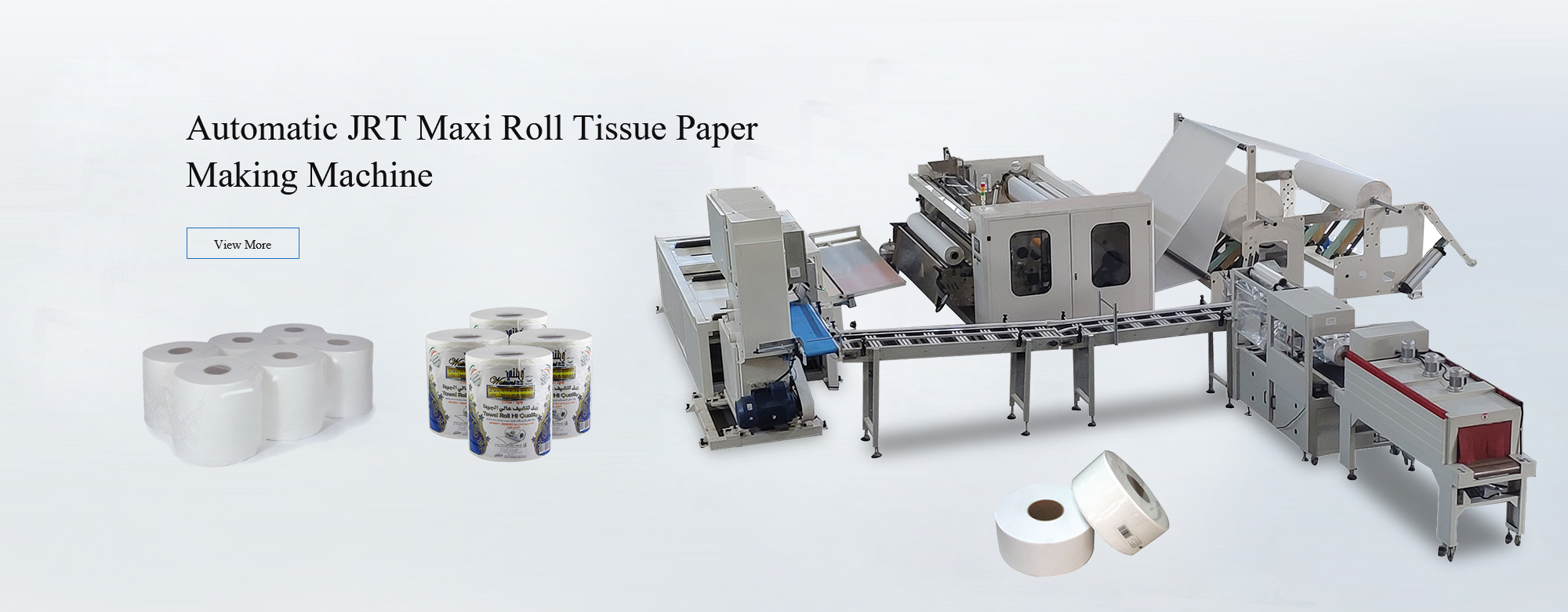
Automatic Toilet Paper Production Line (High Speed)
Fully integrated rewinding, log sawing, and automatic bundle packing line for high-capacity tissue mills.
Contact Us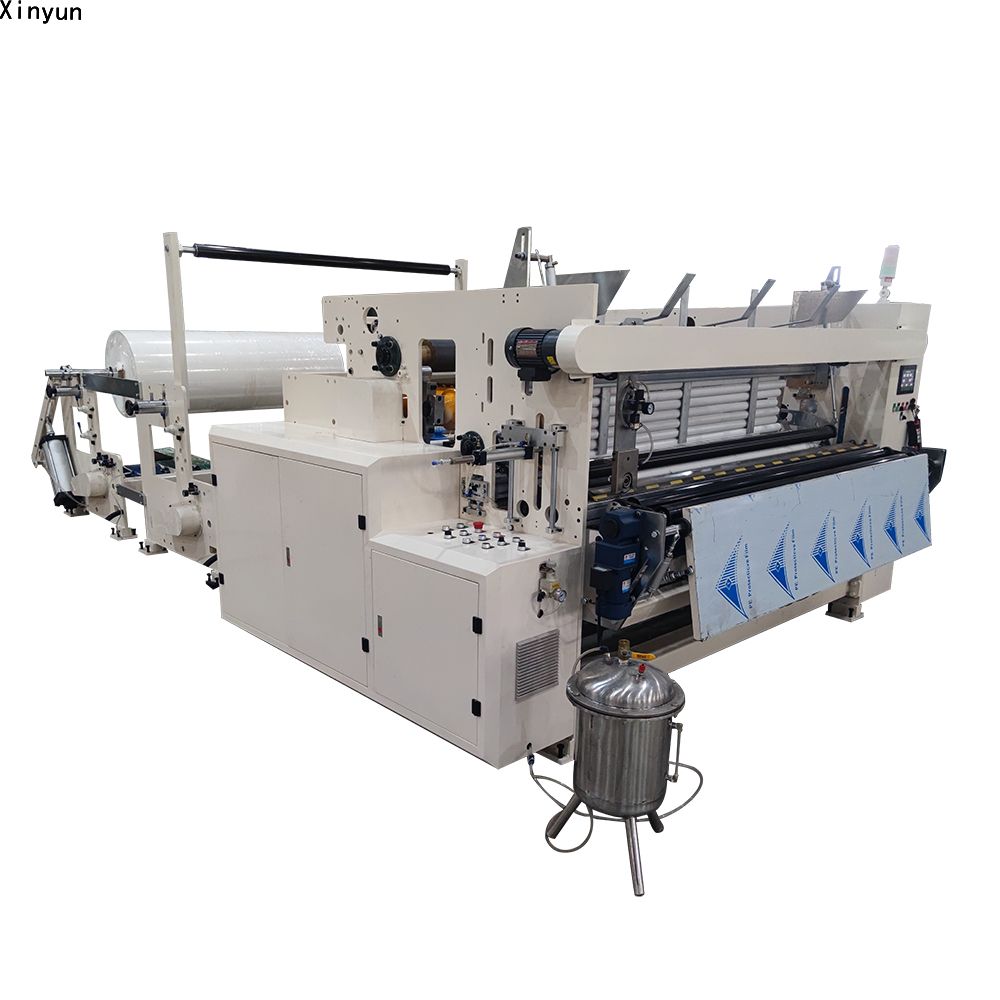
XY-TQ-B Mini Center-Pull Toilet Paper Rewinder
Compact high-precision rewinding solution designed for both household toilet rolls and center-pull industrial rolls.
Contact Us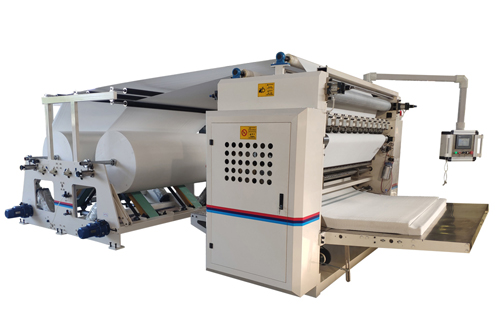
XY-GU-20A Automatic Facial Tissue Line
Multi-lane vacuum interfolding and continuous log slitting for soft-pack and box-type facial tissue products.
Contact Us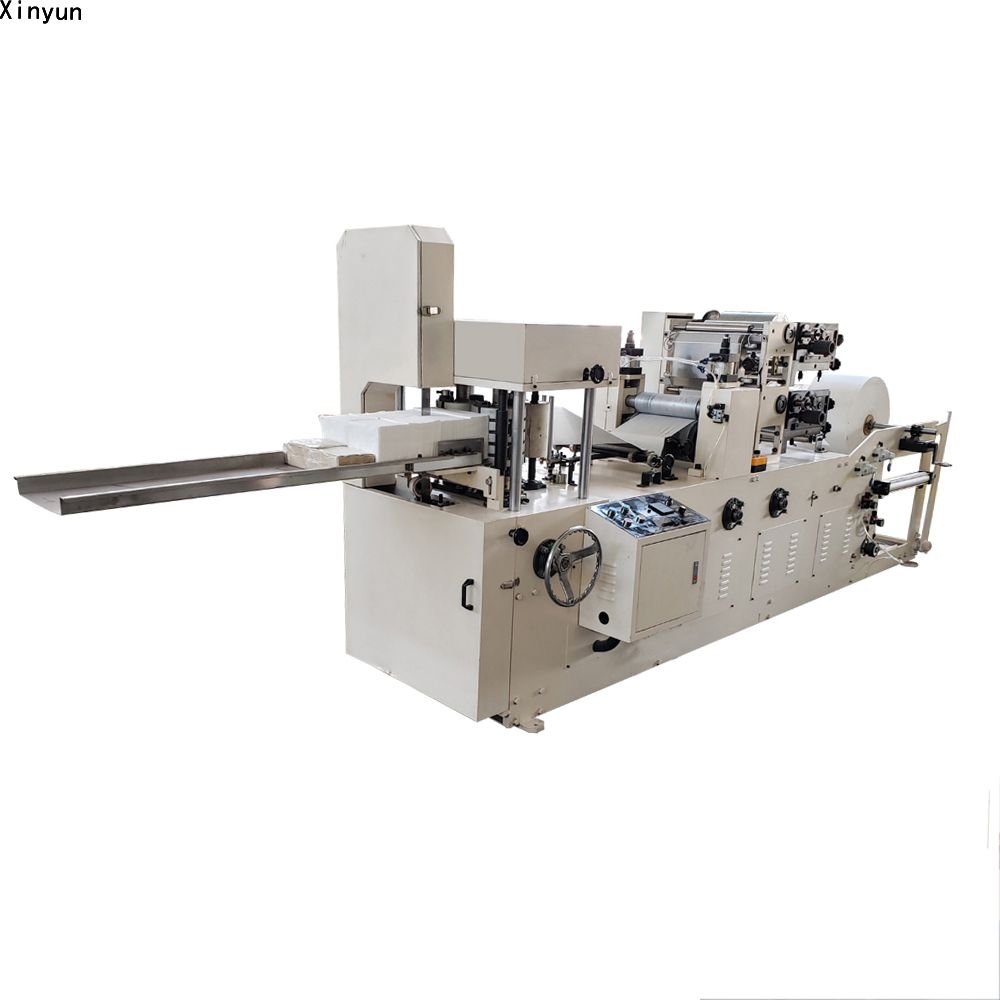
Embossing & Color Printing Napkin Machine
High-efficiency napkin paper machinery with flexographic color printing, embossing, and folding capabilities.
Contact UsEngineering Comparison: Technical Specifications by Production Capacity
When selecting an automatic toilet paper production line, tissue plant owners must match raw material supply with market distribution requirements. Below is a technical benchmark comparison compiled by our chief machinery design team:
| Performance Benchmark | Compact Series (XY-TQ-1575) | Industrial Series (XY-TQ-2800) | High-Speed Servo Line (XY-TQ-B-500) |
|---|---|---|---|
| Parent Roll Width | 1750 mm - 1800 mm | 2750 mm - 2800 mm | 2750 mm - 2800 mm |
| Linear Speed (Max) | 180 - 220 m/min | 200 - 250 m/min | 280 - 350 m/min |
| Daily Output (8 Hours) | 2.5 to 4.5 Metric Tons | 6.0 to 9.5 Metric Tons | 12.0 to 18.0 Metric Tons |
| Log Cutter Type | Manual / Single-Channel Saw | Double-Channel Band Saw | High-Speed Orbital Log Saw |
| Automation Grade | Semi-Automated Roll Transfer | Fully Automated Line | Full Servo + Robotic Packaging |
| Installed Power | 15 kW - 22 kW | 35 kW - 55 kW | 65 kW - 95 kW |
Global Future Procurement Trends in Tissue Converting Technology
The global tissue converting market is undergoing rapid transformation, driven by environmental regulations, rising energy costs, and shifting consumer expectations. Buyers seeking sustainable competitive advantages must align their equipment purchasing decisions with several industry trends:
1. Transition Toward Coreless & Variable-Diameter Roll Production
Shipping paperboard cores incurs logistics expenses and ecological waste. Modern automatic toilet paper production lines are increasingly specified with quick-interchange mandrels that allow seamless switching between traditional paper core rolls and coreless toilet rolls. Coreless technology utilizes specialized pneumatic vacuum mandrels to start rewinding directly on paper fibers, creating tight, uniform roll centers.
2. Energy-Efficient Mechanical Embossing & Reduced GSM Processing
With pulp prices fluctuating globally, tissue converters strive to reduce paper basis weight without sacrificing softness or absorbency. Advanced point-to-flat and steel-to-rubber embossing units physically bulk up 13-14 g/m² plies, simulating the hand-feel of much heavier paper stock. Energy-efficient pneumatic loading cylinders replace older hydraulic clamps, reducing power consumption during embossing engagement.
3. IoT Integration and Remote Diagnostics
Modern production lines manufactured by Arabia Industrial Tissue Equipment LLC come integrated with Siemens or Mitsubishi PLC platforms with Ethernet interface. Factory managers can monitor real-time linear speed, roll count, perforation blade operational hours, and fault alarms via cloud dashboards or mobile applications. Remote remote diagnostics allow our engineers to perform PLC software updates and troubleshoot sensor diagnostics globally without on-site delays.