Featured Tissue Converting Equipment Portfolio
As an industry-leading tissue paper machinery supplier & exporter, our portfolio encompasses high-performance toilet paper rewinding lines, facial tissue interfolders, napkin color printing systems, and automated log saw cutters. Explore our engineered machinery designed for maximum throughput, low energy consumption, and superior paper handling.
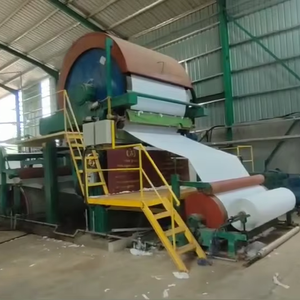
Bamboo Pulp System Tissue Toilet Paper Production Machine
Fully automatic production line specifically calibrated to convert eco-friendly bamboo pulp fiber into premium multi-ply toilet rolls with high tensile strength retention.
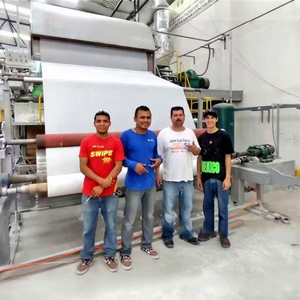
Recycled Fiber & Waste Paper Tissue Converting Machine
High-yield full automatic facial tissue and toilet roll converting machine engineered to handle recycled pulp and de-inked stock without web breaks or tension loss.
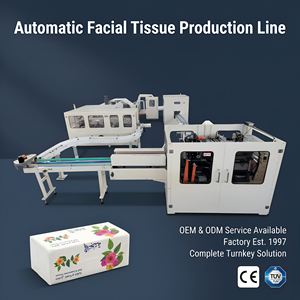
Facial Tissue Converting Line with Automated Bundle Packing
High-speed interfolded facial tissue production system featuring direct inline synchronization with automated poly-bundle packaging units for maximum operational efficiency.
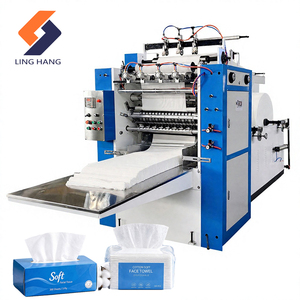
Compact Facial Tissue Production Line (Embossing, Cutting, Folding)
Integrated small-footprint converting line equipped with precision steel-to-rubber embossing, orbital log cutting, and DRC substrate processing capability.
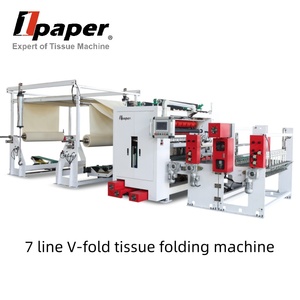
High-Speed PLC Controlled Soft-Pack Facial Tissue Folding Machine
Advanced vacuum-assisted interfolding machine equipped with multi-axis PLC controls, touch-screen HMI, and real-time web tension monitoring.
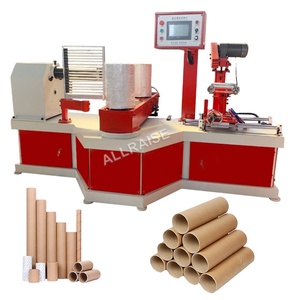
Spiral Paper Core Winding & Automated Tube Cutting Machine
Heavy-duty core making machinery engineered for continuous winding, precise gluing, and multi-blade cutting of toilet paper and industrial towel cores.
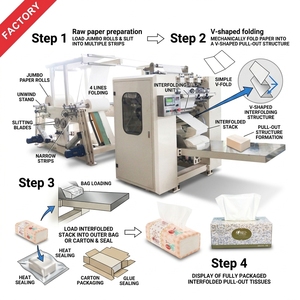
Dual-Function Facial Tissue & Toilet Roll Converting Unit
Versatile modular machinery enabling rapid product changeover between interfolded facial tissue and perforated toilet paper rewinding applications.
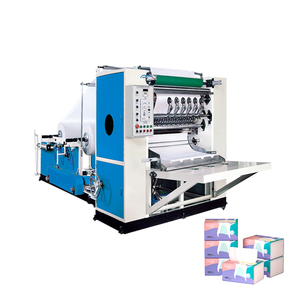
Full Automatic 2-Lane Facial Tissue Line with Dual Box & Bag Wrapping
High-capacity dual-lane interfolding equipment featuring inline switching between cartoon box packaging and economical soft-pack nylon wrapping modules.
Enterprise Core Engineering Competencies & Technical Foundation
At Arabia Industrial Tissue Equipment LLC, we combine decades of mechanical engineering experience with cutting-edge manufacturing infrastructure to supply global tissue converters with high-precision equipment. Unlike standard sourcing agents, our operation is grounded in in-house component processing, rigorous metallurgical standards, and end-to-end line balancing.
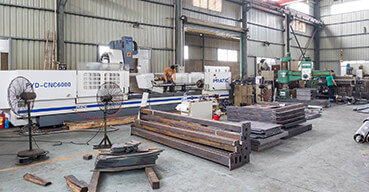
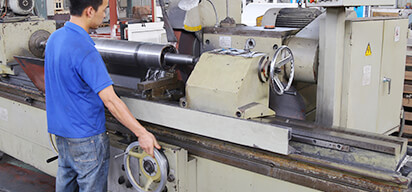
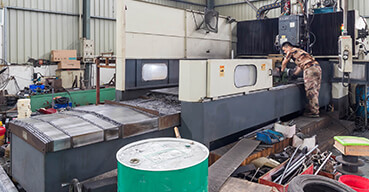
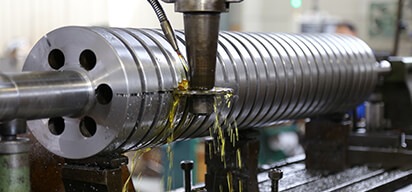
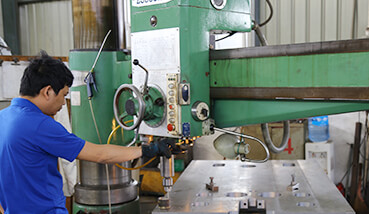
In-House CNC Processing Center
Key mechanical components—including embossing roller shafts, log saw cutting arbors, and perforation blade holders—are machined in-house on high-precision CNC centers to maintain strict geometric tolerances (±0.01mm) and eliminate delivery bottlenecks.
Matched Speed Line Balancing
We engineer complete production lines where parent roll unwinders, rewinding heads, log cutters, and primary/secondary wrappers are synchronized via multi-axis motion control, preventing line choking and micro-stoppages.
Global Export & On-Site Support
With operational machinery operating across the Middle East, Africa, South America, and Europe, our technical field engineers deliver turnkey commissioning, operator training, and lifetime spare parts support worldwide.
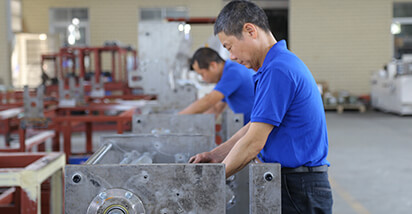
State-of-the-Art Manufacturing & Assembly Operations
Comprehensive Tissue Machine Recommendation & Procurement Whitepaper
Selecting the optimal tissue converting machinery requires a rigorous technical evaluation of substrate properties, target production volumes, finished product geometry, and downstream packaging automation. In modern tissue mill operations, equipment failure or speed mismatch between the rewinder and log cutter can lead to substantial material waste and unrecoverable downtime. Below is an engineering roadmap to assist procurement managers in matching machine specifications with market demand.
1. Substrate Chemistry & Web Handling Dynamics
Different pulp fibers behave distinctly under mechanical tension and perforation impact. Understanding fiber characteristics prevents catastrophic web breaks:
- 100% Virgin Wood Pulp: Displays long fiber length and high tensile elasticity. Compatible with high-speed rewinding lines exceeding 230–300 m/min. Requires dynamic pneumatic unwind braking and automatic edge-alignment sensors to prevent web floating.
- Bamboo Pulp Fibers: Possesses shorter fiber bundles and higher stiffness compared to softwoods. Requires modified perforation anvil knife angles (typically 1:80 shear ratio) and controlled embossing roller nip pressure to prevent micro-fracturing along the web.
- Recycled & De-inked Stock (DRC): Characterized by lower tensile strength and variable basis weight (13–22 gsm). Converting lines must feature dual closed-loop tension control rollers and surface-driven unwind stands to minimize physical pull stress on the web.
2. Production Yield Engineering: Line Speed vs. Net OEE
A common procurement mistake is evaluating machines solely on maximum mechanical design speed. Realized plant output is governed by Overall Equipment Effectiveness (OEE). Calculating actual saleable output requires accounting for roll changeover cycles, core loading intervals, log transfer times, and log saw blade sharpening cycles.
Engineering Formula for Net Shift Output:
Net Output (Rolls/Shift) = [ Web Speed (m/min) × Operating Minutes × Line Efficiency % × Lanes ] ÷ Finished Roll Sheet Length (m)
*Note: Fully automatic rewinding machines with automatic core loading and tail sealing reduce changeover cycle losses from 15% down to under 2.5%.
Future Procurement & Technology Trends in Tissue Converting
The global tissue converting landscape is undergoing rapid technological transition driven by rising labor costs, energy efficiency mandates, and shifting consumer preferences toward non-plastic eco-packaging. Key engineering trends shaping procurement decisions over the next decade include:
1. Smart IoT & Predictive Diagnostics
Next-generation tissue production lines are integrated with cloud-connected PLC architectures. Vibration sensors on log saw arbors and thermal cameras on embossing bearings detect mechanical wear before failure occurs, minimizing unscheduled maintenance.
2. Energy-Optimized Vacuum & Drive Systems
Replacing traditional mechanical gear trains with individual servo-drive motors across unwinders and interfolders reduces electrical power consumption by up to 35% while eliminating gear oil contamination hazards.
3. Sustainable Non-Wood Fiber Processing
As pulp raw material costs fluctuate, converting machinery must handle alternative agricultural fibers such as wheat straw, sugarcane bagasse, and bamboo without reducing operational line speeds.
Technological Evolution of Tissue Machinery Engineering
The historical development of tissue paper machinery reflects a continuous drive toward higher automation, improved tactile softness, and reduced human intervention:
Generation 1: Mechanical Cam-Driven Converting Machines
Relied on centralized line shafts, mechanical cams, and manual web threading. Required extensive setup times, frequent gear lubrication, and produced high noise levels (>88 dB).
Generation 2: PLC Automation & Pneumatic Control
Introduced programmable logic controllers (PLCs), optical sensor counting, and pneumatic tucking arms for interfolding. Enhanced machine speed while lowering operator skill thresholds.
Generation 3: Fully Synchronized Direct-Drive Servo Systems
Modern industry standard featuring independent servo-driven shafts, 3D point-to-point laser engraving embossing, automatic web tension control, and integrated robotic primary-to-secondary packaging transfer.
Frequently Asked Questions (Procurement & Technical Operations)
Which finished tissue products can be produced using your machinery range?
Our machinery portfolio covers the full spectrum of tissue products: household toilet rolls, center-pull commercial rolls, maxi/jumbo industrial rolls, kitchen towels with glue lamination, soft-pack and box facial tissues, folded table napkins with single or multi-color flexographic printing, hand towels, pocket handkerchief tissues, as well as dedicated spiral paper core winding machines and automatic orbital log saw cutters.
How should a plant owner calculate and select the correct machinery capacity?
Capacity selection must begin with the target saleable finished packs or rolls required per 8-hour shift, rather than nominal design speeds. Buyers must calculate parent roll width, basis weight (GSM), plies, finished sheet dimensions, log saw cut rates per minute, and expected packaging machine throughput. Our technical engineering team provides line-balancing calculations to ensure no equipment bottleneck exists between unwinding, interfolding/rewinding, cutting, and wrapping.
Can Arabia Industrial Tissue Equipment supply complete turnkey production lines?
Yes. We specialize in engineering complete turnkey tissue converting lines starting from parent roll unwinding stands, edge-embossing, glue lamination units, perforation systems, high-speed rewinding/folding machinery, integrated log transfer systems, automatic band saw or orbital log saw cutters, up to automated single-roll wrapping, poly-bundling, or cartoon boxing machinery.
What precise technical parameters are required to receive a tailored engineering proposal?
To provide an accurate technical specification and layout proposal, we require: (1) Parent roll maximum width and diameter; (2) Raw paper basis weight (gsm) and ply count; (3) Target finished product dimensions (unfolded sheet size, folded size, or roll diameter/core size); (4) Desired embossing pattern or printing requirements; (5) Packaging style (soft pack nylon, cartoon box, or bundle pack); and (6) Local factory operating voltage, frequency, and compressed air availability.
How do you verify machine quality and operational performance prior to shipment?
Every machine undergoes a strict Factory Acceptance Testing (FAT) protocol in our assembly shop. We run real paper stock provided by the client or matched GSM equivalent at full operational speed to verify web tension stability, perforation clean-cut, interfold precision, log saw grinding accuracy, and sensor response. Video verification reports and live remote video demonstrations are provided to overseas buyers prior to dispatch.
What electrical voltages and mechanical customization options are available?
All electrical drive panels, PLC configurations, and motor specifications are custom-built to match regional power requirements (e.g., 380V 3-Phase 50Hz, 220V 3-Phase 60Hz, or 415V 50Hz). Mechanical customization includes customized laser-engraved embossing rollers (steel-to-steel or steel-to-rubber), multi-color flexo printing stations, and PLC interface operating language selection (English, Spanish, French, Arabic, Russian).