Industrial Equipment Benchmark & Featured Converting Lines
Explore precision-engineered tissue paper converting machines, automatic wet wipe production modules, napkin folder systems, and high-speed box sealers verified for enterprise throughput.
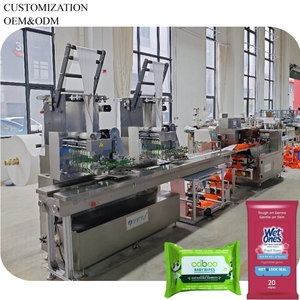
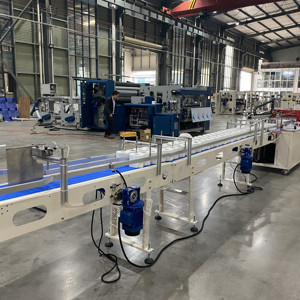
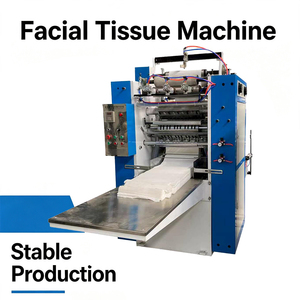
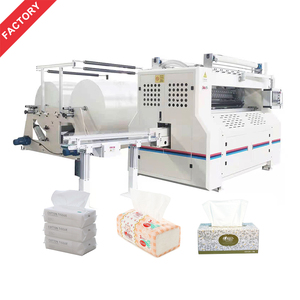
Engineering Excellence in Modern Tissue Converting & Packaging Systems
The global tissue paper converting sector is undergoing a massive technological shift driven by changing consumer hygienic demands, escalating raw pulp costs, and the urgent imperative for operational energy efficiency. Modern tissue packaging production lines represent a sophisticated convergence of mechanical engineering, high-speed multi-axis motion control, pneumatic web tension management, and integrated optoelectronic quality assurance. Equipment sourcing is no longer merely an evaluation of baseline machine speed; it requires a rigorous audit of total cost of ownership (TCO), overall equipment effectiveness (OEE), structural rigidity under continuous mechanical stress, and seamless modular scalability.
Leading global OEM manufacturers and exporters, such as Arabia Industrial Tissue Equipment LLC, have set new industry standards by combining in-house precision heavy machining with advanced PLC telemetry. Whether converting virgin softwood pulp, recycled fiber blends, or non-woven spunlace substrates into retail toilet rolls, kitchen towels, embossed restaurant napkins, soft-packed facial tissues, or pocket handkerchiefs, matching machine kinematics to material basis weight (GSM) and ply structural integrity is critical for preventing tearing, web drift, and machine downtime.
Anatomy of a Complete Turnkey Tissue Production Architecture
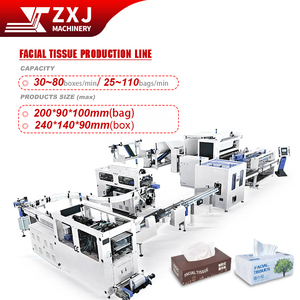
A commercial-grade, fully integrated tissue converting and packaging infrastructure comprises four synchronized technical subsystems. Each subsystem must maintain precise linear throughput parity to prevent downstream bottlenecking or upstream material backup:
1. Unwinding & Embossing Module
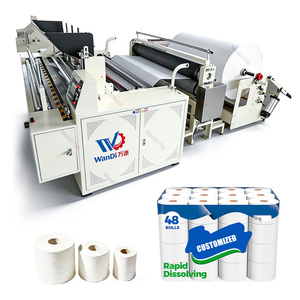
Features pneumatic parent roll loading arms, dual or triple unwinding stands, and precision steel-to-rubber or steel-to-steel embossing rollers. Point-to-point or nested embossing patterns enhance sheet bulk, hand-feel softness, and liquid absorption metrics.
2. Rewinding or Interfolding Unit
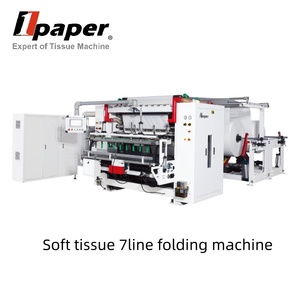
Utilizes PLC-governed surface rewinding for toilet log cores or vacuum-assisted interfolding jaws (V-fold, Z-fold, or C-fold) for facial tissues and hand towels. Multi-lane setups (e.g., 7-lane or 10-lane configurations) multiply throughput output exponentially.
3. Automated Log Saw Cutting
Employs high-speed orbital disc saws or continuous heavy-duty band saw cutting heads equipped with automatic carbide blade sharpening systems, optical cutting length sensors, and active trim extraction chutes to deliver clean, burr-free roll edges.
4. Primary & Secondary Packaging
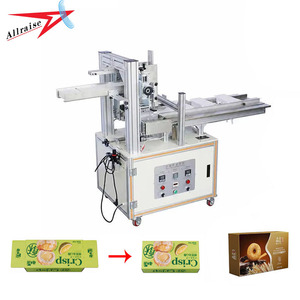
Integrates heat-sealing film wrappers, PE nylon soft-pack machinery, box cartoning systems with hot-melt side-gluing units, and robotic bundle stackers to ensure long-distance export stability and pristine retail shelf appeal.
Enterprise Advantage Analysis: Arabia Industrial Tissue Equipment LLC
Selecting an equipment export partner requires looking beyond basic catalog parameters to inspect manufacturing methodology, raw material quality, component traceability, and factory testing protocols. Arabia Industrial Tissue Equipment LLC has positioned itself as a premier engineering partner for international tissue converters across the Middle East, Africa, Europe, and the Americas through several core competencies:
- In-House CNC Machining Center: Unlike third-party machine assembly brokers, key mechanical components—including heavy cast-iron wall frames, roller shafts, cutter mandrels, and embossing cylinders—are precision-machined in-house on multi-axis CNC centers. This guarantees micron-level mechanical tolerances, minimal vibration during high-speed runs, and exceptional structural longevity.
- Turnkey System Integration: Custom engineering team designs production floor layouts specifically calibrated to client plant dimensions, local power grid specifications (380V–480V, 50Hz/60Hz), pneumatic pressure capacities, and target shift volumes.
- Tier-1 Global Component Architecture: Critical electrical, electronic, and pneumatic controls utilize components from leading industrial brands (e.g., Siemens PLC interface, Schneider Electric contactors, Omron sensors, AIRTAC pneumatic cylinders, Delta high-torque servo motors). This guarantees localized access to replacement parts across global markets.
- Comprehensive Pre-Shipment Validation: Every complete line undergoes rigorous 72-hour continuous test runs using client-provided parent rolls prior to export dispatch. Operational videos detailing rewinding stability, log saw cut cleanliness, and packaging heat-seal integrity are delivered for buyer sign-off.
Industry Development Trends (2025–2030)
The tissue converting and packaging machinery sector is entering a period of rapid technological advancement. Plant owners and capital equipment buyers must align their machinery procurement strategies with the following structural trends shaping global production floors:
1. Industry 4.0 Telemetry, AI Vision Quality Control, and Remote Diagnostics
Modern production lines are transitioning from basic programmable logic controllers (PLCs) to IoT-enabled smart converting systems. Real-time data collection tracks parameters such as motor torque, bearing temperature, vibration spectra, and web tension variations. Integrated AI-driven machine vision camera sensors monitor sheet perforations, print registration accuracy, and edge-sealing continuity at high speeds, automatically rejecting non-conforming finished packs without reducing line velocity. Remote Ethernet gateways allow OEM technicians to diagnose program logic issues or recalibrate motion profiles across international borders in real time.
2. Transition to Biodegradable Packaging Substrates & Eco-Friendly Hot-Melts
Global environmental regulations and retailer sustainability targets are driving converters away from single-use polyethylene (PE) outer wrapping films toward ultra-thin recyclable polypropylene, compostable PLA films, and paper-based outer packaging. Machinery manufacturers must adapt sealing jaw heating profiles, static elimination bars, and feed timing belts to handle eco-friendly substrates, which exhibit narrower thermal sealing windows and different elastic modulus behaviors. Furthermore, low-temperature, energy-efficient hot-melt gluing units are replacing traditional hot adhesives on cartoning lines to lower overall power draw.
3. Energy Efficiency, OEE Optimization, and Reduced Compressed Air Reliance
With electrical energy prices rising globally, machinery design focuses heavily on power conservation. High-efficiency IE4/IE5 synchronous motors, regenerative braking drives that return decelerating kinetic energy back into the plant power grid, and direct-drive servo setups that eliminate power-loss-prone belt transmissions are becoming standard. Furthermore, replacing traditional high-volume pneumatic actuators with electric mechanical servo-actuators significantly lowers overall plant compressed air consumption, reducing auxiliary compressor load and maintenance overhead.
Future Procurement & Sourcing Strategy Trends
Industrial buyers, corporate procurement officers, and private equity investors building tissue manufacturing facilities are shifting away from short-sighted initial CapEx evaluation models toward holistic Total Cost of Ownership (TCO) frameworks. Key purchasing criteria for 2025 and beyond include:
- Modular Line Expandability: Purchasing modular machine frameworks that allow plant managers to add color printing units, secondary embossing stands, or automatic bundle packing arms as market demand grows, eliminating the need to replace entire production lines.
- Universal Parent Roll Versatility: Sourcing rewinders and folders capable of running varying pulp qualities—ranging from premium 100% virgin wood pulp to high-percentage recycled fibers and bamboo pulp—without requiring extensive mechanical re-tooling or experiencing web breakage.
- Rapid Tool-Less Format Changeover: In response to the growth of private-label SKUs and short-run customer orders, procurement directors prioritize converting lines equipped with digital servo adjustments and quick-release mechanical chucks, cutting format changeover times (e.g., from toilet roll to towel roll, or soft-pack size adjustments) from hours to minutes.
Comprehensive B2B Procurement FAQ
Ready to Optimize Your Tissue Converting Floor or Plan a New Turnkey Production Line?
Consult with our lead engineering team today. We deliver custom line layouts, detailed technical specifications, and factory-direct pricing matching your finished product metrics.