Precision Tissue Bagging & Converting Machinery
Engineered for low-maintenance operational continuity, high OEE output, and flexible film adaptation across toilet rolls, facial tissues, napkins, and industrial wipes.
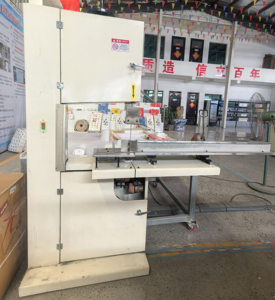
Semi-automatic Manual Small Toilet Paper Roll Tissue Paper Rolling Band Saw Cutting Machine Equipment Fast Response
Precision log saw cutter tailored for flexible roll diameter adjustments, smooth blade positioning, and clean cuts on tissue logs prior to primary bagging.
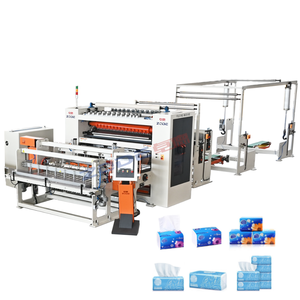
ZODE V7L Good Price Tissue Paper Folding Machine, Fully Automatic Facial Tissue Paper Production Line
Heavy-duty vacuum interfolding system engineered for high-volume soft-pack and carton facial tissue production lines with synchronized output.
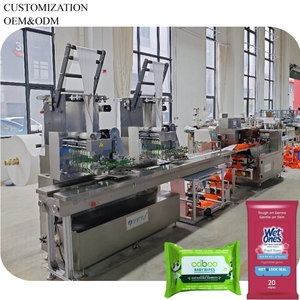
5-30pcs/pack Automatic Restaurant Napkin Tissue Making Machine Multi Pieces Baby Wipes Making Machine Wet Wipes Making Machines
Versatile multi-pack liquid dosing, folding, and flow-wrapping bagging machine designed for hygienic wipes and restaurant napkin packs.
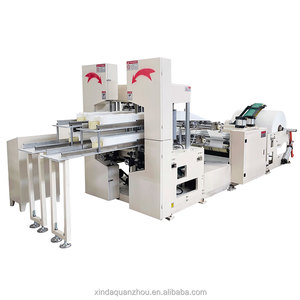
High Speed Complete Fully Automatic Paper Napkin Facial Tissue Making Machine Production Line Factory Price
Integrated converting line featuring continuous embossed folding, accurate lane counting, and automated transfer to bagging systems.
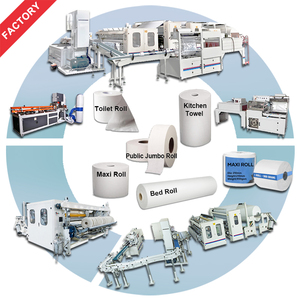
High-Speed Automatic Tissue Paper Manufacturing Line for Toilet Tissue, Kitchen Towels, Jumbo Rolls and Bed Rolls
Full-scale converting plant architecture equipped with automatic rewinding, perforation, log cutting, and secondary bundle bagging units.
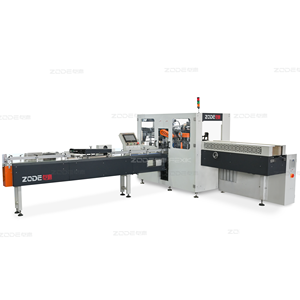
Full Automatic Facial Tissue Paper Making Machine Drawing Type Facial Tissue Production Line
Multi-lane vacuum interfolded line delivering consistent draw-type tissue stacks directly to primary film bagging and wrapping equipment.
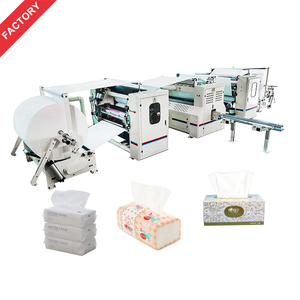
Hot-selling Towel Paper Slitting and Rewinding Machine Toilet Paper Rewinder Machine Roll Napkin Tissue Paper Making Machine
High-speed slitting and rewinder for household rolls, MAXI rolls, and industrial towels with precise web tension control systems.
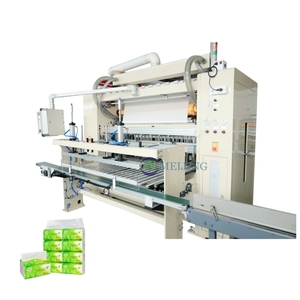
Best Price Full Automatic Soft Pack Type V Folding Facial Tissue Folding Machine with Transfer System
Automated V-fold interfolded facial tissue machine complete with inline log transfer systems for direct linking to soft-pack bagging machinery.
Engineering Excellence in Automated Tissue Bagging & Packaging Architecture
In modern tissue converting facilities, primary and secondary packaging systems represent the pivotal nexus where manufacturing productivity intersects with retail shelf appeal and unit cost efficiency. Tissue bagging machinery—spanning primary soft-pack bagging for facial tissues, individual roll overwrapping, napkin bundling, and secondary multi-pack bundle bagging—has evolved from basic mechanical pushers into multi-axis servo-driven, computer-controlled automation centers.
When procurement teams and engineering executives evaluate prospective OEM machinery manufacturers, analyzing raw speed specs (cycles per minute) in isolation is insufficient. True operational profitability relies on holistic line integration: seamless synchronization between log saws, interfolders, rewinding units, film feeding tensioners, thermal sealing bars, and robotic bundling stations. A failure in film tracking or temperature control at the bagging stage creates immediate upstream backpressures, stopping high-speed slitter-rewinders and resulting in significant downtime losses.
Critical Technical Insight: The Information Gain in Servo-Driven Bagging
Legacy tissue bagging equipment utilized pneumatic pushers controlled by limit switches, leading to mechanically harsh product transfers, frequent deformation of delicate paper stacks, and high mechanical wear. Modern tier-1 tissue bagging factories integrate absolute encoder multi-servo drive systems (typically 10 to 18 independent motion axes). This architectural upgrade allows electronic cam profiles to dynamically decelerate during product contact and accelerate during sealing, delivering non-destructive handling of ultra-soft 2-ply and 3-ply tissue logs at speeds exceeding 120 to 150 bags per minute.
Get a QuoteMulti-Axis Servo Motion Control
Eliminates mechanical linkages and chain drive degradation. Ensures precise synchronization between film feeding, gusseting, pusher flights, and rotary end-sealers.
Smart Thermal Impulse Sealing
Closed-loop PID temperature regulation handles thin PE, CPP, and sustainable bio-degradable films without burning or seal-line delamination during high-speed runs.
Automated Infeed Buffering
Integrated optical sensor arrays monitor incoming tissue stack density, automatically adjusting lane speed to prevent jams and compensate for upstream line speed fluctuations.
Factory Capability Matrix: Evaluating Tissue Bagging Machine Manufacturers
Sourcing directors must differentiate between small-scale machine shops and fully integrated tissue packaging equipment factories. Below is a comparative engineering benchmark detailing key mechanical standards across OEM factory tiers:
| Evaluation Metric | Tier 1 Machinery Manufacturers | Standard Commercial Suppliers | Low-Cost Assembly Shops |
|---|---|---|---|
| Drive Architecture | Full Servo-Driven (12-18 Axes, EtherCAT) | Hybrid Servo-Pneumatic Controls | Mechanical Cam & Chain Drive |
| Bagging Speed (Soft-Pack) | 120 – 160 Bags / Minute | 60 – 90 Bags / Minute | 30 – 50 Bags / Minute |
| Film Compatibility | PE, CPP, OPP, Recyclable PCR & Bio-Films | Standard Virgin PE & CPP Films | Thick Virgin PE Only |
| Changeover Downtime | 10 – 15 Mins (Recipe Auto-Adjust) | 45 – 60 Mins (Manual Handwheels) | 2 – 4 Hours (Tooling Swap Required) |
| In-House Machining | 5-Axis CNC Milling, Laser Cutting, CMM QA | Subcontracted Frame & Part Machining | Outsourced Manual Machining Parts |
| Line Yield Rate (OEE) | ≥ 98.2% Consistent Yield | 90.0% – 93.5% Yield | ≤ 82.0% Yield (High Waste) |
Future Procurement Trends in Tissue Bagging & Packaging (2025–2030)
The global tissue paper market is undergoing a structural shift driven by sustainability mandates, supply chain volatility, and retail demands for flexible packaging formats. Enterprise buyers seeking long-term competitive advantages must align their equipment procurement strategies with these core industry trends:
1. Transition to Post-Consumer Recycled (PCR) & Paper-Based Bagging Materials
Regulatory frameworks, such as the EU Single-Use Plastics Directive and global ESG commitments, are accelerating the adoption of thin-gauge PCR films (down to 15–20 microns) and recyclable Kraft paper wrapping. Legacy bagging machines struggle with thin PCR films due to inconsistent tensile strength and uneven melting points. Modern bagging machinery factories are equipping film transport units with double-stage servo tension compensators and pulse-heating sealing bars that deliver leak-proof seals on variable-density bio-based substrates.
2. Modular Machine Layouts & Rapid Format Versatility
Private-label converting plants require machines capable of rapid format shifts. Sourcing trends favor modular bagging platforms where a single line can switch between single-roll toilet tissue overwrapping, 4-pack retail bundles, and 24-roll master bundles with minimal mechanical teardown. Integrated servo HMI memory banks store over 100 recipe formats, automatically adjusting conveyor guides, pusher strokes, and sealing bar heights at the touch of a button.
3. Edge AI Vision Inspection & Predictive Quality Assurance
To eliminate consumer complaints regarding unsealed bags, torn gussets, or misaligned print, advanced bagging machinery factories are integrating inline high-resolution vision systems. Utilizing AI-trained edge computing vision algorithms, these systems inspect 100% of finished packs in real time, automatically ejecting defective bags without interrupting continuous line operation.
4. Energy-Efficiency & Compressed Air Reduction
With industrial electricity prices fluctuating, energy management has become a critical key performance indicator (KPI). Electric servo actuators are replacing high-consumption pneumatic cylinders across pusher and tucking mechanisms. This engineering shift reduces factory compressed air demands by up to 60%, significantly lowering kilowatt-hour consumption per ton of converted tissue.
Global Tissue Converting & Packaging Industry Development Trends
The global tissue paper machinery landscape is shifting toward full digital integration and automated end-of-line packaging lines. Strategic growth in tissue converting relies on mastering three operational disciplines:
- End-to-End Smart Line Connectivity: Modern converting facilities no longer treat rewinding, cutting, bagging, and case packing as standalone processes. Open fieldbus protocols (such as EtherCAT and OPC-UA) enable real-time telemetry exchange between upstream rewinding logs and downstream bagging equipment, automatically throttling bagging line speeds to match paper roll production.
- Ergonomic & Safe Plant Floor Operations: Modern bagging equipment incorporates light curtain safety arrays, fully enclosed noise-dampening cabins (reducing operating noise below 72 dBA), and intuitive graphical user interfaces (GUIs) that minimize operator training periods.
- Compact Footprint Optimization: Factory space represents a key capital expenditure. Machinery designers are consolidating infeed turn-tables, stacking stations, primary baggers, and secondary bundlers into compact, L-shaped or straight-line layouts that maximize floor space efficiency.
Why Enterprise Buyers Partner with Arabia Industrial Tissue Equipment LLC
As a global leader in high-performance tissue paper machinery, Arabia Industrial Tissue Equipment LLC delivers turnkey industrial equipment tailored to local market requirements, sheet properties, and facility constraints. Our competitive strength rests on four fundamental engineering pillars:
In-House Machining & Precision QC
Unlike suppliers who outsource core fabrication, our state-of-the-art manufacturing facility houses 5-axis CNC machining centers, precision gear grinding equipment, and laser cutting bays. Key mechanical parts, sealing jaws, and drive shafts are machined in-house, ensuring strict dimensional tolerances and immediate spare parts availability.
Complete Turnkey Line Engineering
We build complete, synchronized tissue production ecosystems—from raw parent roll unwind stands, slitter-rewinders, and interfolding units to high-speed primary bagging machines, band saw log cutters, and secondary bundle wrappers.
Global Field Service & Remote Diagnostics
Our global technical team provides full factory installation, operator commissioning, and preventive maintenance training. All automated bagging lines feature secure remote IoT telemetry modules, enabling our automation engineers to troubleshoot program logic and optimize performance in real time anywhere in the world.
Frequently Asked Questions (Sourcing FAQ)
Expert technical insights addressing common evaluation criteria, machine specifications, and operational parameters for tissue bagging machinery sourcing.
Request a Custom Technical Proposal & Machine Layout
Planning a new tissue converting line or upgrading your existing packaging capacity? Speak directly with our senior application engineers to receive customized equipment recommendations, floor space drawings, and budgetary quotes.
Get a Quote