Featured Tissue Converting & Packaging Machines
Explore our high-throughput wrapping, folding, and rewinding machinery built for maximum operational efficiency (OEE) and reduced total cost of ownership (TCO).
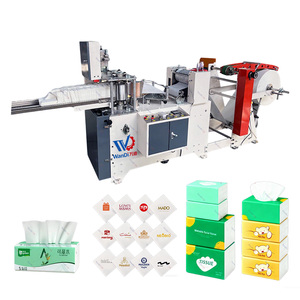
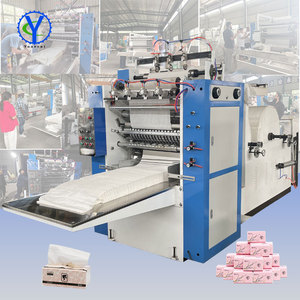
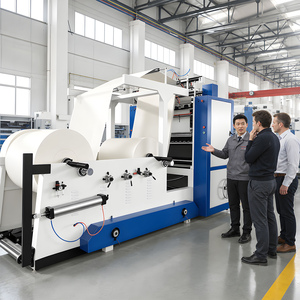
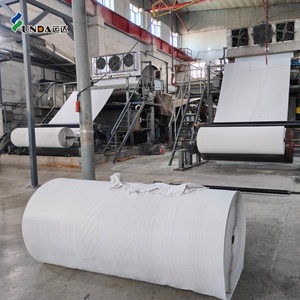
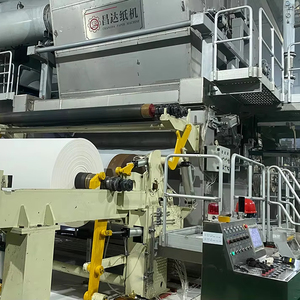
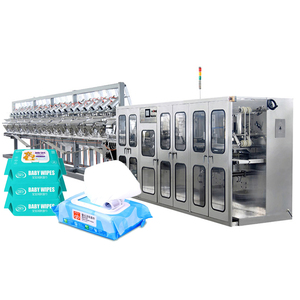
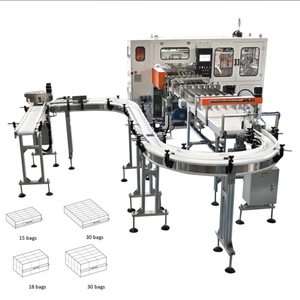
Arabia Industrial Tissue Equipment LLC — Global Manufacturing Authority
As an industry leader in tissue paper machinery manufacturing and exporting, Arabia Industrial Tissue Equipment LLC operates a state-of-the-art CNC processing center dedicated to crafting elite tissue converting lines. Our expertise spans complete turnkey solutions including toilet paper rewinding machines, facial tissue folding systems, napkin printers, hand towel interfold lines, and high-speed automated facial tissue overwrappers.
Every piece of equipment engineered in our facility undergoes rigorous load testing and optical quality verification. By matching unwinding, embossing, slitting, cutting, and packaging speeds in perfect synchronization, we eliminate production bottlenecks and allow plant managers to realize maximum profitability per shift.
Industry Whitepaper: Modern Engineering & Kinematic Architecture of Facial Tissue Wrapping Machinery
In the competitive tissue converting market, the packaging stage represents both the final quality benchmark and the primary bottleneck for operational efficiency. Modern commercial facial tissue wrapper machines have evolved far beyond basic mechanical link systems. Today’s premier wrapping equipment utilizes multi-axis servo motion control, continuous-motion soft wrapping technology, and precise thermal sealing systems capable of maintaining air-tight seal integrity at speeds exceeding 150 to 200 soft-packs per minute.
Core Technical Insight: The efficiency of a facial tissue wrapping line is governed by web tension consistency and thermal seal response time. Inconsistent poly film feeding leads to jam-ups, misaligned optical registration, and excessive film scrap. Precision servo-driven unwinding modules maintain constant web tension within ±0.2N under variable speed acceleration curves.
1. Kinematic Motion Control & Multi-Axis Servo Integration
Legacy tissue wrappers relied heavily on complex mechanical cam assemblies, timing belts, and chain drives, which suffered from mechanical backlash, high maintenance downtime, and vibration at high line speeds. Next-generation facial tissue wrappers engineered by Arabia Industrial Tissue Equipment LLC incorporate independent servo drives (typically 7 to 12 axes per line) governing key functional zones:
Infeed Synchronization Servo
Tracks incoming stacked tissue logs from the log cutter or interfolder, adjusting stack spacing dynamically without crushing delicate paper plies.
Film Unwind & Registration Servo
Controls outer poly film (BOPP/CPP/PE) feeding based on high-resolution optical sensor eye-mark detection, keeping print logos perfectly centered.
Folding & End-Sealing Servo
Executes precise side-envelope folding and continuous thermal end-sealing without damaging heat-sensitive bio-films.
2. Thermal Sealing Dynamics & Film Material Adaptability
Tissue converters face growing market demands to switch between standard polyethylene (PE), biaxially oriented polypropylene (BOPP), cast polypropylene (CPP), and eco-friendly recyclable or compostable bio-plastics (such as PLA-based films). Achieving high-speed sealing across varied melting points requires dynamic PID temperature management coupled with fast-responding Solid State Relays (SSR) or ultrasonic sealing modules.
| Film Material Type | Optimal Thickness Range | Recommended Sealing Temp (°C) | Maximum Line Speed | Key Operational Consideration |
|---|---|---|---|---|
| BOPP (Biaxially Oriented Polypropylene) | 18 – 25 microns | 130°C – 155°C | Up to 180 packs/min | High clarity, excellent optical registration stiffness. |
| PE (Polyethylene / Low-Density PE) | 25 – 40 microns | 110°C – 135°C | Up to 140 packs/min | Superior puncture resistance; requires precise cooling block. |
| CPP (Cast Polypropylene) | 20 – 30 microns | 125°C – 145°C | Up to 160 packs/min | Soft touch finish; requires low-friction feeding belts. |
| PLA / Biodegradable Bio-Films | 20 – 35 microns | 95°C – 115°C | Up to 120 packs/min | Narrow thermal window; best paired with ultrasonic sealing. |
3. Total Cost of Ownership (TCO) & OEE Optimization
When calculating return on investment (ROI) for a facial tissue wrapper machine export purchase, evaluating initial capital expenditure (CAPEX) alone is inadequate. Enterprise buyers must account for Total Cost of Ownership (TCO) over a 10-year operational life cycle. Key variables impacting TCO include:
• Power Consumption Efficiency: High-efficiency servo systems reduce electrical draw by up to 30% compared to traditional mechanical wrappers equipped with continuously running induction motors.
• Raw Material Yield Loss: Intelligent machine diagnostics auto-reject misaligned stacks prior to wrapping, protecting valuable outer film rolls from being wasted on improper tissue logs.
• Tool-less Format Changeovers: Modular modular folding tuckers enable size changeovers (e.g., from pocket tissue 50-count to family soft-pack 200-count) in under 20 minutes, raising Overall Equipment Effectiveness (OEE) by 12-15% across multi-SKU operations.
Strategic Global Procurement Trends for Facial Tissue Machinery (2025–2030)
The global tissue converting industry is undergoing rapid transformation driven by sustainability mandates, supply chain realignments, and industry 4.0 automation. Wholesalers and enterprise buyers upgrading their factory floors must align purchasing decisions with the following structural trends:
1. Transition to Paper-Based Outer Wraps
Driven by single-use plastic restrictions across Europe and North America, leading brands are shifting from plastic film soft-packs to ultra-thin barrier paper overwraps. Importers require machines equipped with dual-purpose sealing jaws capable of converting both plastic and coated paper materials seamlesslessly.
2. Edge-AI Vision Quality Inspection
Manual spot-checking is being replaced by inline high-speed computer vision systems. Cameras positioned at the wrapper exit analyze seal alignment, film clarity, wrinkle presence, and brand logo placement at full line speeds, auto-ejecting defective packs without slowing production.
3. Smart Factory IoT Connectivity
Enterprise procurement specifications now routinely mandate OPC-UA and MQTT communication protocols. Modern tissue wrappers integrate with plant-wide ERP and MES software, enabling real-time remote monitoring, predictive motor vibration analytics, and automated maintenance alerts.
4. Fully Automated Downstream Bundling
To reduce manual labor costs, single-pack soft wrappers are increasingly paired with integrated automatic multi-pack bundling machines and robotic case packers. A continuous automated pipeline from tissue interfolding to palletizing cuts labor overhead by up to 70%.
Technological Evolution & Development Roadmap of Facial Tissue Wrappers
The technological lineage of tissue packaging equipment reflects a move toward higher linear speeds, reduced mechanical wear, and zero-defect quality guarantees. Understanding this trajectory allows business owners to invest in future-proof machinery that remains competitive over decades.
Phase 1: Mechanical Cam & Chain-Driven Wrappers (Legacy)
Characterized by fixed mechanical linkages, limited linear speeds (<80 packs/min), long tooling changeover times (3-5 hours), and high operator skill reliance. High noise levels and frequent lubrication downtime restricted plant scalability.
Phase 2: Hybrid Electro-Mechanical Systems (Transitional)
Introduced basic PLC logic and standalone frequency inverters for main drives while retaining mechanical linkage for side tucking and cutter arms. Speeds improved to 100-120 packs/min, but format versatility remained constrained.
Phase 3: Fully Synchronized Multi-Axis Servo Wrappers (Current Industry Standard)
Engineered with independent servo motors assigned to every motion axis. Features touch-screen HMI recipes, dynamic tension compensation, automatic optical registration, and production speeds reaching 150-200 packs/min. Highly adaptable to varied sheet plies and pack counts.
Phase 4: Autonomous Smart-Converting Lines (Emerging)
Integrates self-optimizing servo algorithms that automatically adjust heater temperatures and sealing pressure based on ambient humidity, film roll batch variations, and real-time thickness sensors, achieving near-zero scrap rates.
Facial Tissue Wrapper Machine Procurement FAQ (Expert Buying Guide)
Ready to Upgrade Your Tissue Packaging Capacity?
Contact our senior engineering team today to receive custom line layouts, detailed technical specifications, and factory-direct pricing tailored to your production goals.
Get a Quote