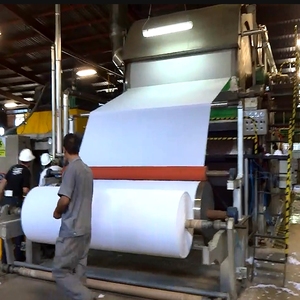
Fully Automatic Tissue Paper Making Machine 1880 Double Set
View Product Details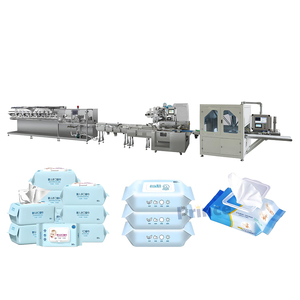
Full Automatic Wet Tissue Wipes Making Machine for Single & Multi-piece Wet Wipe Production
View Product Details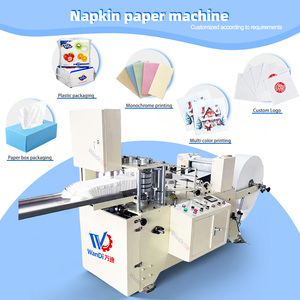
Toilet Paper Making Machine Paper Jumbo Roll Napkin Printing Production Napkin Tissue Paper Making Machinery for Sale
View Product Details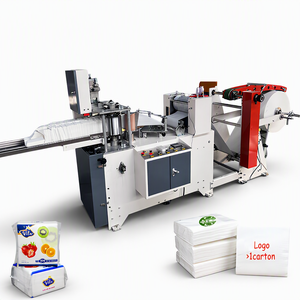
Factory Price Automatic Toilet Napkin Paper Making Machine Napkin Tissue Making Machine for Small Business
View Product Details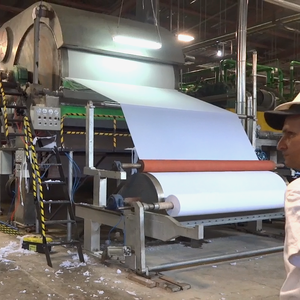
Jumbo Roll Toilet Tissue Napkin Paper Making Machine Produce by Wooden/Waste Paper Paper Product Machinery
View Product Details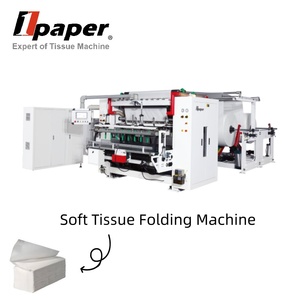
Zhejiang Wenzhou Factory Price High Efficiency Automatic Facial Tissue Folding Equipment Paper Folding Machine 120m/min 380V
View Product Details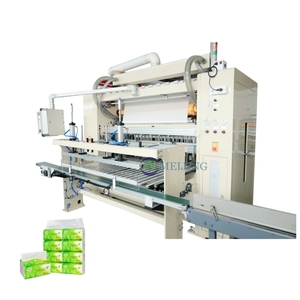
Best Price Full Automatic Soft Pack Type V Folding Facial Tissue Folding Machine with Transfer System
Get a Quote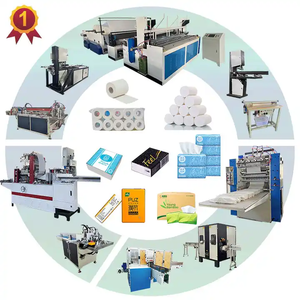
China Supplier Facial Tissue Making Machine with Complete Packaging Semi-automatic Toilet Paper Line Napkin Tissue Machine
View Product DetailsThe global tissue paper manufacturing and converting industry has undergone a massive structural shift over the past decade. Driven by expanding hygiene awareness, rapid urbanization, and increased consumption of FMCG personal care products across emerging markets, industrial converters are seeking machinery that delivers high throughput, mechanical reliability, minimal waste, and modular scalability. China has established itself as the world's primary manufacturing hub for industrial tissue converting machinery, serving converters across the Middle East, Africa, Latin America, and Europe.
As top Chinese tissue machine manufacturers and exporters—such as Arabia Industrial Tissue Equipment LLC—continue to integrate advanced CNC machining centers, Siemens/Mitsubishi PLC control systems, continuous servo-driven interfolding, and automated log cutting technologies, the technology gap between European brands and leading Chinese OEM suppliers has virtually closed. Buyers now gain access to premium industrial-grade equipment at highly competitive capital expenditures (CAPEX), allowing for accelerated ROI cycles and increased operational margin.
In-House Machining Center
Unlike third-party assemblers that outsource critical structural fabrication, our dedicated CNC machining facility crafts key transmission shafts, embossing rollers, wallboard frames, and folding cylinders in-house. This ensures sub-millimeter tolerances, reduces mechanical vibration at speeds above 150m/min, and guarantees long-term durability.
End-to-End Line Engineering
We do not deliver standalone machinery in isolation. Every production project is specified as a cohesive, synchronized line—matching parent roll unwinding stand capacity to automatic rewinding/folding units, continuous band saw log cutters, and automatic flow wrapping or bundle packing units.
Global Export & On-Site Field Support
With verified equipment installed across North Africa, the Middle East, South America, and Eastern Europe, our international service team offers complete technical consultation, customized electrical panel wiring (matching local 380V/415V/480V 50/60Hz grids), operator training, and reliable lifetime spare parts availability.
As raw tissue jumbo roll prices fluctuate and environmental regulations tighten globally, machinery design is rapidly evolving. Exporters and equipment buyers must understand the technological trends shaping the future of tissue production over the next decade:
1. Full Servo-Driven Interfolding & Automatic Tension Synchronization
Legacy mechanical gear-driven folding and rewinding machines often suffer from paper web breakage when converting low-GSM virgin pulp or high-recycle blend papers. Advanced tissue making equipment now utilizes multi-axis motion controller systems with individual servo motors dedicated to unwinding, perforation, embossing, and folding. This allows continuous real-time tension adjustment, preventing web breaks and raising operational speeds to 120m/min - 200m/min.
2. Steel-to-Rubber and Steel-to-Steel Point-to-Point Embossing
Market consumer preference has shifted strongly toward ultra-soft, high-bulk tissue products. Modern embossing units feature high-precision laser-engraved steel rollers configured with point-to-point or point-to-flat embossing profiles. Micro-embossing combined with nested lamination glue units yields up to 30% higher perceived roll volume without increasing paper basis weight, directly optimizing raw material costs.
3. Automated Downstream Log Cutting & Bundling Integration
Manual log cutting creates major bottlenecks in high-volume converted product facilities. The standard modern industrial setup integrates high-capacity continuous single-channel or dual-channel band saw log cutters equipped with automatic orbital blade sharpening systems, optical sensing trim extractors, and automated multi-roll wrapping machinery.
4. Energy Efficiency & Sustainable Waste Reduction
New-generation converting machines feature regenerative braking drives, vacuum pump energy recovery, and optimized pneumatic air consumption. Furthermore, advanced edge-trim trim rewinders collect dust and paper scrap, feeding them directly back into pulping systems for complete zero-waste manufacturing loops.
Step 1: Calculate Target Output Per Shift
Avoid buying machinery based purely on linear machine speed (m/min). Calculate target finished roll/pack units required per 8-hour shift, taking into account roll diameter, sheet count per roll, log cut cycle time, and expected overall line efficiency (OEE benchmarked at 80%-85%).
Step 2: Match Jumbo Roll Web Width
Match machine unwinding stand width (e.g., 1880mm, 2800mm, 1575mm) to locally available jumbo roll mill widths. Choosing a standard 1880mm model allows multi-lane conversion of standard toilet rolls or facial tissues without excessive edge trim waste.
Step 3: Specify Fold & Emboss Tooling
For napkin and facial tissue lines, precisely define folded dimensions (e.g., 1/4 fold, 1/8 fold, V-fold, Z-fold, N-fold) and open sheet dimensions. Specifying precise tooling upfront prevents expensive post-delivery adjustments and cylinder retrofits.
Ready to Upgrade Your Tissue Converting Plant Capacity?
Consult with our senior technical engineers today to receive a customized line layout proposal, technical specification sheet, and direct factory price quote.
Get a Quote