Featured Tissue Converting Machinery
Explore our industrial-grade tissue converting equipment, custom-engineered for maximum Overall Equipment Effectiveness (OEE) and minimal maintenance operational expenditure.
1. Executive Summary: Sourcing High-Performance Tissue Paper Machinery from China
The global tissue paper converting market has undergone a structural paradigm shift driven by urban population expansion, tightening industrial sustainability mandates, and heightened consumer demand for premium sanitary products. For paper converters, commercial tissue distributors, and enterprise buyers, sourcing from a lead-grade China tissue making machine manufacturer represents a strategic leverage point to balance capital expenditure (CAPEX) with long-term operational efficiency (OPEX).
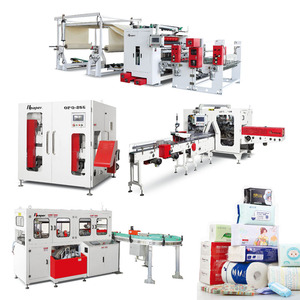
Modern tissue converting is no longer defined merely by mechanical speeds; it is governed by tension stability, web control precision, fast pneumatic changeovers, energy-efficient servo drives, and synchronized inline packaging. As a global machinery manufacturer with an integrated in-house CNC machining center, Arabia Industrial Tissue Equipment LLC designs and builds full-spectrum tissue converting lines—including high-speed toilet paper rewinding machines, interfolded facial tissue lines, multi-color napkin folders, hand towel converting setups, and single-roll/bundle packaging machines.
Information Gain Insight: Real-world plant productivity relies on matching parent roll unwinding speeds directly with downstream log saw cutting cycles and poly-wrapping flow. Purchasing standalone machines without line synchronization leads to operational bottlenecks, increased scrap rates (exceeding 4%), and degraded Overall Equipment Effectiveness (OEE).
2. Enterprise Engineering Competence & In-House Manufacturing Rigor
Our operational philosophy centers on complete mechanical and electronic integration. Unlike traditional aggregators who outsource core component manufacturing, our facility maintains tight engineering control over critical mechanical assemblies. This structural transparency ensures that every paper converting machine exported to the Middle East, Europe, Africa, and the Americas meets rigid ISO and CE industrial benchmarks.
In-House CNC Machining Center
Key structural frames, embossing rollers, wallboard components, and perforation shafts are precision-machined in our own CNC processing workshop. This controls tolerances to within ±0.01mm, dramatically reducing machine vibration at high speeds.
Siemens/Delta PLC Automation
Integrated motion control systems utilize multi-axis Siemens or Delta PLCs combined with high-resolution human-machine interfaces (HMI). Operators monitor sheet count, perforation length, web tension, and real-time diagnostic logs effortlessly.
Pre-Shipment Video Inspection
Every tissue converting machine undergoes a mandatory 48-hour continuous test run under simulated load conditions before packing. Buyers receive full video verification of rewinding speed, log saw precision, and wrapping consistency prior to container dispatch.
3. Technical Portfolio Analysis & Equipment Categorization
To assist procurement directors in identifying the optimal machinery configuration for their specific regional market requirements, the technical specification table below highlights key parameters across our core tissue equipment lines:
| Machinery Line Type | Target Output Product | Design Speed / Capacity | Paper Basis Weight (GSM) | Core Automation Features |
|---|---|---|---|---|
| Automatic Toilet Roll Rewinder | Bathroom tissue rolls, Kitchen towels | 180 – 250 m/min | 13 – 30 g/m² (1 to 3 ply) | Auto core loading, edge embossing, tail sealing & trimming |
| Interfolded Facial Tissue Line | Soft-pack & Boxed facial tissue | 800 – 1200 sheets/min/lane | 12 – 18 g/m² (2 to 4 ply) | V/Z fold interfolding, auto-count stacker, inline cutter synchronizer |
| Color Printing Napkin Machine | Hospitality napkins, Serviettes | 600 – 1000 pcs/min | 14 – 22 g/m² (1 or 2 ply) | 1-2 color flexographic printing, steel-to-wool embossing roller |
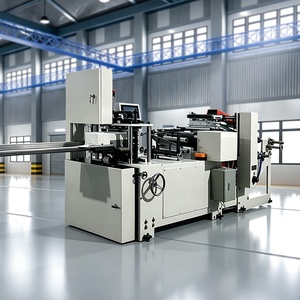
| Automatic Band Saw Log Cutter | Log trimming for rolls & folded tissue | 60 – 120 cuts/min | N/A (Log dia: 90-150mm) | Servo grinding wheel adjustment, touch-screen length control |
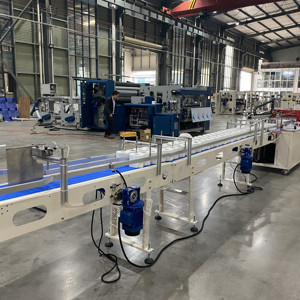
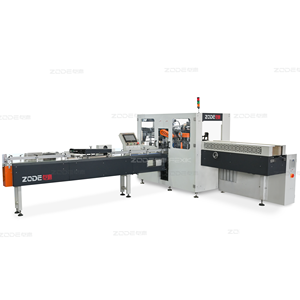
| Single & Bundle Poly Wrapper | Finished consumer packs | 40 – 80 packs/min | PE, PP, CPP film packaging | Pneumatic push-bar feeder, tight thermostatic heat sealing |
Technical Highlights of Key Machinery Lines
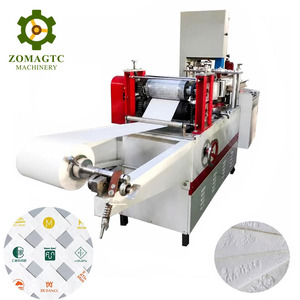
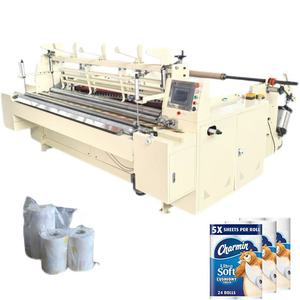
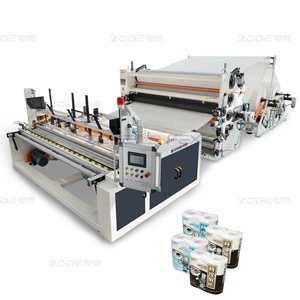
- High-Speed Automatic Toilet Paper Rewinding Lines: Features dual pneumatic backstands, synchronized timing belt transmission, steel-to-rubber or steel-to-steel embossing units, and an integrated log receiver. Automatic tail-gluing and trimming eliminate manually bound finished rolls.
- Drawing-Type Facial Tissue Production Lines: Utilizes vacuum suction folding technology to ensure continuous interfolding without tearing delicate virgin or recycled tissue paper webs. Lane configurations range from 2 lanes for start-up operations up to 10 lanes for high-capacity manufacturing plants.
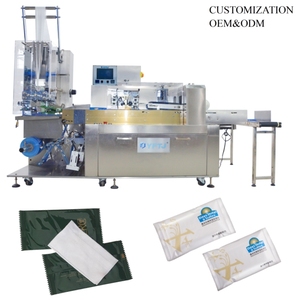
- Flexographic Printing Serviette Napkin Folders: Fitted with ceramic anilox rollers for crisp ink transfer and fast-drying solvent-free ink systems, making them ideal for customized hotel, restaurant, and fast-food corporate branding orders.
4. Future Procurement Trends in Tissue Machinery (2025–2030)
As the pulp and paper industry transitions toward carbon-neutral operations and digital plant architectures, equipment procurement managers must evaluate tissue making machinery through the lens of long-term strategic adaptability. Key procurement trends shaping the next decade include:
A. Energy Efficiency and Lower Carbon Footprint Per Ton
Traditional tissue converting machinery consumes substantial electrical power in vacuum pump operation, web unwinding friction, and heating tunnels. Modern machinery incorporates variable frequency drives (VFDs) across all major motors, regenerative braking systems on parent roll stands, and optimized vacuum turbine designs. Procurement decisions increasingly favor machinery that delivers a 15% to 22% reduction in kilowatt-hours per metric ton converted.
B. Modular Upgradability and Tool-Less Quick Changeovers
Consumer preferences shift rapidly between 2-ply soft toilet rolls, 3-ply embossed bath tissue, and jumbo commercial rolls. Modern converting lines feature modular frame architectures that allow paper converters to retrofit point-to-point lamination units, 3D embossing rolls, or automated core loading modules without replacing the entire rewinding head assembly.
C. High-Density Fiber Compatibility (Virgin, Bamboo, Recycled, and Non-Wood Pulps)
With pulp price volatility affecting global operating margins, converters require equipment capable of handling diverse raw materials without frequent web breaks. Modern unwinding tension control systems feature ultra-sensitive pneumatic dancer arms and load-cell web tracking, permitting stable high-speed converting of bamboo pulp, sugarcane bagasse fiber, and 100% recycled paper stock.
5. Macro Industry Development Trends: Automation & Industry 4.0
The global tissue manufacturing sector is witnessing a decisive move away from semi-automatic, labor-intensive machinery toward fully automated, self-diagnosing production ecosystems. Key technological vectors driving this evolution include:
- Full Servo-Driven Kinematic Chains: Mechanical chain-and-gear drives are being systematically replaced by multi-axis servo drive technology. This eliminates mechanical backlash, reduces wear-and-tear components by up to 40%, and enables micro-second adjustments of perforation timing during live production runs.
- IoT Remote Maintenance & Tele-Diagnostics: Modern tissue converting plants leverage cloud-connected PLC controllers. Our engineering team can remotely analyze machine operating logs, perform software updates, and troubleshoot sensor anomalies across international borders in real time.
- Vision Inspection Systems for Quality Control: High-speed optical camera systems are increasingly integrated prior to the packing stage to automatically detect sheet defects, misaligned perforation lines, or ink smudges on printed napkins, diverting defective units without interrupting continuous line operation.
6. Comprehensive Sourcing FAQ & Technical Guidance
Partner with China's Premier Tissue Machinery Engineering Expert
Whether you are establishing a new tissue paper converting facility or upgrading existing production lines for higher OEE and lower unit costs, our engineering team provides end-to-end technical consultation, factory floor layout plans, and custom machinery quotes.