Featured Tissue Converting & Napkin Packaging Machinery
Engineered for high-volume converters: Rewind, fold, emboss, cut, and pack with matched line velocity.
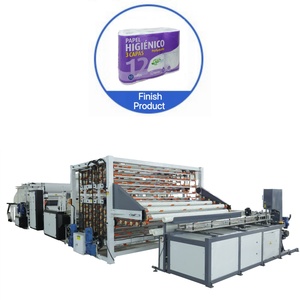
China Factory Buy Fully Automatic Toilet Tissue Paper Roll Production Making Equipment Machine With Price
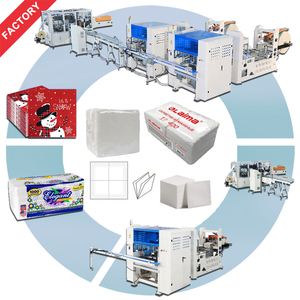
Automatic Tissue Paper Making Machine | Napkin & Toilet Paper Roll Line
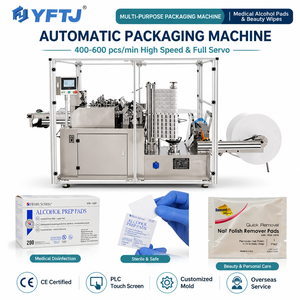
Turnkey Alcohol Prep Pad Production Line Automatic Single Piece Wet Tissue Making Machine
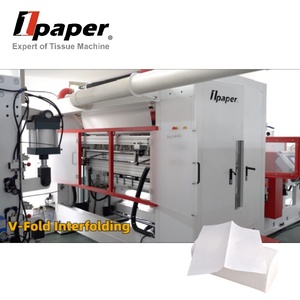
Fully Automatic V-Fold Facial Tissue Folding Machine with PLC Gearbox & Motor
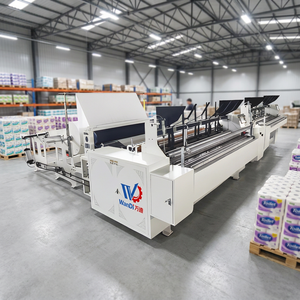
Hot Selling Tissue Paper Converting Machinery Mini Small Full Automatic Rewinding Machine
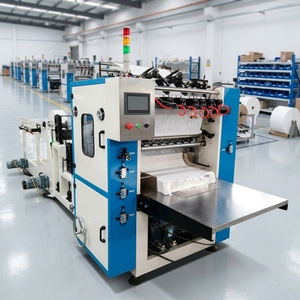
Facial Tissue Machine and Disposable Face Towel Machine Production Line
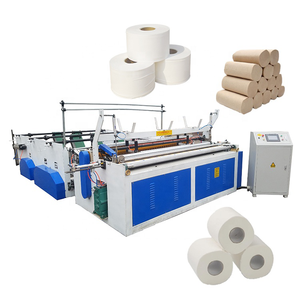
Full/Semi Automatic Toilet Paper Machine Production Line Toilet Paper Roll Making Machine
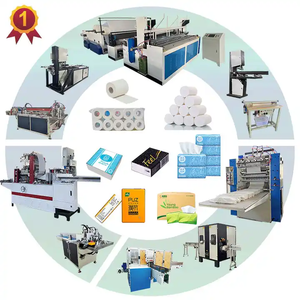
China Supplier Facial Tissue Making Machine with Complete Packaging Semi-automatic Line
1. Technical Blueprint: Engineering Excellence in Napkin Packaging Machinery
In modern tissue converting, the napkin packaging machine is no longer treated as an isolated end-of-line unit. Instead, it serves as the critical synchronizing bridge between high-speed mechanical folding heads and downstream automated case packing systems. Chinese manufacturing clusters—specifically located across machinery hubs such as Wenzhou, Foshan, and Jiangmen—have radically redefined the global cost-to-performance ratio for automated tissue equipment. By incorporating multi-axis CNC machining, direct-drive servo kinematics, and closed-loop tension regulation, top-tier Chinese factories now deliver napkin packaging machines capable of handling continuous operational speeds up to 800 packs per minute while maintaining strict visual and structural bag integrity.
Key Information Gain Metric: Overall Equipment Effectiveness (OEE)
High-tier Chinese napkin packaging machinery operates at an average overall line OEE of 92%–95%, reducing linear waste to under 0.8% during high-speed film wrapping transitions through real-time web tension compensation.
Achieving maximum structural perfection in packed napkin stacks (ranging from 1/4 fold, 1/8 fold, cocktail 20x20cm, up to large 40x40cm dinner napkins) requires exact control over mechanical stack compression and film wrapping mechanics. When tissue paper unwinds from parent rolls, variations in humidity, paper bulk, and ply bonding directly impact stack compressibility. Premium Chinese machinery manufacturers overcome these physical variables through electro-pneumatic stack press units paired with optical servo sensors. The result is uniform film tension around the soft tissue bundle without crushing the delicate embossed pattern or scorching plastic poly-wrapping film (CPP, PE, or BOPP).
2. Technological Trends & Architectural Innovations in China's Factory Ecosystem
The rapid evolution of napkin converting machinery from mechanical cam-driven configurations to full motion-controlled servo architectures represents a major milestone in industrial automation. Modern factories leverage advanced mechatronic designs to drive competitive advantage across several core areas:
Full Servo-Driven Motion Control
Eliminating traditional chain drives, 12-axis to 16-axis independent motion controllers (e.g., Siemens S7-1500 family or Beckhoff EtherCAT systems) enable precise registration between napkin stack pushers, film feeding rolls, and sealing jaws.
AI-Powered Vision Inspection
Inline high-speed cameras monitor napkin fold alignment, edge trim quality, color printing registration, and heat-seal perimeter integrity at full line velocity, automatically rejecting sub-standard packs.
Ultrasonic & Sustainable Film Sealing
Transitioning from pure thermal heat wires to smart ultrasonic sealing bars allows converters to run ultra-thin bio-degradable PLA and recyclable paper-wrapper films without heat-sink distortion.
Below is a technical comparison of historical mechanical napkin wrappers versus modern Chinese servo-driven fully automatic packaging lines:
| Performance Standard | Legacy Mechanical Lines | Modern Chinese Servo Packaging Lines | Industrial Benefit |
|---|---|---|---|
| Operating Speed | 120 – 250 packs/min | 400 – 800 packs/min | +220% higher operational yield per footprint |
| Format Changeover Time | 3.5 – 6.0 Hours (Manual) | 15 – 30 Minutes (Recipe PLC) | Dramatically reduces down-time for custom orders |
| Sealing Precision | Fixed Thermal Jaw (±10°C) | PID Fuzzy Logic / Ultrasonic (±1°C) | Eliminates burn-through and seal air leaks |
| Film Compatibility | Standard PE / CPP Only | CPP, PE, BOPP, Biodegradable PLA, Paper | Meets global ESG eco-packaging standards |
| Maintenance Interval | 500 Operating Hours | 2,500 Operating Hours | Reduces consumable replacement expenditure |
3. Enterprise Strengths & Manufacturing Excellence: Arabia Industrial Tissue Equipment
Positioned at the apex of tissue converting equipment supply, **Arabia Industrial Tissue Equipment LLC** (in strategic synergy with top-tier Chinese manufacturing facilities) provides global buyers with an uncompromised standard of engineering reliability and vertical manufacturing control.
In-House Precision CNC Machining Center
Crucial components—including embossing steel rollers, vacuum folding drums, dynamic cutting shafts, and packaging push-rods—are processed entirely in-house using 5-axis CNC machines to maintain ±0.005mm tolerances.
Harmonized Turnkey Engineering
Lines are designed as a single synchronized ecosystem. From parent roll unwinding, color printing (1-6 colors), steel-to-rubber embossing, rotary cutting, to automatic soft packaging and carton wrapping—speeds are matched perfectly to avoid bottlenecks.
Proven Export Track Record & Global Service
With hundreds of installations across the Middle East, Africa, South America, and Europe, equipment is pre-configured to local factory power grids (380V-440V, 50Hz/60Hz) and supported with remote telemetry diagnostics.
4. Future Procurement Trends in Napkin Packaging Machinery (2025–2030)
Procurement directors and factory managers evaluating equipment acquisitions over the next decade must align their purchasing criteria with major macro trends shaping the global paper converting sector:
A. Rapid Format Versatility & Modular Tooling
Consumer preferences in retail and HoReCa (Hotel, Restaurant, Catering) markets are shifting rapidly toward varied napkin formats, including custom cocktail napkins (20x20cm, 2-ply), lunch napkins (30x30cm), and premium airlaid dinner napkins (40x40cm, 1/8 fold). Future-proof procurement requires machinery equipped with quick-release modular packaging heads and servo-driven adjustment levers that enable single-operator size changes in under 30 minutes without requiring custom machining.
B. Low-Power Consumption & Kinetic Energy Recovery
With industrial electricity tariffs rising globally, energy efficiency is now a primary Total Cost of Ownership (TCO) metric. Modern Chinese napkin packaging lines integrate Regenerative Servo Drives (RSD) that capture braking energy during rapid deceleration phases and feed it back into the internal DC busbar. This reduces net power consumption by 18% to 25% compared to conventional resistive-braking architectures.
C. Smart Maintenance Telemetry & Predictive Maintenance
Leading factories now equip napkin packaging lines with Edge-AI gateways connected to vibration, thermal, and acoustic sensors mounted on key bearings and servo gearboxes. Real-time data streams to cloud dashboards (MQTT/OPC-UA protocols), alerting maintenance personnel to potential mechanical wear weeks before a physical failure occurs.
5. Comprehensive B2B Procurement FAQ (Frequently Asked Questions)
Request Complete Machinery Specifications & Price List
Planning to establish a new napkin converting factory or upgrade existing packaging capacity? Speak directly with our senior application engineers for custom technical layouts and line quotes.