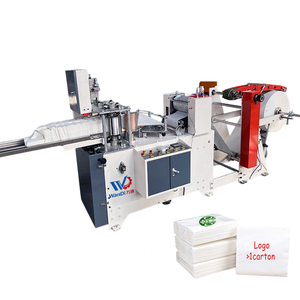
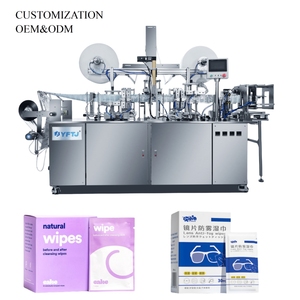
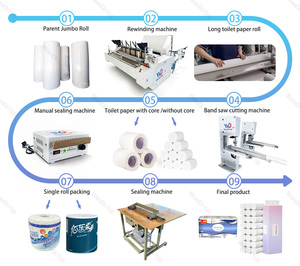
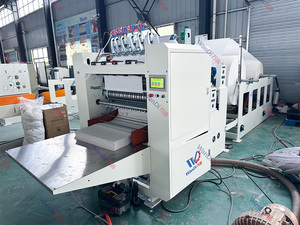
The global tissue converting industry is witnessing a seismic structural transition from traditional rigid cardboard packaging toward flexible soft-pack flow wrapping (pillow wrapping). Driven by fast-moving consumer goods (FMCG) market dynamics, e-commerce optimization, and stringent plastic reduction initiatives, automated tissue flow pack machinery has become the strategic backbone of modern tissue manufacturing plants worldwide.
Flow pack packaging—utilizing poly-films, CPP/PE laminates, and eco-friendly recyclable barrier papers—delivers a 40% reduction in total packaging raw material cost compared to traditional cardboard box inner packaging. Furthermore, soft-pack facial tissues maximize logistics density, enabling tissue converters to fit up to 30% more finished products per shipping container, drastically lowering global freight overheads.
Selecting an industrial flow wrapping system requires an understanding of kinematic control, thermal sealing behavior, and parent-web tension dynamics. Advanced tissue flow pack machines integrate precise multi-axis motion controls to synchronized tissue stack feeding, film tensioning, sealing rotary jaws, and discharge conveyor belts.
Legacy mechanical gear-driven flow wrappers suffer from backlash, mechanical wear, and complex changeover routines. Next-generation systems employ up to 7 independent servo axes, enabling micro-second digital timing adjustments between tissue pushers, film feeding rolls, and sealing jaws without stopping production.
Packaging thin monolayer film or bio-degradable papers requires instantaneous, precise temperature control. Dual-zone PID heating modules ensure heat distribution across rotary or box-motion sealing jaws within ±1°C tolerance, preventing film burn-through or cold seal leaks.
To prevent line downtime, automated dual-spindle film unwinders feature automatic reel splicing units. When the active film roll depletes, the system splices the trailing edge to the new reel at full line velocity (up to 80m/min) without interrupting upstream interfolding machinery.
Global procurement teams evaluating OEM machinery vendors across Asia, Europe, and North America must analyze beyond upfront equipment cost. Total Cost of Ownership (TCO), component standardization, and long-term mechanical stability define true investment return.
| Evaluation Dimension | Top European OEMs | Standard Commodity Suppliers | Arabia Industrial / Welldone System |
|---|---|---|---|
| Initial Capital Investment | Very High ($450k – $850k+) | Low ($30k – $60k) | Optimal Balanced ($80k – $180k) |
| In-House CNC Processing | 100% In-House | Outsourced Sub-contracted | 100% In-House Precision Center |
| Frame Wallboard Thickness | 25mm – 30mm Machined Steel | 12mm – 15mm Welded Sheet | 20mm – 25mm Heavy Solid Steel |
| Film Tension Dynamics | Servo Closed-Loop Dancing Arm | Basic Mechanical Friction | Servo Tension Control + Optical Tracking |
| Changeover Flexibility | Recipe-driven Automated (<15 mins) | Manual Tooling Realign (>2 hrs) | Modular Quick-Release Recipe Driven |
| Global Service & FAT | Global Hubs (High Cost) | Limited Remote Support | Video-Verified FAT + Global Field Engineers |
As tissue converting lines scale toward higher automation density, procurement executives must align their machinery specifications with regulatory, environmental, and technological shifts shaping the next decade:
1. Hyper-Automation & Unmanned Packaging Cells: Flow pack machinery is no longer purchased as standalone equipment. Future procurement mandates complete end-to-end synchronization: from parent roll unwinding, continuous interfolding, automatic log cutting, and soft-packing flow wrapping to robot bundle bundling and palletizing.
2. Sustainable Monomaterial & Paper Film Processing: Global environmental legislation is penalizing non-recyclable multi-layer plastics. Modern flow packing systems must feature low-friction heat-sealing coatings, variable dwell-time sealing jaws, and precise web tension controllers capable of handling ultra-thin 100% polyethylene (PE) monomaterials and heat-sealable paper substrates without creasing or tearing.
3. AI Vision Inspection and Quality Assurance: Modern high-speed lines integrate inline camera inspection modules directly above the flow wrapper's infeed belt. These vision systems inspect tissue stack height uniformity, detect folded edge tears, check print pattern alignment, and verify seal integrity in real time, automatically rejecting sub-standard packs at full speed.
Enterprise Strengths: Arabia Industrial Tissue Equipment LLC
With decades of dedicated engineering leadership in tissue paper converting, rewinding, folding, and flow pack packaging machinery, Arabia Industrial Tissue Equipment LLC stands as a premier manufacturing partner for global tissue paper converters.
In-House Precision Processing Center
Unlike assemblers who outsource critical components, we machine key frame wallboards, cutter shafts, and sealing jaw mounts in our state-of-the-art CNC machining facility, ensuring tight tolerances (<0.01mm) and long-term operating life.
Complete Line Synchronization
We engineer end-to-end factory layouts. Our flow pack wrappers are designed to match the exact output curve of upstream facial tissue interfolders, napkin machinery, and automatic log cutters, eliminating production bottlenecks.
Video-Verified FAT Protocol
Every tissue flow wrapper undergoes rigorous Factory Acceptance Testing (FAT) with client-supplied paper grades prior to shipment. Unedited operational video documentation and live remote streaming ensure zero-risk procurement.
Global Export & Technical Footprint
Our converting systems are deployed in over 50 countries across the Middle East, Africa, South America, and Europe, backed by comprehensive spare parts inventory, lifetime technical support, and on-site engineering commissioning.
To avoid costly operational delays or equipment mismatches, engineering and procurement teams should follow this systematic protocol when requesting quotes and evaluating technical proposals:
- Define Finished Pack Specification Range: Clearly specify minimum and maximum finished pack dimensions (Length × Width × Height), tissue count per pack (e.g., 50 sheets, 100 sheets, 200 sheets), and required fold types (V-fold, Z-fold, W-fold).
- Specify Packaging Film Parameters: Document film type (CPP, PE, BOPP, laminated paper), film thickness (gauge in microns), and print registration requirements (optical eye mark spacing).
- Calculate True Required Line Capacity: Base speed requirements on saleable finished output per shift (accounting for raw material roll changes and planned maintenance) rather than theoretical peak mechanical ratings.
- Verify Infeed Machine Synchronization: Ensure the flow wrapper's automatic stack feeder is equipped with a matching flighted belt conveyor that bridges seamlessly with the output channel of your facial tissue interfolder or napkin cutter.
- Request Spare Parts Interchangeability: Confirm that electrical components (PLC, Servo Drives, Touchscreens) utilize globally accessible standard brands such as Siemens, Schneider, or Mitsubishi for easy local maintenance.
Request a Customized Tissue Flow Pack Line Engineering Proposal
Connect directly with our senior application engineers to review your product specifications, optimize line layouts, and receive a comprehensive commercial quote.
Contact Us