High-Efficiency Soft Tissue Converting & Packaging Lines
Engineered for precise fold consistency, multi-ply embossing, high-speed wrapping, and maximum overall equipment effectiveness (OEE).
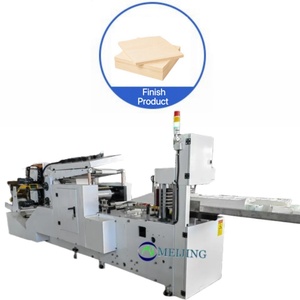
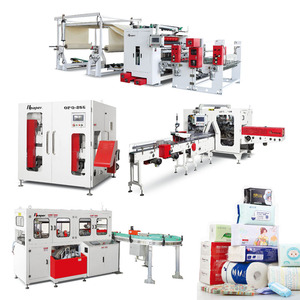
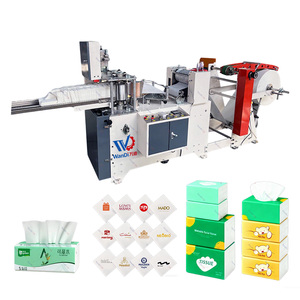
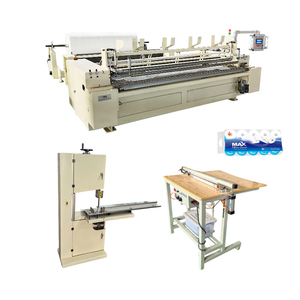
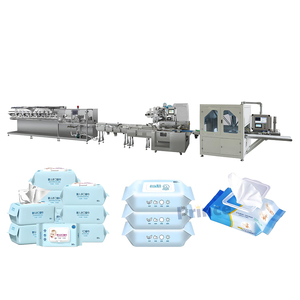
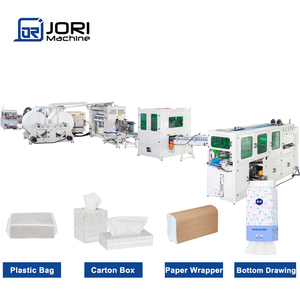
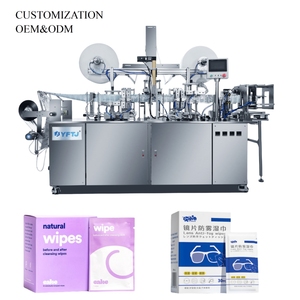
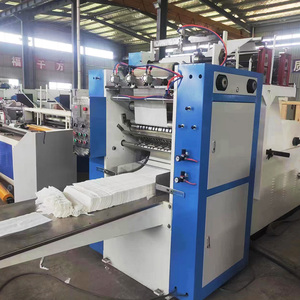
Global Market Dynamics & The Top 10 Soft Tissue Packaging Machine Manufacturers
The global soft tissue converting and packaging machinery landscape is experiencing a fundamental shift driven by automated servo-control technology, eco-friendly substrate processing, and the demand for flexible multi-pack formats. Modern paper converting facilities are transitioning from standalone rewinding or folding units toward fully integrated end-to-end production lines. According to recent industrial machinery benchmarks, plant operators who utilize full-servo synchronizations reduce downtime during changeovers by up to 65% while preserving paper tensile strength across varying GSM weights.
When selecting a manufacturing vendor or equipment supplier for soft tissue packaging machines, engineering teams evaluate technical capability across three primary vectors: mechanical web tension management, log-saw cutting accuracy, and flexible high-speed overwrapping/bagging adaptability. Below is an authoritative technical analysis of the top 10 global manufacturers and suppliers shaping the tissue machinery sector in 2025.
| Manufacturer / Supplier | Primary Specialization | Core Automation Level | Max Line Speed (m/min or pcs/min) | Strategic Value Proposition |
|---|---|---|---|---|
| Arabia Industrial Tissue Equipment LLC | Complete Converting & Packaging Lines (Facial, Toilet, Wipes) | Full-Servo / Siemens PLC | Up to 200–300 pcs/min | In-house machining precision, quick changeover, modular customization, competitive TCO |
| Körber Tissue (Fabio Perini) | Ultra High-Speed Rewinding & Packaging Systems | Proprietary Smart Servo | 800–1000 m/min | Tier-1 global market presence, premium enterprise infrastructure |
| PCMC (Paper Converting Machine Co.) | Tissue Converting, Flexo Printing & Packaging | Full-Servo Control | 600–800 m/min | Heavy-duty build quality, strong North American service network |
| C.G. Bretting Manufacturing | Specialty Napkin, Towel & Folded Tissue Machinery | Integrated Automation | Up to 2500 sheets/min | High-precision embossing and multi-color inline printing integration |
| Futura S.p.A. | High-Speed Toilet & Kitchen Towel Converting | Advanced Process Control | 600–900 m/min | Pioneering log handling safety and automated unwinding systems |
| Maflex Tissue Converting Machinery | Modular Converting & Packaging Lines for Industrial/Domestic | Microprocessor Servo | 350–600 m/min | Highly scalable modular design suited for small to mid-sized mills |
| Kawanoe Zoki Co., Ltd. | Facial Tissue Interfolding & Soft Pack Packaging | Fully Automated | 200–400 m/min | Precision folding mechanics for delicate premium tissue grades |
| Foshan Baosuo Paper Machinery | Tissue Converting & Paper Making Line Support | PLC Synchronized | 200–500 m/min | Cost-effective turnkey infrastructure for broad regional markets |
| Zamboni Packaging Systems | Bundle Wrapping & Overwrapping Packaging Machinery | Servo Drive Packaging | Up to 120 packs/min | High-efficiency secondary roll packaging and poly-wrapping |
| Chan Li Machinery Co. | Facial, Napkin & Diaper Packaging Systems | Standard PLC / Servo | 150–350 m/min | Reliable entry-to-mid level converting machinery configurations |
Information Gain Insight: Evaluating Machine TCO (Total Cost of Ownership)
While maximum linear speed is frequently highlighted in equipment datasheets, industrial operational audits demonstrate that Overall Equipment Effectiveness (OEE) is heavily governed by unscheduled stoppage time, web breaks during parent roll splice transitions, and packaging film seal failures. Leading equipment manufacturers now embed tension-sensing load cells combined with dynamic servo feedback loops to preserve web tension stability even when processing lower-basis-weight (11.5–13.5 gsm) recycled furnish.
Enterprise Capabilities & Engineering Excellence: Arabia Industrial Tissue Equipment LLC
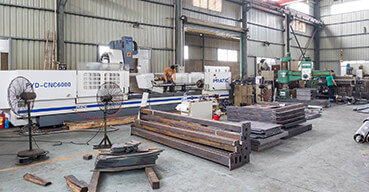
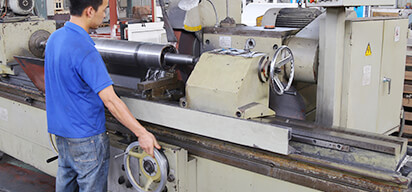
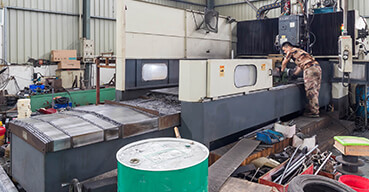
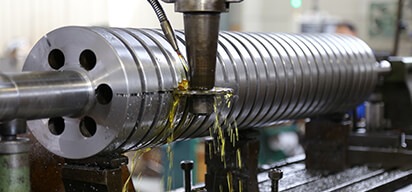
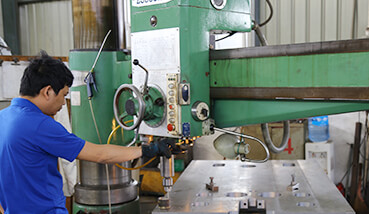
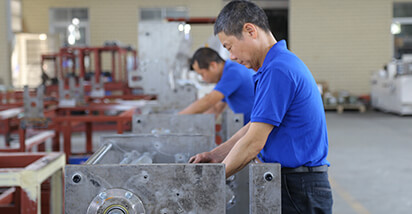
Arabia Industrial Tissue Equipment LLC operates at the forefront of tissue converting and packaging technology. By maintaining an in-house precision processing center, the company bridges the gap between customized mechanical engineering and rapid global delivery cycles. Unlike mere machine assemblers, our engineering teams exercise total quality control over critical components—from CNC-machined steel-to-rubber embossing rollers and precision log-saw grinding mechanisms to custom PLC control programming.
In-House Machining, Assembly & Quality Assurance Protocol
Our manufacturing philosophy centers on eliminating downstream operational friction. Each machine undergoes strict dynamic load testing prior to shipment. Below is a detailed view into our manufacturing workshop and processing center:
Core Enterprise Differentiators
- Matched Output Engineering: Line components (unwind stands, embosser, interfolder/rewinder, log saw, primary soft packer, and bundle wrapper) are speed-calibrated to eliminate bottlenecking.
- Turnkey Process Customization: Capability to handle varied tissue formats—including soft-pack facial tissue, V/N/Z interfolded hand towels, embossed napkins with inline flexographic color printing, single/multi-piece wet wipes, and standard or center-pull toilet rolls.
- Servo-Driven Tension Stability: Closed-loop tension controllers adjust web feeding automatically relative to parent roll diameter decay, mitigating paper tear risk.
- Global Field Service & Training: Comprehensive technical installation guidance, spare parts availability, and remote diagnostic telemetry for minimum operational disruption.
Future Procurement & Machinery Trends in Soft Tissue Packaging (2025–2030)
As tissue converting plants expand capacity to meet growing hygiene demand across consumer and Away-From-Home (AFH) sectors, strategic procurement decisions are governed by technical developments in automation, raw material flexibility, and energy efficiency. Plant directors and procurement managers should structure equipment specifications around four key technological macro-trends:
1. Transition to Full-Servo Architecture & Industry 4.0 Telemetry
Legacy mechanical line shafts with complex chain drives and gears are rapidly being phased out in favor of multi-axis servo drives. Full-servo systems grant independent speed control over individual machine modules—such as perforation rollers, folding fingers, and sealing belts. Furthermore, IoT-enabled PLC architectures allow plant supervisors to monitor continuous operating metrics, predict bearing wear via vibration analysis, and diagnose sensor faults remotely, reducing downtime.
2. Eco-Friendly Poly-Film & Paper-Based Packaging Capability
Global environmental mandates and consumer preference are compelling tissue converters to transition away from traditional non-recyclable PE film packaging. Modern soft tissue packaging machines must process ultra-thin bio-PE, recycled poly films, and fully recyclable kraft/kraft-lined paper wrapping material without burning through thin layers or producing weak seam seals. Equipment equipped with dual-stage digital temperature control manifolds and impulse sealing technology ensures thermal sealing integrity regardless of substrate variation.
3. Multi-Lane Scalability & Rapid Format Changeovers
Fixed-format converting machinery restricts commercial growth. Modern buyers prioritize multi-lane facial tissue machines (e.g., 4-lane, 6-lane, or 8-lane configurations) featuring modular log-cutting units and quick-release folding tools. Servo-driven pack size adjustment allows operators to transition from a 100-count soft pack facial tissue to a 200-count pack via touchscreen recipe selection in minutes rather than hours.
4. Energy Efficiency & Low-Noise High-Vacuum Operations
Vacuum extraction system design significantly influences electrical consumption during V-fold or Z-fold interfolding. Modern facial tissue equipment utilizes variable-frequency turbo blowers instead of traditional constant-speed displacement pumps, trimming power draw by 25% to 40% while lowering ambient shop-floor noise levels to under 78 dB(A).
Strategic Buyer's Guide: 5-Step Equipment Procurement Checklist
To avoid capital misallocation when procuring soft tissue machinery, procurement executives should complete this technical specification matrix prior to requesting formal commercial proposals:
Step 1: Parent Roll Parameter Audit
Document maximum parent roll width (mm), diameter (mm), core inside diameter, and paper basis weight (gsm per ply). Ensure the unwinding stand features pneumatic loading and active motor unwinding for low-gsm paper.
Step 2: Finished Product Geometry Definition
For folded products, explicitly define three parameters: Unfolded Sheet Dimension (L x W), Folded Sheet Dimension, and Fold Type (V-Fold, Z-Fold, C-Fold, 1/4 Fold Napkin). For rolled products, specify roll diameter, sheet count, perforating pitch, and core/coreless parameters.
Step 3: Secondary Packaging Specifications
Decide whether finished packs require individual poly wrapping, carton box packaging, or multi-pack bundlers. Match cutter throughput directly to wrapping machine infeed velocity.
Step 4: Utility & Infrastructure Compatibility
Verify local site electrical voltage/frequency (e.g., 380V 3Phase 50Hz vs 415V/480V 60Hz), compressed air volume (m³/min at 0.6–0.8 MPa), and plant floor space load-bearing specs.
Step 5: Operational Safety & Compliance Standards
Insist on CE certification, emergency safety light curtains around log-saw cutters, and enclosed interlocking doors on high-speed folding modules.
Frequently Asked Questions
Technical and operational answers for tissue converters, plant managers, and equipment buyers.