High-Efficiency Tissue Converting Machinery
Engineered for high OEE, rapid pattern changeovers, and continuous jumbo-roll processing across virgin, recycled, and non-wood pulp substrates.
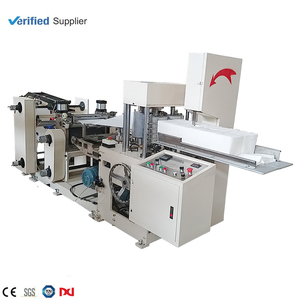
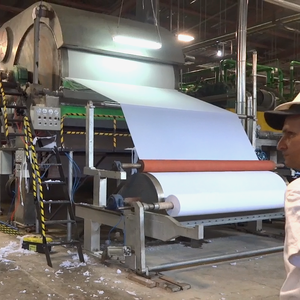
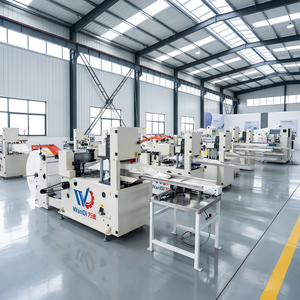
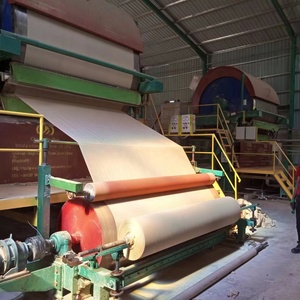
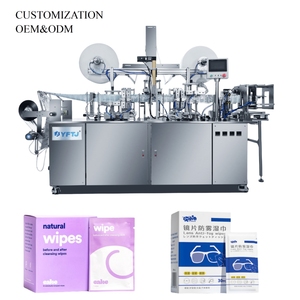
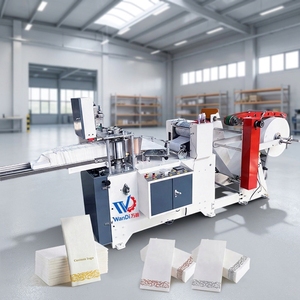
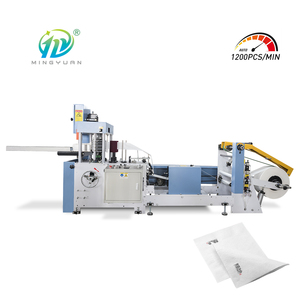
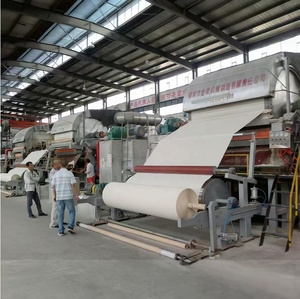
In-House Manufacturing Excellence & Integrated Machine Engineering
In the industrial paper converting sector, machine durability, shaft alignment precision, and web tension control define operational success. As a premier global supplier and exporter, our core advantage lies in full vertical integration: maintaining an advanced in-house machining and processing center where critical structural frames, Yankee dryer rolls, embossing cylinders, and log saw cutter drives are milled to sub-micron tolerances.
Unlike simple assemblers who source components off-the-shelf, our engineering facility implements rigorous metallurgy controls and computerized dynamic balancing. This structural integrity guarantees vibration-free continuous operation even when running lightweight tissue substrates (down to 13 g/m² per ply) at linear speeds exceeding 1,200 meters per minute.
Key Manufacturing Advantages:
Precision CNC Milling Center
Heavy-duty cast iron wallboards bored on multi-axis CNC beds prevent drive shaft deflection and premature bearing wear over decades of operation.
Matched-Speed Automation
Parent roll unwinding, point-to-point embossing, perforation, log saw cutting, and primary film packaging engineered as a single continuous line.
Global Commissioning & Spares
End-to-end global export services including remote PLC telemetry diagnostics, site commissioning, and lifetime fast-track replacement parts supply.
Top 10 Industrial Tissue Machine Suppliers & Exporters
An Industry Whitepaper Benchmarking OEM Technical Capabilities, Converting Economics, and Equipment Reliability for Commercial Sourcing
When capital procurement teams evaluate high-capacity tissue converting equipment, vendor selection must extend far beyond basic machine purchase price. Factors such as Overall Equipment Effectiveness (OEE), scrap percentages during parent roll transfers, thermal efficiency of drying hoods, and modular flexibility for variable sheet formats govern long-term profitability. Below is the technical breakdown of the industry's top 10 machine manufacturing and exporting methodologies.
| Rank / Paradigm | Primary Technical Focus | Optimal Converting Application | Yield & OEE Advantage |
|---|---|---|---|
| 01. Crescent Former High-Speed Lines | Triple-layer hydraulic headboxes, steel Yankee dryers (12-18 ft diameter) | Commercial jumbo rolls, premium facial tissue, high-bulk bath tissue | Maximized fiber dispersion; speeds up to 2,000 m/min with minimal web fatigue. |
| 02. Servo-Driven Automatic Rewinding Systems | Multi-shaft coreless/cored rewinding, pneumatic surface density control | Consumer toilet rolls, Away-From-Home (AFH) maxi center-pull rolls | Constant roll firmness with zero fiber damage; rapid mechanical reset < 15 mins. |
| 03. Point-to-Point Embossing & Lamination Units | Steel-to-rubber/steel micro-embossing with precision pneumatic nip loading | 2-ply to 4-ply kitchen towels, decorative napkins, surgical tissues | Enhances bulk absorption by 40% without increasing raw fiber consumption. |
| 04. Bamboo & Non-Wood Pulp Converting Systems | High-shear slitting, customized fiber-dust extraction hoods | Eco-friendly bio-tissue products, sustainable bamboo facial wipes | Prevents short-fiber clogging in slitter assemblies; maintains high slitting speed. |
| 05. High-Speed Interfolding Facial Tissue Lines | Vacuum-assisted V/N/Z fold interfolding with electronic counting cutoffs | Soft-pack facial tissues, box tissues, pocket handkerchief sheets | Continuous multi-lane operation (up to 16 lanes); eliminates sheet jamming. |
| 06. Color Printing & Folding Napkin Machinery | 1 to 4 color flexographic printing inline with heating/drying tunnels | HORECA custom logo napkins, cocktail tissues, dinner napkins | Quick-drying eco-inks; flawless registration at production rates > 1,000 pcs/min. |
| 07. Automatic Log Saw & Band Saw Cutting Units | Dual-orbit servo cutter head, automatic blade grinding and lubrication | High-throughput toilet roll and towel log processing | Surgical-cut edges with zero burr or crushing; blade life extended by 300%. |
| 08. Automated Single & Bundle Wrapping Systems | Rotary high-speed heat sealing, photo-electric tracking for film centering | Consumer primary film overwrapping, multi-roll bundling | Aesthetic tight wrap protection; compatible with biodegradable poly films. |
| 09. Single-Sachet Wet Wipe Packaging Lines | Peristaltic liquid dosing pumps, four-side hermetic seal pouching | Medical, cosmetic, and disinfectant single-use wet wipes | Dosing accuracy within ±0.1ml; leak-proof seal integrity for extended shelf life. |
| 10. Recycled Waste Paper Deinking & Pulp Lines | Flotation deinking, multi-stage screening, heavy-reject separators | Economy toilet paper rolls, low-cost commercial paper products | Converts low-cost waste stocks into bright, hygienic base paper rolls. |
Technical Deep-Dive: Modular Architecture & Process Control
Modern tissue converting is no longer a collection of isolated standalone machines; it is a synchronized digital process. To achieve sustained profitability, converting plants must evaluate four key engineering subsystems before placing equipment orders:
1. Unwind Stands & Dynamic Tension Compensation
Parent jumbo rolls often exhibit density inconsistencies or moisture gradients from the paper machine. Advanced converting lines feature independent servo motors on each unwind stand, paired with dancer arm sensors that continuously measure web tension. By dynamically modulating unwind torque, these systems eliminate web snapping during acceleration or emergency braking phases.
2. Embossing & Ply Lamination Technology
The embossing unit is the primary driver of perceived tissue softness and absorbency. Leading exporters provide steel-to-rubber or steel-to-steel engraved rolls featuring micro-and-macro embossing patterns. When producing multi-ply kitchen towels, glue lamination units apply precise micro-droplets of water-soluble adhesive only to the raised nodes of the embossed ply, preserving internal air pockets that boost liquid retention capacity.
3. High-Speed Log Cutting Dynamics
The transition from a continuous rewould log (typically 1.5 to 3.5 meters in length) into individual commercial rolls requires extreme cutting precision. Servo-driven orbital log saws utilize circular tungsten-carbide blades that orbit around the log assembly while rotating at high speeds. Integrated automatic sharpening stones ensure continuous blade dressing without stopping the line, maintaining smooth end-cut faces across thousands of logs per shift.
4. Smart PLC Integration & Industry 4.0 Connectivity
Modern tissue production lines are equipped with centralized touchscreen HMI consoles backed by Siemens or Mitsubishi PLC systems. Ethernet-enabled sensors monitor motor temperatures, bearing vibration, ribbon tension, and packaging counts in real-time. Automated fault diagnostic systems quickly pinpoint operational anomalies, allowing maintenance crews to reduce mean time to repair (MTTR).
Future Development & Procurement Trends (2025–2030)
Anticipating Regulatory Shifts, Eco-Pulp Feedstocks, and Energy Efficiency Targets in the Global Tissue Supply Chain
1. Alternative Non-Wood Pulps (Bamboo, Bagasse, Straw)
Driven by strict global deforestation mandates and carbon accounting protocols, tissue converters are rapidly transitioning away from 100% hardwood/softwood virgin pulps. Machine suppliers must now offer specialized slitting blades, dust collection systems, and modified embossing nips capable of handling the shorter fiber lengths and differing tensile profiles of agricultural residue and bamboo pulps.
2. Waterless & Energy-Minimized Manufacturing
Energy costs represent up to 30% of tissue conversion expenses. Next-generation tissue machines incorporate high-efficiency infrared drying hoods, closed-loop vacuum water recovery circuits, and direct-drive servo motors that regenerate braking energy into the facility grid, significantly lowering power usage per ton of finished paper.
3. Plastic-Free & Biodegradable Packaging Inline Integration
Single-use poly film packaging is facing tightening import bans in North America and Western Europe. Future-proof tissue machines now feature dual-capability wrapping modules designed to run both standard polyethylene films and ultra-thin paper wrappers or bio-compostable PLA films without requiring mechanical rebuilds.
4. Predictive Maintenance & AI Quality Vision Systems
Optical AI inspection systems mounted directly after the interfolding or rewinding section detect pinholes, color blemishes, perforation skips, or edge tears at line speed. Substandard units are automatically ejected prior to packaging, ensuring 100% quality compliance for private-label brand suppliers.
Frequently Asked Questions in Capital Sourcing
Direct Answers from Engineering Directors on Selection, Installation, and Yield Management
Which key parameters must be provided to obtain an accurate machine quotation?
To spec a machine line accurately, converters must provide: (1) Parent roll parameters (width, diameter, basis weight in g/m², and ply count); (2) Target finished product dimensions (roll diameter, core diameter, sheet size, folded format); (3) Desired production yield per 8-hour shift; and (4) Local electrical standards (e.g., 380V 50Hz 3Phase vs 480V 60Hz 3Phase).
What is the practical difference between a standard toilet roll machine and a maxi roll line?
Standard consumer toilet roll machines process smaller core diameters (38–45mm) and smaller finished roll diameters (90–140mm) with tight perforations. Maxi roll / AFH (Away-From-Home) lines process larger parent roll widths and handle finished roll diameters up to 300mm, often featuring center-pull plug capability and heavier structural slitting components.
How does non-wood pulp (e.g., 100% bamboo) affect machine wear and knife longevity?
Bamboo and bagasse fibers contain higher silica levels and shorter natural fibers than virgin softwood pulps. This increases abrasive wear on slitter blades and creates fine particulate dust. Machines configured for bamboo pulp incorporate hardened tungsten-carbide knife edges, forced air suction hoods, and dust-sealed electrical cabinets.
Can a single napkin machine produce multiple sizes and fold styles?
Mechanical folding heads are manufactured for specific dimensions (e.g., 230x230mm, 300x300mm, 400x400mm) and fold geometries (1/4 fold, 1/8 fold, or M-fold). While fine adjustments to embossing gap and printing registration are simple, changing fundamental sheet size requires swapping the folding cylinder or investing in a modular interchangeable machine platform.
What lead time is required for custom high-speed converting production lines?
Standard modular units (e.g., standalone log cutters or basic rewinders) typically ship within 30 to 45 days. Fully automated, high-speed turn-key production lines—incorporating multi-color flexographic printing, custom pattern embossing rolls, log saws, and automatic bundling machinery—generally require 60 to 90 days for complete precision machining, assembly, and pre-shipment factory testing.
How do you guarantee machine safety and compliance during global export?
All exported converting lines comply with international safety directives. This includes physical interlocked safety guarding over rotary log saws, emergency stop pull cords along unwind walkways, CE-certified low-voltage control cabinets, and full electromagnetic compatibility (EMC) compliance for variable frequency drives.