Featured OEM/ODM Tissue Production Equipment
Explore our engineered industrial tissue converting equipment, designed for maximum operational efficiency, low downtime, and customizable product formats.
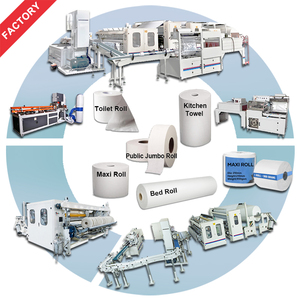
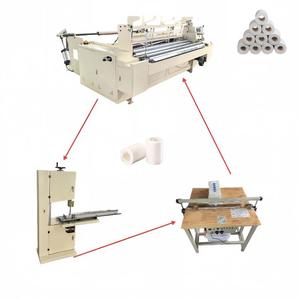
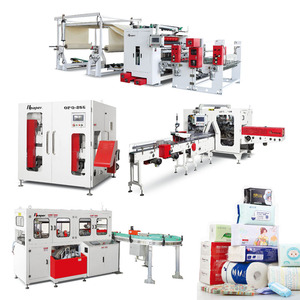
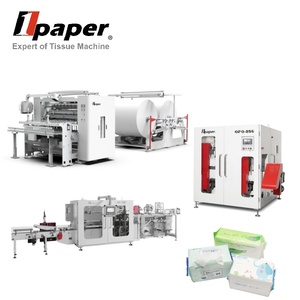
Enterprise Strengths & OEM/ODM Manufacturing Superiority
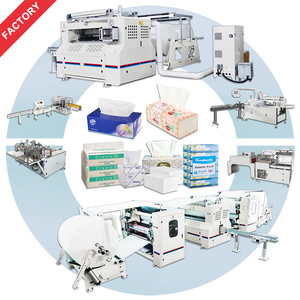
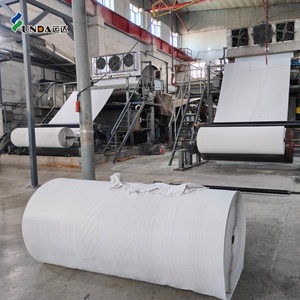
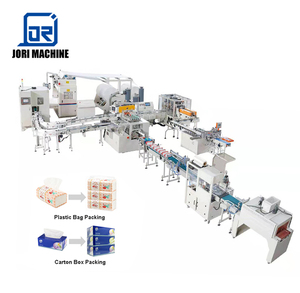
As an established industrial machinery manufacturer, we deliver end-to-end tissue paper converting and pulp processing solutions with complete customization, in-house machining, and field engineering service.
In-House Precision Machining Center
We maintain dedicated CNC milling, lathe turning, and surface grinding infrastructure. Key mechanical components, including embossing cylinders, rewinding shafts, and log saw blades, are manufactured in-house to maintain strict tolerance control and ensure rapid spare parts availability.
Turnkey Mill Engineering & Field Support
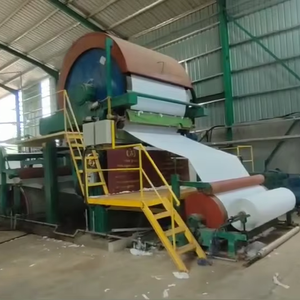
From 30 TPD initial setups to high-volume 100 TPD continuous tissue paper mill projects, our engineering teams provide civil foundation layout planning, electrical integration, overseas installation, operator training, and lifetime technical support.
Advanced Motion Control & Automation
Equipped with industry-leading PLC architectures (Siemens/Mitsubishi) and multi-axis servo motors, our machines deliver seamless web tension control, dynamic length adjustment, and automatic roll transfer with zero speed drop.
Future Procurement Trends in the Industrial Tissue Manufacturing Sector (2025–2030)
The global tissue paper manufacturing landscape is undergoing a structural transition driven by shifting raw material economics, environmental regulation, and rapid expansion in commercial away-from-home (AFH) and retail soft-pack market segments. Procurement officers, paper converting executives, and mill investors must align their capital expenditure (CapEx) strategies with four emerging macroeconomic and technological vectors.
1. Fiber Diversification and Alternative Non-Wood Pulp Processing
Escalating prices for virgin wood pulp (NBHK and SBSK) have accelerated the commercial adoption of non-wood fiber sources, specifically bamboo and sugarcane bagasse pulp. Modern OEM tissue machinery must feature specialized web-tension feedback systems and adapted calendering units to process short, high-hemicellulose bamboo pulp fibers without web tearing or excessive lint generation during high-speed folding operations.
2. Transition to Energy-Efficient and Low-Carbon Machinery
Thermal energy consumed during the drying phase and mechanical energy used in continuous rewinding constitute over 40% of operational expenditure (OpEx). Future procurement mandates favor lines incorporating heat-recovery hoods, high-efficiency vacuum suction rolls, variable frequency drives (VFDs), and intelligent standby power management to reduce specific energy consumption per ton (kWh/t) by up to 18%.
3. Integration of Soft-Pack and Coreless Roll Formats
Consumer preferences in domestic hygiene markets are shifting away from traditional corrugated rigid box packaging toward flexible, high-density polyethylene (HDPE) soft-pack facial tissues and coreless toilet rolls. Coreless toilet paper production eliminates core-winding machinery costs and reduces logistical volume, directly improving shipping margin density for wholesalers and B2B distributors.
Tissue Machinery CapEx & Operational Efficiency Matrix
| Production Line Category | Target Product Range | Typical Daily Output | Web Width Options | Key Automation Features |
|---|---|---|---|---|
| Automatic Bamboo / Virgin Pulp Line | Toilet Rolls, Kitchen Towels | 30 - 100 Tons / Day | 1750 mm - 2850 mm | Servo Rewinding, Auto Core Feeding, Pneumatic Tail Sealing |
| High-Speed V-Fold Facial Line | Soft-Pack, Box Facial Tissues | 150 - 250 Packs / Min | 1200 mm - 2100 mm | Vacuum Interfolding, Auto Count Stacking, Inline Slitting |
| Turnkey Compact Converting Line | Commercial Toilet Rolls, Jumbo Rolls | 10 - 25 Tons / Day | 1350 mm - 1800 mm | PLC Touch Screen, Band Saw Cutting, Manual/Semi-Auto Packing |
| Multi-Function Napkin & Towel Line | Printed Napkins, Hand Towels | 800 - 1200 Sheets / Min | 230 mm - 400 mm | Flexographic 2-Color Printing, Nested Embossing, Auto Folding |
Technological Innovations Driving Next-Generation Tissue Machinery
To maintain high Overall Equipment Effectiveness (OEE) while lowering waste rates below 1.5%, OEM/ODM manufacturers are embedding advanced mechatronics and digital telemetry into every stage of the tissue converting line.
Servo-Driven Sync Mechanism & Dynamic Web Tension Control
Legacy tissue machines relied on complex mechanical gear trains and drive belts, which suffered from mechanical wear, backlash, and phase misalignment over extended operational cycles. Modern high-speed production lines employ independent multi-axis AC servo drives for the unwind stands, embossing rollers, rewinding mandrels, and perforating cylinders. Digital motion controllers dynamically adjust motor torque based on real-time load cell sensor inputs, compensating for variations in parent roll density and basis weight (13 to 22 gsm) with microsecond response times.
3D Steel-to-Rubber and Steel-to-Steel Embossing Innovations
Embossing serves both functional and tactile purposes—enhancing bulk thickness, absorption speed, and sheet hand-feel. Modern OEM lines feature interchangeable laser-engraved steel embossing rollers operating against high-hardness synthetic rubber cylinders or dynamic point-to-point steel rollers. Micro-embossing combined with nested macro-patterning allows converting factories to achieve up to 30% higher perceived volume without increasing raw fiber consumption.
Continuous Automatic Log Sawing & Blade Telemetry
The cutting stage often creates a bottleneck in roll tissue production. Orbiting log saws equipped with servo-driven orbital heads and automatic online blade sharpening systems ensure clean, burr-free cut surfaces on high-density rolls. Integrated optical sensors measure roll diameter variations and blade temperature, automatically adjusting grinding wheel pressure and cycle timing to maximize knife blade longevity and prevent roll scorching.
Custom OEM/ODM Engineering & Quality Management Workflow
To fulfill bespoke client requirements across different geographic markets, our manufacturing plant operates a rigorous five-stage project engineering workflow:
Product & Fiber Analysis
Evaluation of raw material specs (gsm, tensile strength, ply count) and finished product target dimensions (roll diameter, perforation length, fold geometry) to define machine parameters.
3D CAD Layout & Kinematic Simulation
Engineering mechanical layouts, drive train load calculations, and electrical schematics customized to fit the buyer's factory floor footprint and utility connections.
In-House Tooling & Assembly
Machining structural frame plates, dynamic balancing of rewinding rollers, and assembling electrical control panels under ISO9001 quality management protocols.
Frequently Asked Questions (FAQ) for Tissue Machinery Procurement
Detailed answers to technical, operational, and commercial queries commonly submitted by plant managers and procurement executives.
Q: What raw material specifications are required to operate these production lines?
Our production lines are engineered to process parent rolls ranging from 13 gsm to 42 gsm across 1-ply, 2-ply, and 3-ply configurations. Supported fibers include virgin softwood/hardwood kraft pulp, bamboo pulp, sugarcane bagasse pulp, and premium de-inked recycled (DIP) paper. Parent roll unwind stands accommodate roll diameters up to 1500 mm and custom widths from 1200 mm to 2850 mm.
Q: How do you guarantee web tension stability during high-speed rewinding?
Web tension is maintained using closed-loop pneumatic dancer arms paired with high-precision load cells and independent servo-driven unwind stands. The main PLC continuously calculates parent roll inertia as the roll unwinds, automatically adjusting braking torque and drive speeds to prevent web snap or elongation during acceleration and deceleration phases.
Q: Can one production line manufacture both household toilet rolls and kitchen towels?
Yes. Our multi-function rewinding lines can be equipped with dual embossing units (point-to-point and point-to-flat) and integrated glue lamination systems. By adjusting PLC recipe settings, operators can switch between standard toilet roll rewinding and high-density, laminated kitchen towel production within short changeover times.
Q: What is the lead time for custom OEM/ODM tissue manufacturing lines?
Standard machinery configurations require 45 to 60 days for precision machining, assembly, and factory acceptance testing (FAT). Fully customized turnkey mill projects (e.g., 50-100 TPD integrated lines with custom embossing laser engraving and specialized automated packaging) typically have a lead time of 75 to 90 days from design approval.
Q: What factory utilities and infrastructure must be prepared prior to installation?
The client must prepare a level reinforced concrete floor (minimum floor load capacity of 3.5 to 5 tons/m²), stable 3-phase electrical power connection (380V/415V/480V at 50Hz/60Hz depending on region), compressed air supply (0.6 - 0.8 MPa, dry air), and basic industrial water drainage for wet-laminated packaging modules.
Q: How is overseas field installation and operational training executed?
We deploy senior mechanical and electrical engineers directly to your facility to supervise uncrating, foundation anchoring, wiring, line commissioning, and production line optimization. Furthermore, our engineers provide comprehensive on-site training for your staff, covering PLC operation, safety maintenance protocols, and fast product changeover techniques.
Accelerate Your Tissue Converting Business Today
Whether you are expanding existing mill capacity or setting up a new OEM/ODM paper production plant, our engineering team is ready to deliver tailored machine specs, factory CAD layouts, and competitive price quotations.
Send an Inquiry