High-Performance Tissue Converting Machinery
Engineered for industrial precision, high operational efficiency (OEE), and versatile substrate handling ranging from virgin pulp to sustainable bamboo fibers.
Modernizing Paper Converting: The Shift Toward Intelligent OEM/ODM Architecture
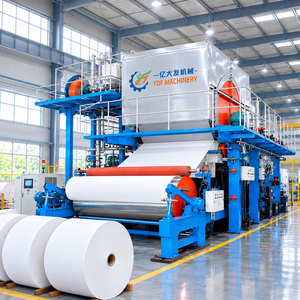
The global tissue paper converting landscape is undergoing an unprecedented technological transition. Driven by shifting consumer hygiene preferences, stringent corporate sustainability mandates, and volatile pulp raw material prices, commercial tissue converters and contract packaging facilities must fundamentally re-evaluate their production machinery choices.
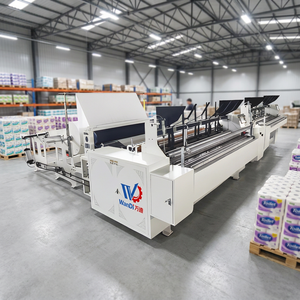
Procuring industrial tissue converting equipment is no longer a simple transactional purchase based on mechanical speed alone. Modern paper converting demands multi-variable optimization: integrating dynamic closed-loop web tension controls, pneumatic unwinding stations, modular embossing units, high-speed rotary log sawing, and automated primary-to-secondary packaging interfaces into a synchronized industrial line.
As a leading OEM/ODM Tissue Converting Machine Factory and Wholesaler, Arabia Industrial Tissue Equipment LLC delivers turnkey machinery engineering engineered around total cost of ownership (TCO) minimization, high Overall Equipment Effectiveness (OEE), and complete customization tailored to regional market specifications across North America, the Middle East, Europe, and Latin America.
Core Mechanical Subsystems in High-Speed Converting Lines
A rigorous examination of the structural and electronic components that dictate roll quality, folding precision, and continuous line availability.
Pneumatic Unwind & Tension Sync
Equipped with independent frequency inverter motors, wall-board heavy-duty stands, and active pneumatic belt unwinding to keep web tension perfectly constant even during high-acceleration master roll startup.
Micro & Point-to-Point Embossing
Precision-ground steel-to-rubber or steel-to-steel rollers featuring CNC-engraved geometric patterns. Delivers maximum tissue bulk, superior sheet softness, and uniform ply adhesion without compromising tensile strength.
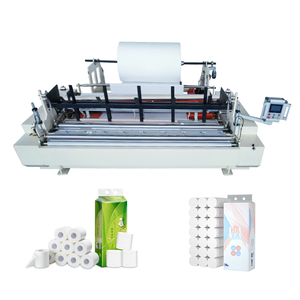
Multi-Lane Interfolding Heads
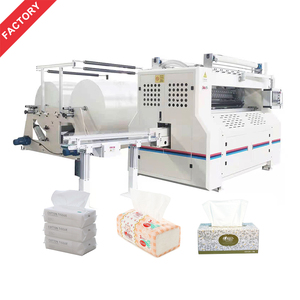
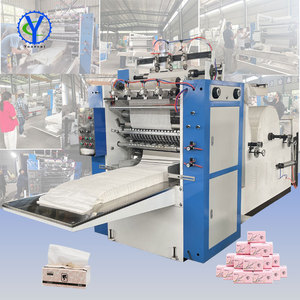
Facial tissue folding systems ranging from 2 to 7+ lanes using vacuum-assisted suction folding plates. Guarantees clean "V", "Z", or "W" fold geometry with zero edge-lock or inter-sheet static cling.
Orbital & Band Saw Log Cutting
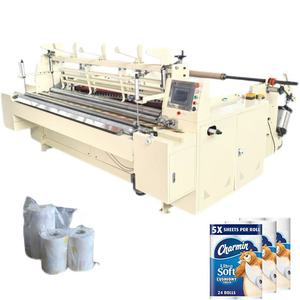
Dual-lane high-speed log saw cutters with automatic servo drive positioning and continuous sharpening systems. Achieves laser-flat cut surfaces on finished toilet paper rolls and kitchen towel logs.
Smart PLC & Motion Control
Integrated Siemens, Mitsubishi, or Delta PLC platforms linked with high-resolution touchscreen HMIs. Features real-time diagnostic alerts, automated line speed matching, and remote telemetry modules.
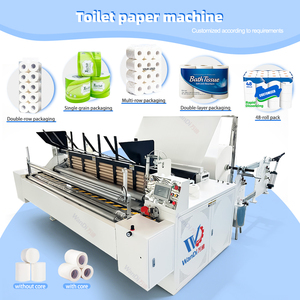
Primary & Secondary Packaging
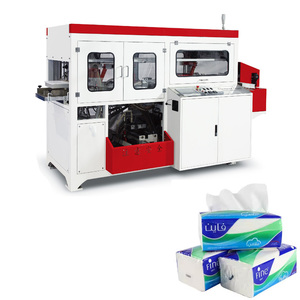
Fully synchronized downstream single-roll wrappers, multi-roll bundling machinery, and soft-pack nylon facial tissue packing lines that prevent line congestion and product deformation.
Future Sourcing & Technological Trends in Tissue Converting
B2B equipment buyers, plant managers, and paper wholesalers must align their capital expenditure (CapEx) strategies with four defining technological macro-trends shaping the next decade of paper manufacturing:
1. Alternative Fibers & Non-Wood Substrates
Environmental legislation and consumer demand are accelerating the shift toward bamboo pulp, bagasse, and mixed agricultural residue pulps. Machines must feature adjustable slitting blade angles, variable draw ratios, and specialized embossing rubber density to prevent tear hazards associated with shorter or stiffer organic fibers.
2. Direct-Drive Servo Motor Elimination of Gear Trains
Traditional chain-and-gear driven rewinding machines are rapidly being replaced by multi-axis direct-drive servo systems. Eliminating mechanical gearboxes cuts routine maintenance downtime by up to 45%, dramatically lowers ambient noise levels, and allows instantaneous changing of sheet counts and perforation pitch lengths directly via the touch-screen interface.
3. Plastic-Free & Sustainable Primary Packaging
Regulatory bans on single-use plastics across Europe and North America are forcing converters to pivot to paper-wrapped toilet rolls and bio-degradable pouch films. Next-generation packing machines incorporate dual-heat sealing bars capable of flawlessly handling paper-based wrap materials without burning or misaligning seals.
4. Edge IoT Telemetry & Predictive Maintenance
Smart sensors deployed on critical bearings, unwinding shafts, and rotary cutters continuous monitor vibration spectrums, thermal signatures, and motor power spikes. Machine telemetry feeds directly into cloud analytics platforms to alert maintenance crews to potential component fatigue long before line stoppage occurs.
Why Enterprise Buyers Partner with Arabia Industrial Tissue Equipment LLC
Combining world-class in-house precision machining with end-to-end turnkey project execution for global tissue converters.
In-House Precision Machining Center
Unlike regional machine trading companies that outsource primary component fabrication to unverified third parties, our modern manufacturing facility features an advanced in-house CNC machining center. Key mechanical assemblies—including heavy-duty wallboards, cutter arbors, embossing cylinder cores, and folding rolls—are milled, ground, and heat-treated in-house.
This vertical integration ensures strict adherence to micron-level tolerances, guarantees absolute batch consistency, and significantly shortens equipment delivery lead times for custom-engineered orders.
- Micron-level CNC accuracy on all structural steel plates and shafts
- Strict dynamic balance testing on all high-speed rotating cylinders
- 100% pre-shipment dry running and live parent roll factory acceptance testing (FAT)
Turnkey OEM/ODM Engineering Customization
Every commercial converting operation possesses unique requirements—ranging from constrained factory floor footprints to specific regional electrical codes and custom finished product dimensions. Our dedicated engineering team works closely with your project managers to design custom-tailored equipment layouts.
- Electrical Adaptability: Full wiring customization for 380V-480V, 50Hz/60Hz, 3-Phase power configurations with UL/CE-certified components.
- Custom Embossing Design: Tailored embossing roller engraving featuring your brand logo, corporate motifs, or unique point-to-point texturing.
- Modular Line Scalability: Expandable machine frameworks allowing easy downstream addition of glue lamination units, color printing modules, or high-speed automated packing equipment as your market demand scales.
Step-by-Step Technical Buyer's Framework: Specifying Your Line
To avoid common procurement pitfalls such as speed mismatch bottlenecks or improper tooling, technical buyers should adhere to the following 4-step sizing methodology established by our field commissioning engineers:
Calculate Saleable Net Shift Output
Do not base plant capacity solely on maximum theoretical machine speeds. Calculate real net shift output by factoring in master roll changeover time, knife sharpening cycles, planned maintenance allowances, and local operator efficiency curves.
Unambiguously Define Finished Specifications
When requesting quotations for folding or rewinding equipment, provide exact parameters: sheet width, unfolded/folded sheet dimensions, ply count, gsm basis weight, roll diameter range, perforation pitch, and required core inner diameter.
Audit Parent Roll Compatibility
Ensure your upstream parent roll supply match the unwinding stand specs: max parent roll diameter (e.g., 1200mm–1500mm), maximum web width (e.g., 1.2m to 2.8m), and core shaft mounting type (pneumatic expanding vs. coreless cone chucks).
Balance Downstream Packaging Lines
Ensure that log cutting machines, single-roll flow wrappers, and master bundlers possess a 15% throughput safety buffer over the upstream rewinder or folding head to prevent backing up logs and causing line stoppage.
Expert Procurement & Engineering FAQ
Clear, direct technical answers to assist procurement officers, plant engineers, and tissue paper business owners.
Ready to Scale Your Tissue Converting Operations?
Consult with our senior machinery application engineers today for custom plant layout design, technical machinery specifications, and competitive direct factory pricing.
Contact Us