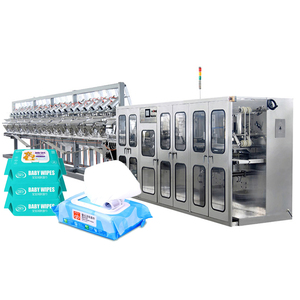


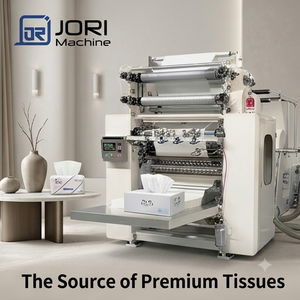
Executive Engineering Report: Modern Facial Tissue Cutting Dynamics & Mechanical OEM Standardization
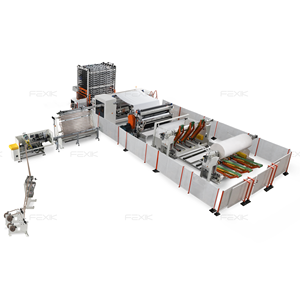
In high-capacity tissue converting plants, the cutting process stands as the critical nexus between web interfolding and automated downstream packaging. As global consumer markets shift toward premium, multi-ply soft-pack tissue and compact box-pack configurations, paper converters demand unprecedented dimensional accuracy, zero-dust edge profiles, and zero-downtime blade maintenance. Modern OEM/ODM facial tissue cutting machines are engineered to resolve historical bottlenecks caused by web drag, heat build-up, and mechanical vibration during log slicing.
Custom engineering in facial tissue processing requires a deep understanding of physical substrate dynamics. Paper basis weights ranging from 11 gsm virgin pulp to 24 gsm recycled fibers behave differently under rapid shear stress. High-speed orbital log saws and multi-lane circular slitting machines must balance peripheral blade velocity, sharpening grind ratios, and servo-clamping pressure. When sourcing from established Chinese machine exporters and original equipment manufacturers (OEMs), international wholesalers secure equipment optimized for precise cross-cutting, long tool life, and seamlessly integrated wrapping lines.
Core Mechanical Architectures in OEM/ODM Facial Tissue Cutters
Our OEM/ODM engineering frameworks are built upon three structural pillars: precise mechanical synchronization, automated thermal management, and dynamic scrap reduction.
Dual-Servo Orbital Log Saw Motion
Utilizes twin independent servo motors to drive blade rotation and orbit path separately. This allows electronic adjustment of cut width and squeeze ratio without stopping the continuous production line.
Pneumatic Micro-Clamp Guidance
Custom-shaped aluminum alloy and polyurethane clamps hold interfolded tissue logs securely. Symmetrical pressure distribution prevents pack distortion and end-sheet tearing.
In-Line Automatic Sharpening & Cooling
Equipped with CBN (Cubic Boron Nitride) grinding wheels controlled by micro-stepping motors. Programmed pneumatic pulse cooling dissipates blade heat, preserving steel temper.
Vacuum Dust & Trim Extraction
Integrated side trim extraction units collect off-cut waste directly at the shear point. High-velocity cyclone ducting removes microscopic paper dust to protect downstream optical sensors.
Safety Interlocks & CE Compliance
Fully enclosed cutting chambers with safety light curtains and electromagnetic door locks. Instantaneous pneumatic blade braking stops 610mm circular saws within 1.2 seconds upon emergency stop trigger.
Modular OEM/ODM Drive Customization
Customizable drive architecture allowing integration with Siemens, Schneider, or Mitsubishi PLC platforms. Tailored frame widths enable seamless retrofitting into third-party interfolders.
Technical Matrix: Facial Tissue Log Saw Cutting Machine Models
Comparing mechanical specifications across standard OEM models allows plant managers to balance line capacity against floor plan footprint and energy targets.
| Machine Model | Lane Capacity | Cutting Speed (Cuts/Min) | Log Diameter / Pack Height | Blade Size (OD × ID) | Total Power (kW) |
|---|---|---|---|---|---|
| FC-LS150 Single Lane | 1 Lane | 60 – 120 cuts/min | 70mm – 120mm | Φ 610mm × Φ 68mm | 7.5 kW |
| FC-LS250 Dual Lane | 2 Lanes | 120 – 220 cuts/min | 80mm – 130mm | Φ 610mm × Φ 68mm | 11.0 kW |
| FC-LS350 High-Speed Quad | 4 Lanes | 200 – 300 cuts/min | 90mm – 150mm | Φ 810mm × Φ 80mm | 18.5 kW |
| FC-SL900 Continuous Slitter | 8-12 Multi-Lane | Up to 1200 m/min web | Flat Interfolded Sheet | Φ 250mm Rotary Shear | 22.0 kW |
Arabia Industrial Tissue Equipment LLC: Enterprise OEM/ODM Supremacy
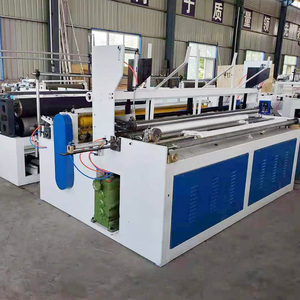
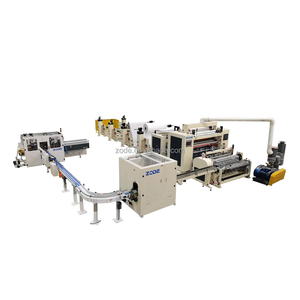
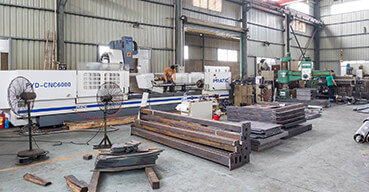
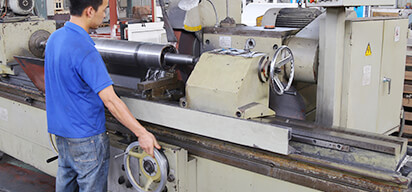
Arabia Industrial Tissue Equipment LLC stands as a pioneer in tissue paper converting machinery, providing high-efficiency solutions spanning toilet paper rewinding lines, napkin machines, facial tissue interfolders, pocket tissue units, and automated log cutters. Our manufacturing footprint features a dedicated in-house CNC precision processing center, ensuring key structural components are machined under strict dimensional tolerances.
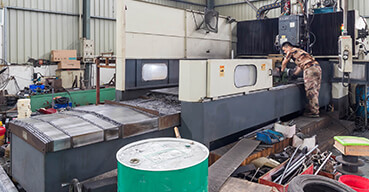
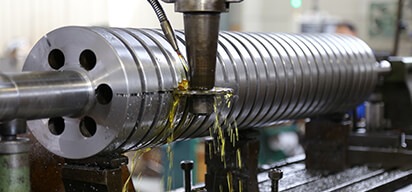
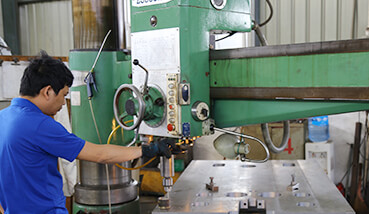
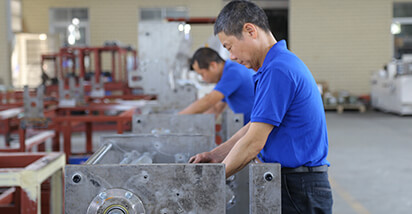
Unlike standard machinery trading firms, our direct engineering approach centers on matching rewinder and log saw speed with downstream film wrapping equipment. By analyzing parent roll grammage, ply count, tensile strength, and target pack dimensions, our technical team eliminates production bottlenecks before equipment leaves the factory floor. Every OEM machine undergoes rigorous 72-hour continuous testing prior to shipment, accompanied by full video validation and performance certifications.
Strategic Sourcing Trends: The Future of Facial Tissue Cutting (2025–2030)
As the tissue converting industry aligns with global sustainability directives and Industry 4.0 automation, international paper wholesalers and B2B buyers are re-evaluating their procurement metrics. Purchasing decisions are no longer guided solely by capital cost; Total Cost of Ownership (TCO), energy efficiency per ton of processed paper, and digital integration capabilities are now paramount.
1. AI-Powered Wear Diagnostics
Integration of acoustic vibration sensors near the blade arbor to detect micro-flaws and edge dulling before cut quality degrades, enabling predictive blade sharpening cycles.
2. Zero-Plastics Band Saw Conversion
Adaptation of orbital log saw clamp mechanisms to accommodate eco-friendly, plastic-free paper wrappings without causing friction tears or edge scuffing.
3. Ultra-Low Power Kinetic Servo Drives
Regenerative braking drives that capture kinetic energy during blade decelerations, redirecting power to the log feed mechanism to reduce overall line power consumption by up to 18%.
Technical Sourcing FAQ: Expert Insights for Buyers & Machinery Wholesalers
Below are technical answers to common engineering questions asked by procurement officers, factory owners, and tissue converting engineers when purchasing facial tissue cutting machinery.
Q: How does blade metallurgy (HSS vs. 9CrSi vs. Tungsten Carbide) impact facial tissue edge quality?
A: Standard 9CrSi alloy steel blades provide an economical solution for soft, low-grammage virgin tissue but require sharpening every 1,000–1,500 cuts. High-Speed Steel (HSS) offers superior thermal stability during continuous high-speed runs, extending grind intervals. Premium Tungsten Carbide blades deliver exceptional edge retention for recycled tissue containing abrasive fillers, maintaining clean cut edges for up to 5,000 cuts between sharpener engagements, thus significantly reducing blade consumption and paper dust generation.
Q: What is the primary cause of pack deformation ("squeeze damage") during log saw cutting?
A: Pack deformation usually stems from an imbalance between clamp pneumatic pressure, blade bevel angle, and feed timing. If the log clamps exert excessive vertical pressure, interfolded layers distort before the blade enters. Conversely, insufficient pressure allows the log to shift during knife penetration. OEM custom-fitted clamp channels match the specific trim dimensions of the interfolded bundle, ensuring equal force distribution.
Q: Can a single facial tissue cutting machine handle both soft-pack and box-pack tissue formats?
A: Yes. Modern automatic facial tissue log saws utilize programmable PLC recipes that allow operators to switch cut lengths (e.g., from 100mm pocket sizes to 200mm standard box sizes) via touchscreen control within minutes. Adjusting the cutoff length changes the servo feed distance per stroke, eliminating the need for mechanical gear swaps.
Q: How do OEM and ODM customization services differ when ordering tissue machines from China exporters?
A: OEM (Original Equipment Manufacturing) services focus on building machinery according to your brand labeling, aesthetic preferences, electrical standards (e.g., 380V 50Hz, 415V 60Hz, or 220V 3-Phase), and pre-defined component suppliers. ODM (Original Design Manufacturing) involves custom engineering machine dimensions, lane counts, clamp geometry, and transfer conveyor height from scratch to integrate cleanly into an existing plant layout.
Q: What maintenance protocols ensure optimum OEE (Overall Equipment Effectiveness) on high-speed cutters?
A: Key protocols include daily cleaning of optical eye sensors and vacuum suction ports, weekly checking of CBN sharpening stone wear profiles, monthly tension calibration of timing belts, and routine greasing of linear guide rails. Ensuring steady air pressure (minimum 0.6 MPa) prevents pneumatic clamp slippage and edge tearing.
Optimize Your Tissue Converting Line Efficiency Today
Consult with our lead engineering team to specify custom OEM/ODM facial tissue cutters, log saws, or continuous slitting machinery tailored to your factory layout and target yield.
Get a Quote