Industrial Tissue & Napkin Production Equipment
Explore our high-speed automated folding, embossing, rewinding, and wet wipe converting lines built to custom OEM engineering specifications.
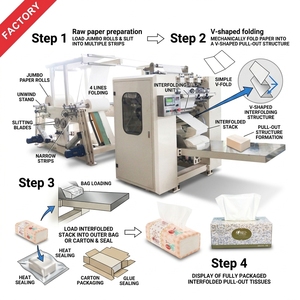
Facial Tissue Machine Tissue and Toilet Paper Machine Facial Tissue Paper Making Machine
Dual-function high-speed tissue converting unit engineered for multi-ply facial tissue interfolding and toilet paper rewinding with PLC tension control.
View Machine Details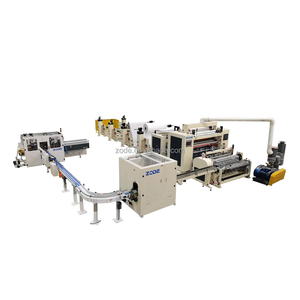
Factory Production Line Automatic Facial Tissue Paper Towel Making Machine
Full-scale factory line designed for heavy-duty commercial tissue towel manufacturing, featuring automated slitting and synchronized embossing.
View Machine Details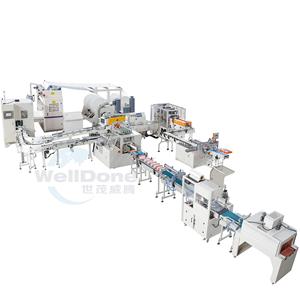
Welldone High Capacity Folding Machine PLC Controlled Facial Tissue Hand Towel Line
Advanced PLC-driven interfolding platform delivering rapid throughput for premium hand towels and soft-pack facial tissues with automatic counting.
View Machine Details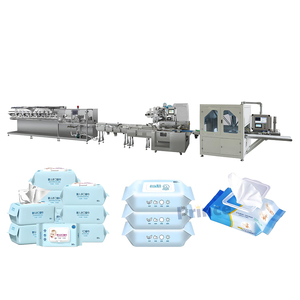
Full Automatic Wet Tissue Wipes Machine for Single & Multi-piece Wet Wipe Production
Hygienic stainless-steel liquid dosing and cross-folding machine designed for antiseptic, baby, and personal care wet wipes packing.
View Machine Details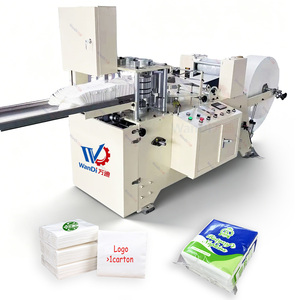
Small Size Tissue Paper Making Machine Full Automatic Napkin Tissue Paper Making Machine
Compact, high-efficiency napkin folding unit tailored for restaurant, catering, and hotel tabletop paper napkin customization.
View Machine Details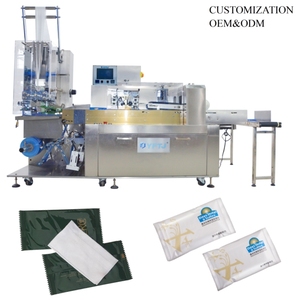
YFTJ Single Wet Wipes Making Machine Wet Tissue Paper Converting Plant
Precision single-sachet wet wipe forming and liquid sealing system optimized for high-speed airline, hotel, and restaurant orders.
View Machine Details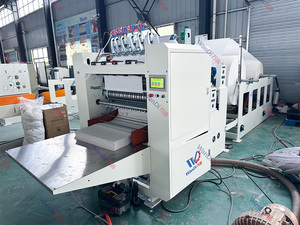
Fully Automatic Pocket Tissue Handkerchief Napkin Making Machine Manufacturing Plant
High-speed mini handkerchief napkin folding and outer film wrapping line designed for portable consumer tissue packs.
View Machine Details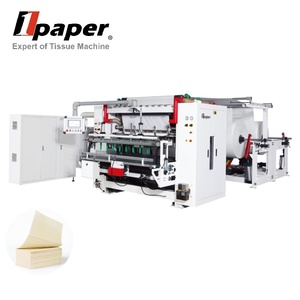
Smart Automatic Tissue Folding Machine Touch Screen Interface PLC Motor Core 150 Pcs/Min
Next-gen smart folder featuring touch-screen HMI, servo motor integration, dynamic web alignment, and rapid format changeover tooling.
View Machine DetailsExecutive Industry Report: Strategic OEM Engineering in Napkin Machine Manufacturing
The global tissue paper converting sector is undergoing a profound technological transformation driven by shifting consumer hygiene demands, commercial hospitality requirements, and stringent environmental policies. As custom OEM napkin machine manufacturers, engineering excellence is no longer measured solely by raw mechanical speed; it is defined by mechanical stability, energy efficiency, tension control precision, and modular adaptability. Modern tissue converting factories require equipment capable of seamlessly processing diverse paper grades—ranging from 13 GSM virgin wood pulp to 30 GSM recycled and bamboo fiber blends—without sacrificing folding geometry or causing web breakage.
In high-speed paper napkin manufacturing, mechanical synchronization between unwinding parent rolls, flexographic printing stations, embossing rolls, continuous folding heads, and pneumatic rotary cutters determines overall Equipment Effectiveness (OEE). Custom OEM manufacturing allows brand owners and commercial tissue converters to specify exact parameters tailored to their regional market requirements. Whether configured for 1/4 fold, 1/8 fold, N-fold, Z-fold, or specialized cocktail napkin dimensions, tailored engineering eliminates post-installation bottlenecks and optimizes yield per parent roll.
Information Gain Insight: Advanced servo-driven tension management reduces raw material paper scrap by up to 3.8% compared to traditional mechanical gear-linked napkin folders, directly translating to annual raw material savings exceeding tens of thousands of dollars per line.
Engineering Core Competencies & Enterprise Manufacturing Strengths
Our industrial production campus integrates state-of-the-art multi-axis CNC machining centers, dynamic balancing rigs, and dedicated electrical assembly bays. By manufacturing core mechanical components in-house—including hardened steel embossing cylinders, vacuum folding drums, and high-tensile cutter arbors—we maintain absolute quality control over physical tolerances and material hardness specifications.
In-House Precision Machining
Key mechanical components are processed using Japanese and European multi-axis CNC equipment, guaranteeing micron-level precision and eliminating thermal deformation during continuous high-speed runs.
Siemens PLC & Servo Integration
Fully integrated electronic shafting powered by Siemens PLC control architecture provides real-time web tension adjustment, touch-screen HMI recipe management, and remote diagnostic capabilities.
Steel-to-Rubber & Steel-to-Steel Embossing
Custom-engraved laser engraving rollers offer high-definition 3D embossing options, ranging from border floral patterns to full-surface micro-embossing that enhances sheet loft and tactile softness.
Modular Flexibility & Quick Changeover
Tool-less folding lane adjustments and modular slitting assemblies reduce format changeover times from hours to minutes, maximizing operational versatility for multi-SKU tissue converters.
Rigid ISO Quality Assurance
Every custom napkin production line undergoes a continuous 72-hour load run and strict dynamic balancing verification prior to factory dispatch, ensuring zero-defect installation onsite.
Turnkey Global Service Network
From factory layout engineering and foundation planning to onsite installation, operator training, and lifetime spare parts replacement, our global engineering team ensures continuous uptime.
Future Technological Development Trends in Tissue Converting Machinery
As tissue converting manufacturers position themselves for the next decade of market growth, several critical technological trends are shaping equipment procurement strategies across global manufacturing hubs:
1. Direct-Drive Servo Motion Technology replacing Mechanical Transmission: Traditional napkin machinery relied on complex gearboxes, timing belts, and mechanical cams to coordinate unwinding, folding, and cutting. Next-generation OEM napkin machinery utilizes independent multi-axis servo drives for each functional module. This electronic shafting eliminates mechanical backlashes, drastically reduces vibration at speeds exceeding 2,000 pieces per minute, and enables dynamic web tension adjustments through real-time feedback sensors.
2. High-Speed Inline Flexographic Printing & Fast-Drying UV/IR Systems: Commercial restaurant chains and luxury hospitality brands increasingly demand branded, multi-color printed paper napkins. Modern napkin manufacturing lines integrate 1-to-4 color flexographic printing stations directly prior to embossing and folding. Incorporating ceramic anilox rollers and automated doctor blade systems ensures crisp ink transfer, while inline hot-air or infrared drying units prevent ink bleeding across high-speed paper webs.
3. Eco-Friendly & Sustainable Fiber Adaptation: Global regulations limiting single-use plastics and promoting sustainable forestry have led to an surge in non-wood pulp paper consumption, such as unbleached bamboo, bagasse, and recycled fiber stock. These fibers exhibit distinct tensile strengths, elasticity indices, and dust generation levels compared to virgin softwood pulp. Advanced OEM napkin machines are now engineered with dust-extraction hoods, anti-static bar ionization, and dynamic web tension feedback systems specifically calibrated for fragile or non-traditional eco-fibers.
4. Industry 4.0 Connectivity & Predictive Machine Health Monitoring: Smart manufacturing features are transition from luxury add-ons to essential procurement standards. Cloud-connected PLC units continuously monitor motor thermal levels, bearing vibration spectra, pneumatic system pressures, and operational cycle times. Machine vision systems positioned post-folding automatically detect edge misalignment, print register drift, or embossing defects, automatically diverting non-conforming product packs without interrupting full-speed production lines.
Technical Buyer Procurement Checklist: Key Metrics for Evaluating OEM Napkin Machinery
When selecting a custom OEM napkin machine manufacturer, technical procurement teams and plant managers must evaluate equipment performance beyond surface-level mechanical speed figures. To achieve predictable ROI and operational efficiency, assess the following engineering parameters during the evaluation phase:
Web Width and Mechanical Format Flexibility: Ensure the machine frame and unwinding stands accommodate standard parent roll diameters (up to 1200mm–1500mm) and varying web widths (e.g., 230mm, 300mm, 330mm, 400mm). Check if the folding head can be adapted for multiple napkin product formats (such as 1/4 fold, 1/8 fold, or dispenser fold) via quick-change folding boards or modular cassettes.
Parent Roll Unwind Stand & Tension Control Architecture: High-speed converting requires continuous, uniform web tension from full roll diameter down to the core. Evaluate whether the unwind stand features pneumatic flat-belt feeding, automatic web edge alignment (EPC/LPC sensors), and dynamic braking systems to prevent paper slack or tearing during sudden speed acceleration/deceleration.
Embossing Cylinder Construction & Surface Hardening: Inspect the structural integrity of the embossing section. Steel-to-rubber or steel-to-wool paper rolls must feature precise gap adjustments and pneumatic pressure loading. High-grade OEM builders employ laser-engraved, hard-chrome plated steel rollers that resist surface wear and maintain crisp emboss depth across millions of operational cycles.
Automatic Counting and Stacking Mechanism: Downstream packaging efficiency relies heavily on accurate, jam-free stack discharge. Look for pneumatic or electronic servo-driven counting fingers that separate finished napkin stacks into pre-set sheet counts (e.g., 50, 100, 250 sheets) with zero sheet damage before pushing them onto the transfer conveyor leading to automatic wrapping machinery.