Industrial Napkin & Tissue Converting Machinery
Explore our flagship product line engineered with dynamic tension controls, laser-engraved embossing rollers, and integrated automation systems for high-yielding manufacturing operations.
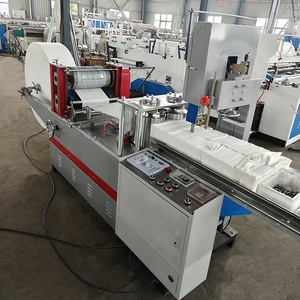
Color Printing Napkin Paper Making Machine
Integrated flexographic color printing with precision steel-to-rubber embossing and folding units for commercial napkins.
View Product Details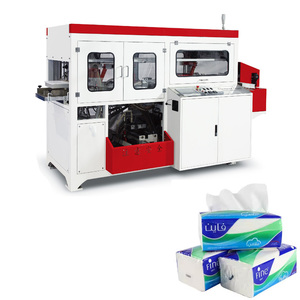
Full Automatic Tissue Paper Packing Machine
High-speed primary and secondary wrapping system for folded napkin bundles, facial tissues, and soft-pack products.
View Product Details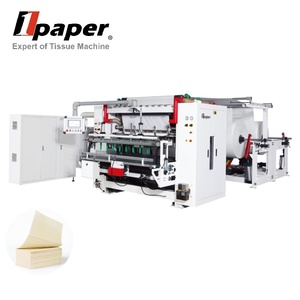
Smart Automatic Tissue Folding Machine (150 Pcs/Min)
Touchscreen HMI interface powered by advanced PLC drive systems for continuous, defect-free folding precision.
View Product Details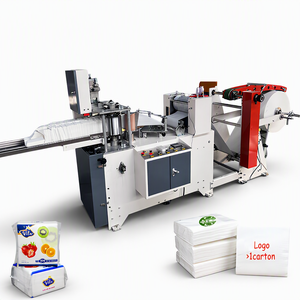
Automatic Napkin Tissue Making Machine for Small Business
Cost-efficient, low-footprint napkin manufacturing machine ideal for expanding regional producers and entry-level converters.
View Product Details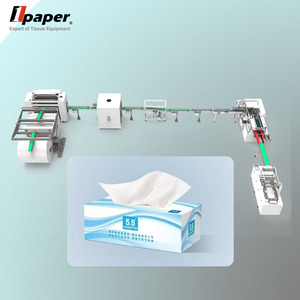
Smart Industrial Facial Tissue & Napkin Log Saw Cutter
Heavy-duty motorized log saw cutter equipped with pneumatic grinding wheels and precise electronic length positioning.
View Product Details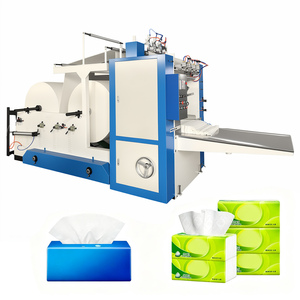
Facial Tissue Folding and Embossing Production Line
Complete multi-lane interfolding and custom embossing line with automatic counting and web guiding technology.
View Product Details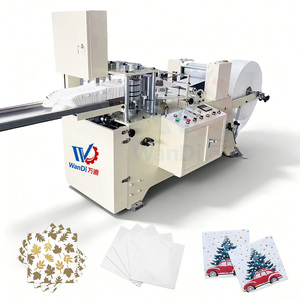
Industrial Toilet Paper & Napkins Converting Line
Dual-purpose tissue converting production line capable of switching between roll unwinding and flat napkin folding.
View Product Details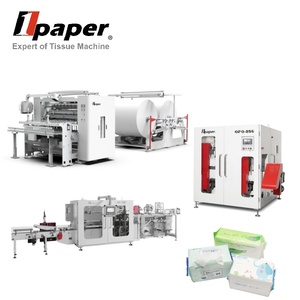
Complete Soft Pack Tissue Production Line (150 Pcs/Min)
Fully integrated tissue production system managing unwinding, point-to-point embossing, slitting, and flow wrapping.
View Product DetailsWhy Leading Tissue Converters Partner with Arabia Industrial Tissue Equipment LLC
Combining precision CNC machining capabilities, customized mechanical engineering, and comprehensive lifecycle technical support to maximize your operational efficiency and product profitability.
In-House CNC Processing Center
We manufacture key components—including embossing steel rollers, folding jaws, and knife shafts—in our dedicated machining workshop, maintaining tolerance thresholds within ±0.01mm.
Custom Tooling & Pattern Etching
From micro-embossing textures for softness enhancement to full 3D custom brand logos, our laser etching center delivers bespoke pattern cylinders tailored precisely to your brand assets.
Dynamic Tension Control Systems
Advanced magnetic powder brakes and closed-loop web tension sensors automatically adjust feed rate relative to parent roll diameter changes, preventing web snaps and paper dust accumulation.
Engineering Whitepaper: Technical Architecture of Modern Napkin Embossing Machines
In high-volume commercial paper converting, the mechanical embossing unit serves a dual imperative: establishing structural rigidity, bulk, and softness in raw tissue sheets while imparting high-definition visual appeal for consumer branding. A custom OEM napkin embossing machine must reconcile complex physical dynamics, including paper basis weight variability (ranging from 13 gsm up to 28 gsm per ply), web moisture fluctuations, and high-speed dynamic roll deflection.
1. Embossing Mechanism Configurations: Technical Comparison
Selecting the optimal embossing cylinder configuration depends heavily on the target finished product—whether cocktail napkins, dinner napkins, folded dispenser towels, or away-from-home (AFH) tissue products.
| Embossing Type | Cylinder Matrix | Primary Application | Mechanical Advantage | Tensile Loss Impact |
|---|---|---|---|---|
| Steel-to-Rubber | Laser-etched hardened steel cylinder vs. Shore A 75-85 rubber roller | Standard 1-ply & 2-ply dinner napkins, border-embossed tissues | High pattern clarity, lower tooling cost, fast replacement cycles | Low to Moderate (10-15%) |
| Steel-to-Steel | Matched male/female engraved steel rollers with synchronized gearing | High-end 2-ply & 3-ply decorative napkins, custom logo printing lines | Exceptional bulk creation, crisp micro-patterns, zero rubber deformation | Moderate (15-20%) |
| Steel-to-Paper/Wool | Engraved steel cylinder against compressed wool/paper sleeve | Deep-embossed luxury napkins, hotel banquet napkins | Extremely soft tactile hand-feel with heavy 3D relief effects | Low (8-12%) |
| Nested (Point-to-Point) | Dual engraved rollers gluing opposing ply points together | Kitchen towels, premium soft facial tissues, thick absorbent napkins | Maximum absorbency and air pocket retention, premium ply bonding | Low (5-10%) |
2. Servo-Driven Synchronous Controls & Web Mechanics
Legacy napkin making machines relied heavily on mechanical chain drives and universal joint shafts, which suffered from mechanical backlash, thermal expansion drift, and tedious pattern changeovers. Modern OEM napkin machine manufacturing utilizes multi-axis Siemens or Mitsubishi PLC systems equipped with independent servo drive motors for every module:
- Parent Roll Unwind Stand: Equipped with active surface drive belts or magnetic powder braking systems to maintain constant line speed despite changing roll inertia.
- Flexographic Color Printing Station: Synchronized ceramic anilox rollers paired with enclosed chamber doctor blades ensuring precise ink metering even during rapid speed acceleration.
- Embossing Nip Drive: Independent high-torque servo motors allowing digital phase adjustment for micro-registration between printing and embossing steps within ±0.1 mm.
- Vacuum Interfolding Assembly: High-vacuum suction cylinders combined with rotary folding jaws, engineered to produce precise 1/4 fold, 1/8 fold, or custom book-fold geometries at speeds exceeding 800 sheets per minute.
Future Procurement Trends in the Napkin Converting Industry (2025–2035)
Global procurement teams and tissue mill directors are shifting their sourcing criteria from initial machine purchase price toward Total Cost of Ownership (TCO), operational flexibility, and energy efficiency. Several macro trends are dictating machine specifications:
1. Transition to Eco-Friendly Straw & Recycled Fiber Pulps
As raw virgin wood pulp prices fluctuate and sustainability directives take effect globally, tissue converters are increasingly using bamboo, bagasse (sugar cane residue), and 100% post-consumer recycled pulp. These alternative fibers possess shorter fiber lengths and lower intrinsic tensile strength. Future napkin embossing machinery must feature ultra-sensitive pneumatic tension damping and heated steel embossing rollers (thermo-embossing) to bind short fibers without tearing the web.
2. Thermo-Embossing and Heat Assisted Rollers
Integrating internal electric heating elements or circulating thermal oil systems inside the steel embossing cylinder elevates surface temperatures to 60°C–90°C. Controlled thermal heat relaxes hydrogen bonds in the cellulose fibers during mechanical compression, permanently setting the embossed relief without weakening cross-directional strength or requiring excessive mechanical pressure.
3. Smart Predictive Maintenance & Industry 4.0 Connectivity
Procurement specifications now frequently mandate IoT-enabled PLC architectures. Real-time monitoring of roller bearing temperatures, vibration signatures on high-speed cutter shafts, and automatic pneumatic pressure adjustment prevent catastrophic failure and reduce planned downtime. Remote diagnostic gateways allow Arabia Industrial Equipment engineers to assist factory technicians overseas via encrypted VPN connections.
Custom OEM Manufacturing & Quality Protocols
From raw steel selection to final high-speed trial runs, explore our standardized engineering workflow engineered to supply worldwide converting factories.
1. Metallurgy & Dynamic Balancing
Cylinders are forged from premium 45# carbon steel or alloyed 20CrMnTi, heat-treated, stress-relieved, and dynamically balanced at 120% rated operational speed to eliminate high-frequency chatter marks.
2. Precise Laser Engraving
Using direct fiber laser etching technology, we craft deep micro-grooves and continuous geometric borders with uniform wall angles, ensuring effortless web release without paper picking.
3. Factory Trial & Sample Verification
Before dispatch, every line undergoes a continuous 72-hour operational trial using the buyer's specified parent roll GSM, ink formulations, and packaging films to guarantee turn-key startup.
Procurement & Technical Buyer FAQ
Detailed technical answers addressing machine selection, customization capabilities, utility requirements, and operational maintenance.
Ready to Upgrade Your Tissue Converting Capacity?
Contact our senior engineering consultants today for a comprehensive machine layout design, customized embossing pattern CAD mockups, and competitive direct factory pricing.