Featured Tissue & Napkin Production Equipment
Industrial-grade machinery engineered for maximum OEE, precision cutting, and high-speed folding
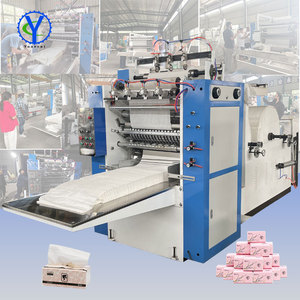
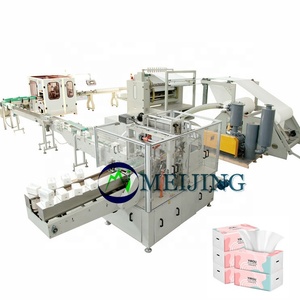
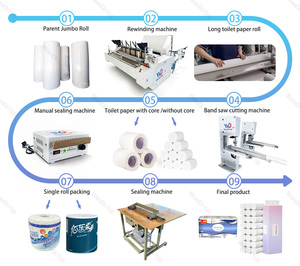
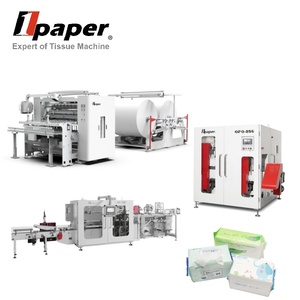
Whitepaper: Engineering Architectural Precision in Industrial Napkin Manufacturing Machinery
In the modern tissue converting landscape, purchasing enterprise-grade napkin folding and tissue converting machinery requires navigating a complex matrix of mechanical speed, tension stability, knife-cylinder clearances, and flexographic printing registration. As a leading premier China wholesale napkin production machine supplier and wholesaler, Arabia Industrial Tissue Equipment LLC delivers factory-engineered systems engineered to convert jumbo parent rolls into consumer-ready, flawlessly folded, and embossed napkin products. Whether deploying 1/4-fold cocktail napkin lines, 1/8-fold dinner napkin configurations, dispenser interfolded lines, or customized multi-color printed tissue platforms, industrial buyers must evaluate machinery through the lens of Total Cost of Ownership (TCO), Operational Equipment Effectiveness (OEE), and long-term mechanical reliability.
The global demand for commercial tissue and paper napkins across HoReCa (Hotel, Restaurant, Catering) and household sectors has shifted manufacturing parameters. Profitability in converting operations no longer depends solely on raw machine RPMs. Modern success hinges on minimizing paper break downtime, eliminating ink bleed on high-speed flexo units, optimizing steel-to-rubber or steel-to-steel embossing cylinder geometry, and matching upstream slitting/folding speed with automated downstream flow-wrapping machinery. This technical whitepaper analyzes key technological benchmarks, procurement trends, enterprise manufacturing standards, and operational best practices for tissue processing plants globally.
Key Takeaway: The Shift from Speed to Synchronized Line Efficiency
A high-speed napkin folder running at 1,000 sheets per minute yields negative margins if downstream band-saw log cutters or bundle wrappers jam frequently. Top-tier converting operations prioritize integrated line balance, automated web-tension feedback via pneumatic dancers, and quick-change sleeve technology for flexographic printing cylinders over isolated mechanical speed specs.
Enterprise Strengths & Core Technological Advantages
Arabia Industrial Tissue Equipment LLC operates as an end-to-end original equipment manufacturer (OEM), combining heavy mechanical engineering with intelligent automation. Unlike equipment traders, our dedicated in-house processing centers control every stage of manufacturing—from raw frame stress-relieving and dynamic balancing of folding rollers to multi-axis CNC machining of precision gears.
In-House Precision CNC Processing
Critical mechanical components—including knife cylinders, embossing rollers, and vacuum distribution plates—are processed in-house to maintain micron-level tolerances and prevent operational vibration.
Matched Line Speed Engineering
We engineer synchronized production systems where parent roll unwinding, embossing, flexographic printing, folding, and final nylon wrapping operate in complete mechanical harmony.
Factory Acceptance Testing (FAT)
Every custom napkin production line undergoes rigorous full-load FAT running actual customer-specified paper stock (13 to 28 GSM) prior to international export and shipment.
By leveraging high-grade cast-iron machine side-plates (minimum 25mm to 40mm thickness depending on line model), our napkin paper making machines effectively absorb mechanical resonance during high-speed continuous folding operations. This structural rigidity prevents premature bearing wear, maintains exact color-to-color flexo registration tolerances (+/- 0.5mm), and guarantees razor-sharp napkin edge slitting even during 24/7 industrial production shifts.
Industrial Napkin & Tissue Machine Technical Specifications
To assist plant directors and procurement managers in specifying optimal machine parameters, the following data matrix outlines standard operational specs across our flagship converting machinery range:
| Machine Category / Model | Finished Product Type | Parent Roll Width (mm) | Converting Speed | Embossing & Printing Options | Control Architecture |
|---|---|---|---|---|---|
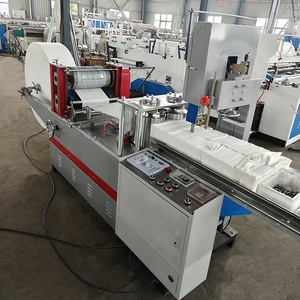
| Color Printing Napkin Machine | 1/4, 1/6, or 1/8 Fold Napkins | 180mm – 400mm | 600 – 1,000 sheets/min | Steel-to-Rubber / 1 to 4 Colors Flexo | Siemens PLC + Touch HMI |
| Multi-Size Tissue Machine | Luncheon, Dinner, Cocktail | 200mm – 500mm | 500 – 800 sheets/min | Point-to-Point / Nested Emboss | Multi-Axis Servo Motor Control |
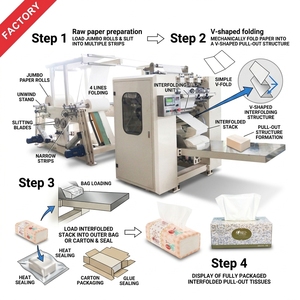
| Soft Pack Facial Tissue Line | Interfolded Soft Pack Tissues | 1200mm – 2800mm | 150 – 200 packs/min | Steel-to-Steel Micro Embossing | Fully Automated Synchronized Line |
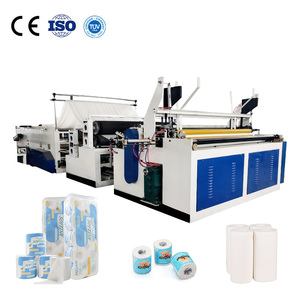
| Automatic Toilet Rewinding Line | Bathroom Rolls & Kitchen Towels | 1750mm – 2800mm | 180 – 250 meters/min | Pneumatic Decofter / Tail Sealer | Inverter + Pneumatic Web Tension |
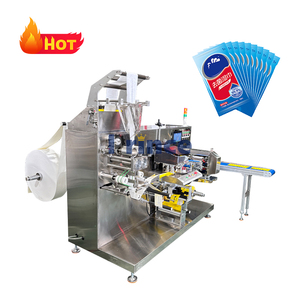
| Wet Wipe Packaging Machine | Single Piece Sachets / Wet Wipes | Custom Web Width | 120 – 260 packs/min | Liquid Dosing + Heat Seal | Photocell Eye + Servo Drive |
Need a Customized Machinery Layout & ROI Calculation?
Consult with our lead tissue process engineers. We evaluate your target GSM, plant floor footprint, electrical standards, and output expectations to deliver a detailed proposal within 24 hours.
Send an InquiryProduct & Industry Development Trends (2026–2030)
The global tissue paper machinery landscape is undergoing a structural transition driven by eco-design mandates, energy efficiency targets, and smart factory integration. As a forward-thinking China wholesale napkin production machine supplier, we highlight four dominant technological vectors shaping the industry:
1. Full Servo-Driven Architecture Replacing Mechanical Gear Trains
Traditional mechanical gear-driven napkin machines rely on complex gearboxes, universal joints, and chain drives to sync unwinding, embossing, folding, and cutting operations. Modern industrial converters are rapidly replacing these legacy systems with multi-axis direct-drive servo motors controlled by central PLC motion controllers. Eliminating mechanical gear trains reduces mechanical backlashes, lowers machine acoustic noise below 75 dB, speeds up sheet size changeovers by over 60%, and drastically reduces maintenance points (such as greasing and gear-wear calibration).
2. Sustainable Fiber Processing & Eco-Embossing Technologies
With global sustainability standards emphasizing recycled fiber content, bamboo pulp, and unbleached kraft virgin stock, napkin folding machines must process raw materials with varying tensile strengths and caliper thicknesses. Advanced web-tension systems featuring closed-loop load cells automatically adjust unwind braking torque in real time, preventing web snaps on low-tensile recycled stock. Furthermore, eco-embossing modules utilize micro-point heating cylinders that soften paper fibers temporarily, creating deep, high-bulking embossed textures without puncturing thin 13 GSM paper webs.
3. High-Speed Flexographic Printing with Water-Based Inks
Brand customization in restaurant and hotel chains has increased demand for multi-color printed napkins featuring eco-friendly water-based flexographic inks. Advanced flexo units integrated into napkin paper machines incorporate enclosed chamber doctor blades and ceramic anilox rolls. This technical configuration eliminates ink splash during 800+ sheets/min runs, ensures uniform ink film distribution, and permits fast color changes with minimal washdown wastewater production.
4. Inline Automated Quality Inspection & Machine Vision
To eliminate manual inspection overhead, modern full-automatic napkin and tissue production lines incorporate high-resolution line-scan camera systems. Placed immediately after the folding and cutting stations, machine vision systems scan 100% of finished napkins for color registration errors, oil stains, torn edges, or improper folding geometry. Defective napkins are automatically rejected via high-pressure air jets before entering the downstream packaging conveyor line.
Future Sourcing & Procurement Trends for Global Wholesale Buyers
Sourcing industrial machinery from a China wholesale napkin production machine wholesaler requires strategic foresight beyond upfront machine purchase costs. Global converters must adapt their procurement methodologies to ensure long-term competitiveness:
- Modular Line Scalability: Buyers are moving away from single-purpose standalone machines toward modular platforms. Strategic procurement teams select napkin base folders designed to accept add-on modules—such as secondary flexo printing stations, lamination units, or automatic transfer units—without requiring structural frame modifications.
- Remote Tele-Diagnostic Infrastructure: International buyers prioritize machines equipped with secure industrial IoT routers (VPN gateway modules). This enables OEM engineers to perform remote software updates, troubleshoot PLC logic alarms, and fine-tune servo motion profiles across time zones without waiting for on-site technician deployment.
- Standardized Component Sourcing: To safeguard against supply chain disruptions, top-tier machinery manufacturers utilize internationally available electrical and pneumatic components (e.g., Schneider electrics, Siemens PLCs, Sick sensors, SMC pneumatics, NSK bearings). This ensures converting plant operators can source replacement parts locally when urgent repairs arise.
- Energy Consumption Benchmarking (kWh/Ton): Energy costs represent a significant percentage of continuous converting overhead. Modern buyers demand high-efficiency IE3/IE4 variable frequency drives (VFDs) and energy-recovery vacuum pumps, reducing power consumption per ton of converted paper by up to 18–22%.
Comprehensive Frequently Asked Questions (FAQ)
What key factors determine the best napkin production machine configuration for a start-up business?
For small-to-medium converting start-ups, the optimal configuration depends on target finished napkin dimensions (e.g., 230mm x 230mm cocktail, 300mm x 300mm luncheon, or 400mm x 400mm dinner napkins), required fold style (1/4 L-fold or 1/8 book fold), expected daily output capacity, and local market preferences regarding embossing and color printing. We generally recommend starting with a versatile 1-lane or 2-lane automatic folding machine featuring interchangeable folding plates, a single-color flexo printing unit, and a steel-to-rubber embossing roller paired with an entry-level automatic wrapping unit.
How does paper basis weight (GSM) impact machine operational speeds?
Paper basis weight directly influences web tension stability and vacuum absorption efficiency during high-speed folding. Single-ply paper typically ranges from 17 to 28 GSM, while double-ply paper uses 13 to 18 GSM per ply. Thin single-ply low-GSM paper requires precise pneumatic dancer tension control and calibrated vacuum timing on the folding cylinders to prevent web tears. Higher GSM paper stock allows maximum running speeds but requires increased embossing roller pressure and wider knife blade clearances.
Can one napkin paper making machine produce multiple finished product sizes?
While folding knife geometry fixed on a specific cylinder radius is designed for a primary sheet length, multi-size tissue paper machines achieve size variations through quick-change folding boards, adjustable slitting blade assemblies, and variable speed VFD drives. For wide size variations (such as switching from a 230mm cocktail napkin to a 400mm dinner napkin), specialized multi-size converting machines utilize modular interchangeable cylinder units or multi-format rotary cutters.
What is the difference between Mechanical Folding and Vacuum Air-Assisted Folding?
Mechanical folding relies on physical tucking blades and mechanical fingers to tuck and fold paper webs. It is cost-effective, durable, and ideal for standard speed requirements (300 to 600 sheets/min). Vacuum air-assisted folding uses controlled suction ports embedded inside rotating folding cylinders to hold, pull, and release paper sheets smoothly. Vacuum folding enables high-speed operations (800 to 1,200+ sheets/min), prevents edge curling on delicate paper stocks, and yields consistent fold registration across high-volume production runs.
How are custom logo embossing rollers manufactured and integrated?
Custom embossing patterns (such as hotel logos, border patterns, or full-surface texturing) are engraved onto seamless forged steel cylinders using high-precision 3D laser engraving technology. Depending on the desired embossing depth and tissue softness, the steel roller is paired with a high-density wool-paper roller, a vulcanized rubber roller, or a matching engraved female steel roller (steel-to-steel embossing). Our machines feature quick-release bearing housings that allow operator teams to swap custom embossing cylinders in under 30 minutes.
What installation, commissioning, and training services do you provide international clients?
We provide comprehensive global installation support. Each machine order includes detailed foundation engineering diagrams, electrical schematics, and operating manuals. We dispatch expert commissioning engineers to customer factories worldwide to oversee machine positioning, wiring hookups, air supply calibration, full-speed trial runs, and operator safety training. Furthermore, our multilingual technical team provides 24/7 online video assistance and fast-track spare parts dispatch.
Conclusion & Strategic Enterprise Partnership
Selecting the right China wholesale napkin production machine supplier and wholesaler is a strategic capital decision that impacts your manufacturing agility, unit product cost, and overall market expansion for years to come. At Arabia Industrial Tissue Equipment LLC, we bridge the gap between heavy industrial engineering and intelligent automation—delivering napkin paper making machines, toilet roll production lines, facial tissue machines, and wet wipe packaging platforms engineered to perform under demanding operational conditions.
Whether you are establishing a new tissue converting factory, upgrading legacy converting lines to full servo architecture, or expanding into custom-printed commercial napkins, our team of dedicated process engineers stands ready to design, manufacture, and commission your ideal machinery layout.
Partner with China's Premier Tissue Machinery Manufacturer
Contact our international engineering sales team today to discuss your detailed product specifications, request equipment videos, or receive a competitive factory-direct quote.
Send an Inquiry