Flagship Facial Tissue & Converting Line Portfolio
Direct Factory Export Models Engineered for High-Yield, Continuous Commercial Processing
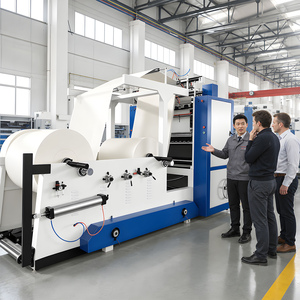
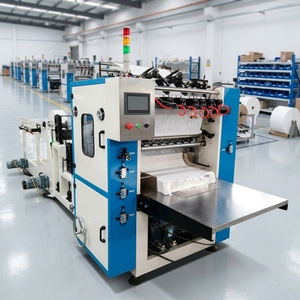
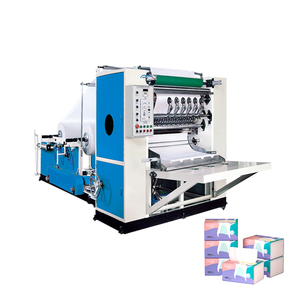
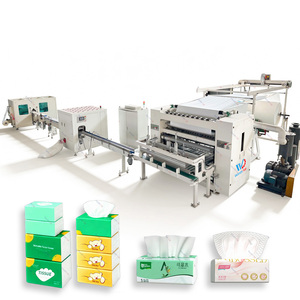
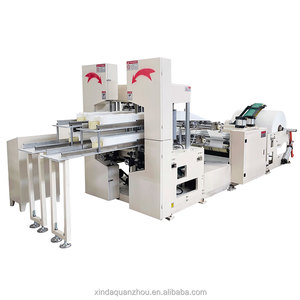
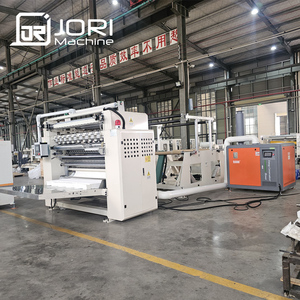
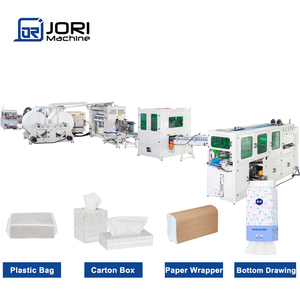
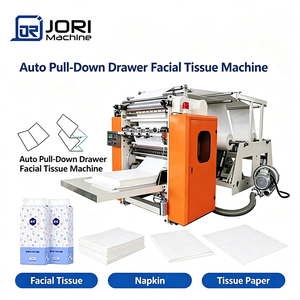
⚙️ Executive Summary & Engineering Whitepaper: Facial Tissue Machinery Sourcing
In the rapidly evolving global tissue paper converting sector, establishing a competitive advantage requires moving beyond standard machinery procurement toward complete production line synchronization. As a premier China wholesale facial tissue making machine exporter, Arabia Industrial Tissue Equipment LLC delivers industrial-grade machinery engineered to optimize Overall Equipment Effectiveness (OEE) while lowering Total Cost of Ownership (TCO).
Facial tissue manufacturing involves sophisticated web tension management, vacuum-assisted interfolding, precision shear cutting, and seamless packaging synchronization. Modern converting plants face a tri-fold challenge: handling varying raw paper pulp grades (including virgin wood pulp, bamboo fiber, and de-inked recycled tissue), maintaining high-speed folding accuracy without tearing low-GSM sheets, and minimizing operator labor through automated downstream cartoning or soft-pack plastic bundling.
This procurement guide and technical whitepaper details the core engineering standards, machinery architectures, fiber processing trends, and procurement strategies necessary for tissue converters, private label manufacturers, and OEM brand holders seeking high-capacity production lines from leading Chinese exporters.
🔬 Technical Architecture: Anatomic Breakdown of High-Speed Facial Tissue Machines
A commercial facial tissue converting line operates as an integrated multi-stage electromechanical system. Understanding the internal mechanics enables procurement directors to properly evaluate equipment quotes and supplier specifications.
| Subsystem Module | Engineering Specification Standards | Impact on Yield & Operational Efficiency |
|---|---|---|
| Unwind Stand Assembly | Pneumatic giant roll loading; dynamic web tension control; flat belt motor drive with magnetic powder brake. | Prevents web sagging or snap off during rapid acceleration; ensures consistent ply registration across 1000–2100mm jumbo roll widths. |
| Embossing Unit | Steel-to-Rubber or Steel-to-Steel micro-embossing rollers; micro-gap hydraulic adjustment; engraved hardened steel. | Enhances bulkiness, hand-feel softness, and ply adhesion without degrading sheet tensile strength. |
| Slitting & Shearing | Circular shear knives with independent pneumatic pneumatic positioning; tungsten carbide steel edges. | Delivers crisp, dust-free longitudinal cuts along multiple feeding lanes prior to interfolding. |
| Vacuum Interfolding | Interlocking spiral folding cylinders; multi-path internal air manifold; high-pressureRoots blower vacuum pull. | Executes precise V-Fold, N-Fold, or Z-Fold interfolding at speeds up to 250 meters per minute without sheet distortion. |
| Automatic Counting & Separating | Optoelectronic sensor array; servo-driven finger separation fingers; programmable sheet count per clip (50–200 sheets). | Eliminates manual stack separation, transferring precise tissue clips directly into the downstream log saw or feeder. |
| Log Saw Cutting | Continuous orbital band saw or single-knife orbital cutter; automatic blade sharpening and lubrication system. | Ensures square, clean cross-cuts through dense tissue clips without crushing package edges. |
The integration of Siemens PLC automation, multi-axis motion controller architecture, and HMI touch panel controls allows line operators to adjust sheet length, counting cycles, embossing nip pressure, and draw speed in real time, dramatically cutting format changeover times from hours to minutes.
📈 Future Procurement Trends in Facial Tissue Converting (2026–2030)
The global tissue manufacturing sector is undergoing fundamental shifts driven by consumer demand for eco-friendly products, rising labor costs, and raw material volatility. Global buyers sourcing facial tissue making machines from China must align their machinery specifications with these four dominant market trends:
1. Sustainable Bamboo & Agricultural Pulp
Higher silica content in non-wood fiber requires extra-hardened steel knife blades and modified vacuum suction profiles to handle shorter fiber tensile limits smoothly.
2. Shift to Soft-Pack Flow Wrapping
Soft-pack film-wrapped tissue packs are rapidly gaining market share over rigid cardboard boxes due to lowered transport volume, material savings, and moisture protection.
3. Closed-Loop IoT Telemetry
Modern machine exports feature cloud-connected remote diagnostics, enabling real-time monitoring of vibration, bearing temperatures, and blade wear metrics.
4. Energy-Efficient Drive Train
Direct-drive servo motors replace traditional chain-and-sprockets drives, reducing energy draw by 22% while eliminating oil bath lubrication requirements.
5. High-Speed Lamination & Printing
In-line glue lamination for multi-ply softness and flexographic color printing modules are becoming standard additions for premium brand lines.
6. Turnkey Single-Source Supply
Converters prefer sourcing complete line solutions—from jumbo roll unwinding to automatic robot palletizing—from a unified engineering vendor.
🏛️ Why Global Converters Partner with Arabia Industrial Tissue Equipment LLC
As a trusted supplier and exporter of tissue paper converting machinery, Arabia Industrial Tissue Equipment LLC has established a comprehensive manufacturing and service infrastructure designed to safeguard your equipment investment:
In-House Machining Center
Key structural frames, embossing rollers, and folding cylinders are machined directly in our internal CNC processing facility to ensure tight tolerances and long-term durability.
Matched Output Line Design
Every line configuration—from rewinder or interfolder to log saw and flow-wrapper—is engineered to operate at synchronized speeds, eliminating production bottlenecks.
Proven International Footprint
Our machinery is active across converting facilities in the Middle East, Turkey, Africa, South America, and Europe, adhering to strict CE safety compliance.
Video-Verified Commissioning
Prior to shipment, every machine undergoes live trial runs using your specific parent roll paper stock, verified via HD video recording and operational inspection reports.
Full Lifecycle After-Sales Support
We supply complete spare parts kits, engineer site installation, operator training programs, and lifelong technical remote troubleshooting support.
Flexible Customization Options
Customized embossing patterns, multi-lane line expansions (2 to 10 lanes), print colors, and custom voltage configurations (220V/380V/415V/440V) catered to your plant site.
📊 Total Cost of Ownership (TCO) & Operational Return Model
When evaluating quotations from Chinese wholesale exporters, upfront machinery capital expenditure (CAPEX) represents only a fraction of total life-cycle costs. Intelligent procurement decisions account for operational expenditure (OPEX) drivers over a 10-year period:
1. Paper Waste Minimization: Paper raw material accounts for 70% to 80% of total tissue production costs. A machine with precise vacuum tension control reduces paper scrap from edge trim and snap-offs from 5% down to under 1.5%, saving tens of thousands of dollars annually.
2. Energy Efficiency Ratios: Standard converting machines utilize centralized air suction and mechanical friction drives that consume high electrical kW power. Our servo-driven, dedicated Roots vacuum pump systems cut active power requirements by up to 28 kW/h under continuous operation.
3. Blade & Tooling Longevity: Hardened tungsten alloy shear blades and pneumatic knife holders double the operational lifespan between sharpening routines, preventing unplanned downtime during high-volume production shifts.
❓ Frequently Asked Sourcing Questions (Procurement FAQ)
Request Machine Specifications & Factory Direct Wholesale Quotation
Consult with our lead engineering team to design a complete tissue converting line tailored to your market requirements, parent roll dimensions, and output targets.
Get Catalog