Engineering-Grade Facial Tissue Folding Equipment
Select from our industry-proven converting machinery built with servo motor synchronization and integrated PLC intelligence
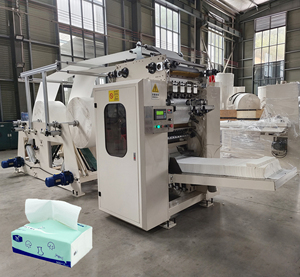
High End Fully Automatic 2 Line V Fold Facial Tissue Paper Folding Machine
Ultra-stable 2-lane production with automated tension control and air-suction V-fold counting.
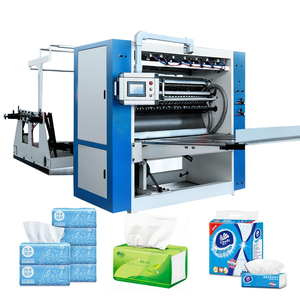
Fully Automatic Facial Tissue Production Machine with Embossing & Cutting
Integrated converting system supporting multi-ply tissue folding, decorative embossing, and log sawing.
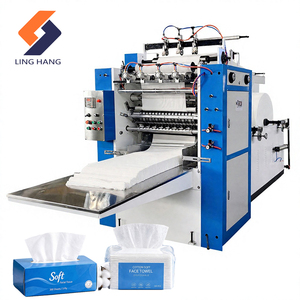
Small Fully Automatic Facial Tissue Line (Embossing, Cutting, DRC Folding)
Compact plant footprint engineered for high-margin specialized tissue and small business startups.
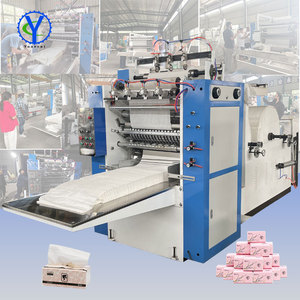
Full Automatic Multi-Size Facial Tissue Paper Folding Converting Line
Flexible width and sheet-length adjustments designed for diverse commercial tissue specifications.
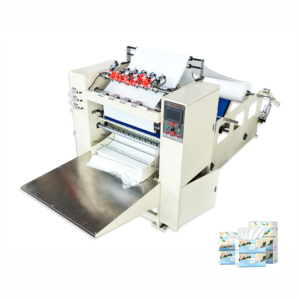
Automatic 3 Lines High-Speed Facial Tissue Drawing Folding Machine
Triple-lane high throughput capacity reaching speeds up to 1000 sheets/min per lane.
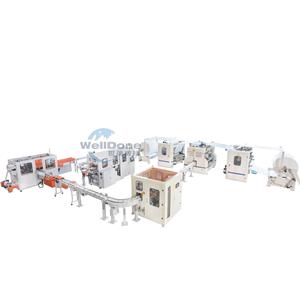
Welldone Automatic Multifold Paper Hand Towel & Facial Tissue Machine
Dual-purpose interfolding mechanism handling both soft facial tissues and commercial hand towels.
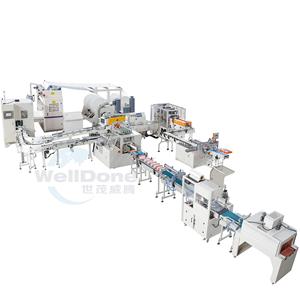
High Capacity PLC Controlled Facial Tissue & Towel Production Line
Industrial-scale automation integrated with Siemens PLC touch interface and auto-counting.
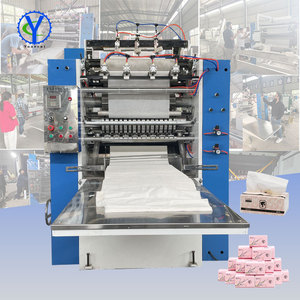
Low Cost Soft Facial Tissue Production Line V Fold Converting Machine
Cost-effective, high-yield tissue line tailored for rapid ROI in competitive consumer markets.
China Facial Tissue Machinery Benchmark Metrics
State of the Industry: Global Sourcing Guide for China Wholesale Facial Tissue Folding Equipment
In the era of modern high-speed tissue converting, purchasing decision-makers face a paradigm shift. Sourcing a China wholesale facial tissue folding machine is no longer merely an exercise in capital expenditure minimization; it is a strategic maneuver to secure long-term operational resilience, product softness consistency, and line automation intelligence. As global tissue paper consumption shifts heavily toward soft-pack facial tissues, box tissues, and multi-ply hygienic products, tissue converting factories across North America, Europe, the Middle East, and Latin America require machinery capable of managing complex paper GSM variations without sacrificing linear output speed.
China has solidified its position as the premier global powerhouse for industrial tissue paper converting machinery. Chinese OEM manufacturers have evolved beyond basic mechanical replication to pioneer full-servo multi-axis synchronized folding technology, pneumatic vacuum-assisted folding systems, and automated inline slitters. This whitepaper systematically evaluates the engineering benchmarks, sourcing frameworks, machine configurations, and procurement strategies necessary to identify leading Chinese factories and suppliers.
Anatomy of a High-Performance Facial Tissue Folding Line
A complete facial tissue converting setup operates as a continuous, synchronized sequence. Understanding the mechanical interaction between components prevents common production bottlenecks and line downtime:
1. Parent Roll Unwinding & Tension Control
Equipped with independent motor drives, flat belt unwinding units, and pneumatic paper loading systems. Constant tension systems utilize magnetic powder brakes or load cells to prevent paper web snapping during high-speed acceleration.
2. Embossing & Lamination Units
Precision steel-to-rubber or steel-to-steel embossing cylinders create decorative patterns and enhance sheet bulkiness. Point-to-point glue lamination units bond 2-ply or 3-ply paper sheets seamlessly.
3. Vacuum Interfolding Drums
The technological core of the machine. Utilizing precise air-suction timing, counter-rotating folding cylinders create clean V-fold, N-fold, or Z-fold interlocked sheets that guarantee smooth pop-up dispensing in final soft packs.
Future Product Development & Technological Trends in Tissue Converting
The global tissue manufacturing sector is undergoing rapid technological transformation driven by energy efficiency goals, raw material flexibility, and Smart Factory (Industry 4.0) integration. When evaluating suppliers in China, buyers must align their procurement criteria with the following forward-looking machine architecture trends:
1. Full Servo-Motion Control vs. Traditional Mechanical Gear Drives
Legacy tissue machinery relied on mechanical shaft transmissions and complex gearboxes, which suffered from gear wear, high noise levels (>85 dB), and prolonged changeover times. Modern Chinese factories now implement full multi-axis servo drive technology (e.g., Siemens, Delta, or Schneider motion systems). Each folding cylinder, slitting blade, and unwinding belt is governed by an independent servo motor, enabling digital phase adjustment, instant sheet length modifications, and sub-millimeter fold alignment.
2. Intelligent Energy-Saving Vacuum Extraction Systems
Interfolding relies on negative air pressure to pull paper webs onto rotating cylinders. Next-generation folding machines incorporate dynamic variable-frequency drive (VFD) vacuum pumps. Rather than running blowers at continuous maximum output, these systems automatically adjust suction pressure based on real-time web speed and paper basis weight (GSM), cutting electrical power consumption by up to 22% to 30%.
3. High-Speed Auto-Transfer & Inline Packaging Synchronization
The modern facial tissue factory minimizes manual operator intervention. Advanced production lines feature automatic counting and stacking transfer units that push folded tissue logs directly into high-speed automatic soft-pack wrapping machines or rigid box cartoning machines. This eliminates manual stacking contamination and boosts total line speed to 120–150 packs per minute.
| Technical Parameter | Standard Entry-Level Line | High-Speed Full-Servo Line | Industrial Multi-Lane Complete Line |
|---|---|---|---|
| Lane Output Configuration | 2 to 4 Lanes | 6 to 10 Lanes | 12 to 14+ Lanes |
| Converting Speed (m/min) | 60 - 80 m/min | 100 - 120 m/min | 140 - 180 m/min |
| Fold Pattern Compatibility | V-Fold (Interfolded) | V, N, Z-Fold Selectable | V / Multi-Fold Custom |
| Control Interface | Button / Basic PLC | Siemens PLC + HMI Touchscreen | Industry 4.0 Cloud IoT Enabled PLC |
| Unwinding Web Tension | Manual / Brake Disc | Pneumatic Auto-Tension Control | Closed-Loop Servo Load-Cell Control |
| Target Annual Capacity | 500 - 1,200 Tons | 2,500 - 5,000 Tons | 8,000+ Tons |
Future Sourcing & Procurement Trends for Overseas Buyers
As global supply chains demand greater agility and localized compliance, B2B procurement strategies for tissue machinery are shifting. International buyers sourcing from China must navigate evolving commercial and technical trends:
Total Cost of Ownership (TCO) Prioritization
Leading buyers look beyond upfront machine purchase price. TCO models evaluate electrical kilowatt usage per ton of finished product, spare part replacement costs (e.g., circular slitter knives, timing belts), and operational labor efficiency.
Customization for Virgin vs. Recycled Fiber
Fluctuating pulp prices require equipment that handles virgin bamboo pulp, 100% wood pulp, and recycled paper fibers. Advanced folding machinery must handle lower tensile strength recycled paper without frequent web breaking.
Remote Commissioning & AR Maintenance Support
Post-pandemic procurement standards prioritize suppliers offering remote augmented reality (AR) troubleshooting, pre-installed VPN diagnostic gateways, and detailed step-by-step video commissioning manuals.
Furthermore, raw material adaptability has become a cornerstone of procurement resilience. Tissue converters must insist that Chinese machinery manufacturers conduct pre-shipment testing using the buyer's localized parent roll paper samples. Differences in paper moisture content, elongation percentage, and static electricity levels can severely impact folding stability if not accounted for during machine calibration.
Enterprise Advantages: Why Partner with Our Manufacturing Facility
Referencing our established manufacturing infrastructure and decades of engineering expertise, our factory stands out as a reliable tier-1 OEM partner for global tissue converters. We combine state-of-the-art metalworking facilities with stringent quality management systems to build machinery that delivers long-term productivity.
In-House Precision Machining Center
We operate dedicated CNC machining centers to fabricate critical components in-house—including wallboards, folding rollers, and embossing shafts. This ensures sub-millimeter tolerances and eliminates reliance on third-party machine shops.
End-to-End Line Synchronization
From jumbo roll unwinding to automatic log sawing and soft-pack wrapping, we engineer complete automated production lines where every downstream unit communicates perfectly with upstream machinery.
Rigorous Pre-Shipment Testing Protocols
Every tissue folding machine undergoes a mandatory 72-hour continuous test run with paper parent rolls before factory acceptance testing (FAT) sign-off, verifying electrical stability and fold quality.
Global Export Compliance & Field Support
Our converting equipment is CE certified and compliant with ISO9001 quality frameworks. We provide complete technical documentation, electrical schematics, and rapid spare part dispatch worldwide.
Procurement FAQ: Technical & Operational Buying Answers
Direct responses to critical questions asked by plant managers, procurement engineers, and factory owners before purchasing tissue equipment:
The difference lies in sheet interlocking and opened sheet dimension flexibility. V-Fold (Interfolded) tissue sheets are folded in half, with each sheet interlocked with the next; it is the global standard for soft-pack dispensing. N-Fold and Z-Fold configurations involve three panels per sheet, providing higher sheet absorbent surface area and distinct pop-up dispenser characteristics often utilized in commercial or premium box tissue formats.
Lane selection depends on your parent roll width and required daily tonnage output. A 2-lane or 3-lane machine is ideal for small to medium converting businesses (producing 1 to 3 tons per 8-hour shift). Larger facilities needing 8 to 15+ tons per shift should opt for 6-lane, 8-lane, or 10-lane high-speed lines linked directly to automatic cartoning or nylon wrapping equipment.
Standard facial tissue machinery runs optimally on tissue paper ranging from 13 GSM to 20 GSM per single ply (or 2-ply 13-15 GSM). Moisture content should ideally remain between 5% and 8%. Paper webs with uneven moisture or weak tensile strength require constant-tension unwinding systems to avoid web tearing at speeds above 100 meters per minute.
The folded width of the tissue is fixed by the cylinder cutting length, but the slitting width (length of the tissue log) can be easily adjusted by repositioning the circular slitter blades on the unwinding web. For full length variability, servo-controlled multi-size folding machines allow digital program changes via the HMI touchscreen interface.
Embossing enhances the visual appeal and tactile bulkiness of facial tissue by creating micro-air pockets between paper plies. Steel-to-rubber rollers provide deep, crisp patterns for kitchen towels or napkins, whereas fine steel-to-rubber micro-embossing is recommended for facial tissues to preserve delicate surface softness without compromising paper structural integrity.
Daily routine maintenance requires blowing compressed air to remove accumulated tissue dust from vacuum valves and folding drums. Weekly checks involve inspecting circular shear blade sharpness, belt tension, and oil lubrication levels. Monthly protocols include verifying PLC servo sensor alignment, suction valve seals, and pneumatic pressure regulators.
Standard manufacturing lead time for standard 2 to 6 lane folding machines ranges between 30 to 45 days. Custom multi-lane lines with glue lamination and full packaging integration require 60 days. Machines are dismantled into heavy-duty wooden crate frameworks, rust-proofed with oil coatings, and secured inside 40ft HQ shipping containers for safe maritime transport.
Ready to Upgrade Your Tissue Converting Capacity?
Consult with our lead engineering team today. Get detailed technical quotations, machine layout drawings, and ROI estimations tailored to your plant requirements.
Inquire Now