Industrial Tissue Machinery Portfolio
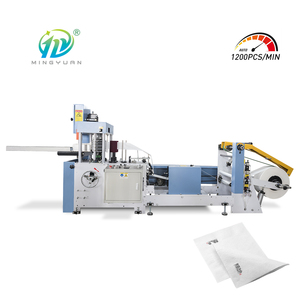
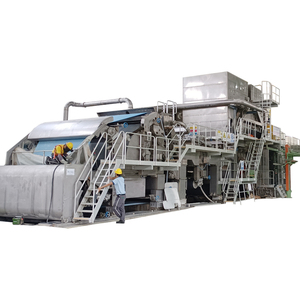
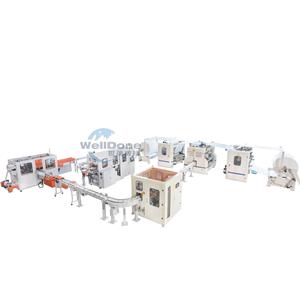
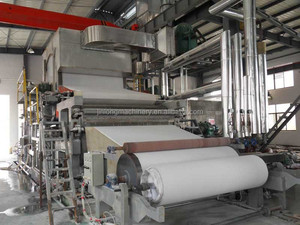
Explore our high-performance converting lines designed for commercial tissue production, embossing, and automated folding.
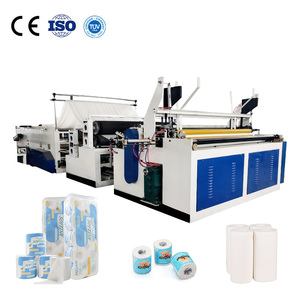
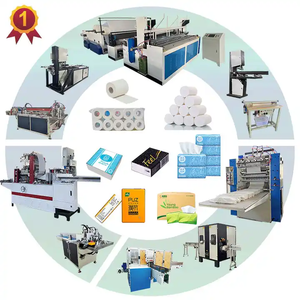
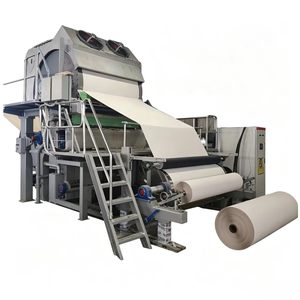
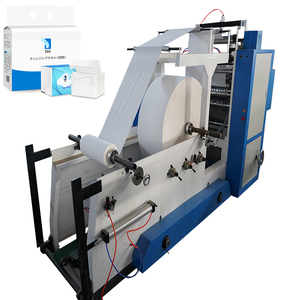
Executive Whitepaper: The Evolution of Industrial Embossed Napkin Manufacturing
A comprehensive analysis of mechanical engineering standards, raw material dynamics, and global trade requirements in tissue paper converting.
In the contemporary fast-moving consumer goods (FMCG) and away-from-home (AFH) hygiene sectors, the demand for embossed paper napkins, facial tissues, and specialized sanitary products has undergone a structural transformation. Global commercial buyers—ranging from high-capacity converting plants in North America and Western Europe to expanding distribution hubs across the Middle East, Africa, and Latin America—are recalibrating procurement criteria. They are shifting away from standalone, low-speed legacy machinery toward high-speed, fully integrated, and energy-efficient tissue converting systems engineered in China.
As a premier China wholesale embossed napkin machine supplier and exporter, our engineering paradigm centers on addressing the core operational challenges faced by tissue converters: total cost of ownership (TCO) optimization, web tension consistency during high-speed unwinding, pattern longevity in steel-to-steel or steel-to-rubber embossing rollers, and continuous, non-stop automatic counting and packaging integration.
Technical Information Gain: Modern embossing converting lines must maintain mechanical tolerance within ±0.02 mm across heavy-duty steel engraving rollers to prevent paper web shearing while ensuring consistent 3D dimensional texture at web speeds exceeding 800 meters per minute.
1.1 Substrate Interactions & Material Science Considerations
The operational performance of an embossed napkin machine is intimately linked to the physical properties of the parent roll substrate. Tissue converting engineers must account for three primary fiber formulations:
- 100% Virgin Wood Pulp: Offers superior tensile strength (MD/CD ratio of 1.8 to 2.2) and high elongation rates, making it ideal for deep micro-embossing and multi-color flexographic printing without web tearing.
- De-inked Recycled Pulp (DIP): Characterized by shorter fiber lengths and higher ash content. Requires specialized pneumatic unwinding brakes and soft-rubber back-up rollers to absorb grammage variations (typically 13 to 22 g/m² per ply).
- Non-wood Bamboo & Bagasse Fibers: Fast-growing eco-substrates gaining traction in ESG-driven markets. Their high silica content demands hardened tungsten-carbide or chrome-plated embossing rolls to minimize mechanical wear over extended production cycles.
Engineering Architecture of High-Speed Embossed Napkin Machinery
Deconstructing the critical mechanical modules and automated drive systems that power modern tissue converting lines.
Unwinding & Web Tension Control
Incorporates dual heavy-duty unwinding stands equipped with flat belt transmission, air-expansion shafts, and closed-loop magnetic powder tension sensing. Prevents web drift and vibration during jumbo roll unwind down to core diameter.
Precision Embossing Station
Options for Steel-to-Steel, Steel-to-Rubber, or Point-to-Point micro-embossing. CNC laser-engraved rollers deliver sharp structural embossing, enhancing napkin bulk, hand-feel softness, and liquid absorption capacity.
Vacuum-Assisted Interfolding
High-vacuum suction cylinders and precision mechanical claw mechanisms support 1/4 fold, 1/8 fold, cocktail fold, and dispenser interfold formats with zero edge deformation and clean counting stack separation.
Comprehensive Machine Specification Comparison Table
| Performance Parameter | Standard Commercial Line | High-Speed Servo Line | Turnkey Industrial Line |
|---|---|---|---|
| Mechanical Output Speed | 180 – 350 m/min (approx. 1,500 pcs/min) | 400 – 700 m/min (approx. 3,200 pcs/min) | 800+ m/min (up to 6,000 pcs/min) |
| Parent Roll Width Range | 200 mm – 450 mm | 500 mm – 1200 mm | 1300 mm – 2800 mm |
| Embossing System Type | Steel-to-Rubber / Steel-to-Wool Paper | Steel-to-Steel (HRC 58-62) | Point-to-Point Laminated Micro-Embossing |
| Folding Options | 1/4 Fold, 1/8 Fold, N-Fold | Vacuum Interfold, Z-Fold, Cocktail Fold | Multi-format Modular Quick-Change Unit |
| Control Interface & PLC | Standard HMI Touchscreen | Siemens / Mitsubishi PLC with Remote Diagnostics | Fully Automated EtherCAT Bus Control System |
| Total Connected Power | 7.5 kW – 15 kW | 22 kW – 45 kW | 55 kW – 110 kW |
Future Procurement Trends in Tissue Machinery (2026–2030)
Strategic technology insights for plant managers, machinery importers, and corporate procurement executives planning capital investments.
1. Full Servo Driven Kinetic Systems
Legacy mechanical line-shaft drive systems are rapidly being phased out. Modern plant operators demand multi-axis servo motion control (independent motors for unwinding, embossing, folding, and log cutting). This eliminates mechanical gear wear, reduces noise levels below 75 dBA, and enables instant digital format changeovers via touchscreen HMI recipes.
2. Water-Based Flexo Color Printing
Environmental compliance and food-grade safety standards (FDA, EU 1935/2004) mandate solvent-free, water-based ink application. High-end napkin machines now integrate inline flexographic printing modules (1 to 6 colors) with ceramic anilox rolls, chambered doctor blades, and hot-air flash drying tunnels for crisp logo and decorative print quality.
3. Automated End-of-Line Integration
To overcome rising global labor costs, converters no longer purchase standalone napkin folders. The market is shifting decisively toward fully integrated lines that connect napkin converting directly to automatic soft-pack film wrappers, cartooning units, and robotic case packers, reducing manual labor intervention by over 80%.
Smart Factory Predictive Maintenance & IoT Connectivity
Industry 4.0 integration has transitioned from an optional feature to a critical procurement requirement. Leading Chinese exporters are now equipping napkin machines with edge-computing IoT gateways. These systems continuously monitor temperature spikes in main drive bearings, track vibration spectra on high-speed log saws, and measure power quality consumption per metric ton of converted tissue.
Predictive maintenance algorithms alert plant operators weeks before a potential mechanical failure, effectively reducing unplanned downtime and maintaining overall equipment effectiveness (OEE) above 95% in multi-shift continuous operations.
Arabia Industrial Tissue Equipment LLC — Enterprise Authority & Strengths
Why Tier-1 tissue converters and international distributors select us as their preferred manufacturing and exporting partner in China.
Arabia Industrial Tissue Equipment LLC stands as a globally recognized manufacturer and exporter specializing in tissue paper converting machinery. Our product portfolio spans full automatic toilet paper rewinding lines, high-speed napkin folding machines, facial tissue interfolding systems, multifold hand towel machinery, pocket tissue equipment, and automated log saw cutters.
In-House Precision Machining Center
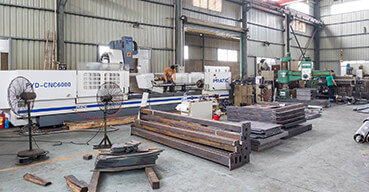
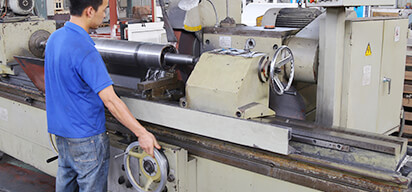
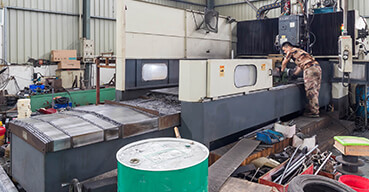
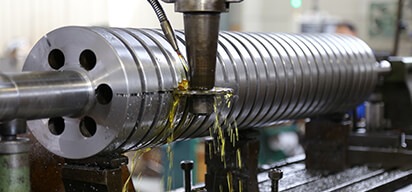
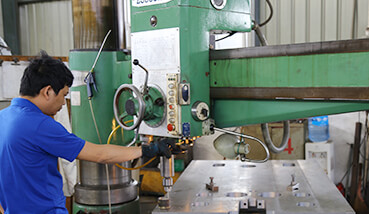
Unlike trading intermediaries, we operate an advanced in-house CNC machining workshop. Critical components—including steel embossing rollers, folding cylinders, frame structures, and cutter arbors—are machined internally under strict ISO 9001 QA protocols to ensure micron-level tolerance and long operational lifespan.
Customized Line Layout Engineering
We do not force rigid standard models on buyers. Every line project begins with the client's end-product requirements: roll dimensions, GSM specifications, embossing artwork, and target output per shift. We then engineer matched-capacity unwinding, embossing, folding, cutting, and packing equipment.
Global Field Service & Commissioning
Our multilingual technical team provides turnkey overseas commissioning, technician training, spare parts management, and lifelong remote support. Over 1,200 converting installations across 65+ countries demonstrate our technical reliability and field-tested performance.
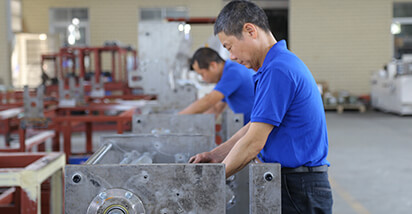
Inside Our Advanced Production Facilities
Frequently Asked Questions (FAQ) for Equipment Procurement
In-depth technical and operational answers to assist engineering teams and purchasing managers during supplier evaluation.
Which specific tissue product formats can these napkin converting lines manufacture?
Our complete equipment portfolio covers household toilet paper rolls, industrial center-pull rolls, jumbo/maxi rolls, commercial kitchen towels, folded restaurant napkins (1/4 fold, 1/8 fold, cocktail fold, M-fold), soft-pack and box facial tissues, multifold hand towels, and mini pocket handkerchief tissues. We also supply integrated core-making machines, band saw log cutters, and continuous wrapping/packing units.
How should a factory calculate and select the correct machinery capacity?
Rather than evaluating machine speed in isolation, converters must start with required saleable finished packs or metric tons per shift. From this target, work backward through napkin dimensions, paper grammage, single-lane vs multi-lane output, expected downtime for jumbo roll loading, and scrap rate (typically 1.5–2% on automated lines). Our engineering staff provides full output calculations based on your specific shift schedule.
What key technical parameters must be provided when requesting a customized RFQ?
To receive a precise technical proposal and commercial quotation, please specify: (1) Parent roll maximum width and diameter, (2) Paper ply count and basis weight (GSM), (3) Finished napkin or roll dimensions (unfolded and folded dimensions), (4) Desired embossing pattern or artwork style, (5) Packaging preference (bulk polybag or individual wrap), and (6) Local factory power grid parameters (e.g., 380V / 50Hz / 3Phase).
What is the standard lead time, FAT acceptance testing, and global warranty protocol?
Standard manufacturing lead time ranges from 30 to 60 days depending on machine complexity and custom embossing roll engraving. Prior to dispatch, we conduct Factory Acceptance Testing (FAT) using client-supplied parent roll paper. Live video demonstrations or on-site inspections verify speed, registration, and product quality. All equipment includes a comprehensive 12-month mechanical warranty and lifelong engineering support.
Total Cost of Ownership (TCO) & Plant Optimization Strategy
A methodology for evaluating machinery capital expenditures against operational profitability over a 10-year service life.
When investing in high-volume embossed napkin equipment, smart buyers look beyond initial CapEx. The overall financial return is determined by Total Cost of Ownership (TCO), which incorporates operational power consumption, waste percentage, maintenance downtime, and operator labor overhead.
1. Energy Recovery & Drive Efficiency
Replacing fixed-speed AC motors with IE4 ultra-premium efficiency servo drives cuts electrical power consumption by up to 28% per ton of converted paper product.
2. Yield & Scrap Reduction
Automatic web alignment, photoelectric edge tracking, and tension compensation prevent premature web breaks, saving up to 15 metric tons of paper substrate annually on high-speed lines.
3. Tooling Durability
Induction-hardened alloy steel slitting blades and hard-chrome plated embossing rolls extend maintenance intervals from 6 months to over 24 months of continuous operation.
Ready to Upgrade Your Tissue Converting Line?
Consult with our lead engineering specialists today. We provide full line layout drawings, technical specifications, operational ROI calculations, and complete price schedules.