Featured Facial Tissue Production Lines & Machinery
High-efficiency tissue converting, interfolding, core winding, and packaging solutions engineered for industrial output.
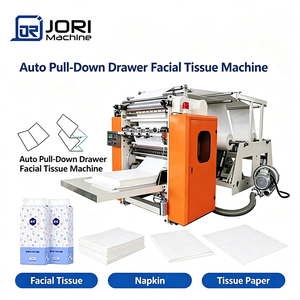
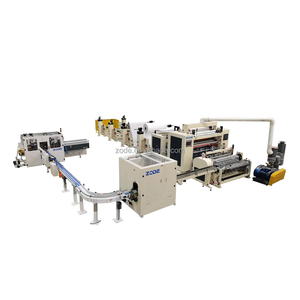
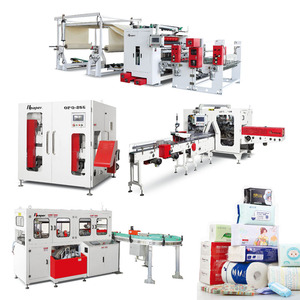
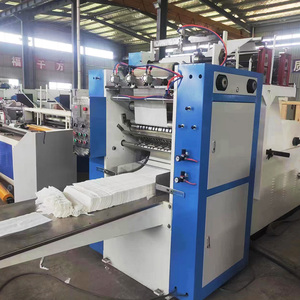

Executive Technical Report: Engineering High-Speed Automatic Facial Tissue Production
In modern hygiene paper manufacturing, sourcing a China Wholesale Automatic Facial Tissue Production Line requires an in-depth understanding of mechanical synchronization, tension dynamics, and post-folding automation. As global consumer demand shifts toward premium multi-ply tissue, eco-friendly bamboo fiber substrates, and ultra-soft calendering finishes, tissue converters must transition from semi-automated, high-labor machinery to fully integrated, servo-controlled continuous converting plants.
An automated facial tissue production line converts parent paper reels (jumbo rolls) into neatly cut, folded, counted, and packaged facial tissues. The technological integrity of the interfolding process determines the structural alignment of V-fold, Z-fold, or M-fold configurations. Achieving operational speeds exceeding 200 meters per minute while maintaining zero jam rates requires high-precision differential vacuum absorption cylinders, helical rotary shear blades, and real-time tension feedback sensors.
1. Core Engineering Architecture of Modern Interfolding Machinery
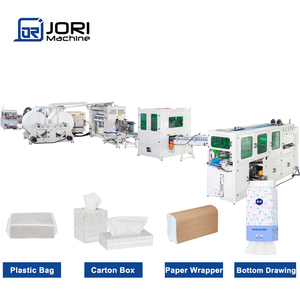
The core converting architecture comprises six interdependent mechanical zones: Parent Roll Unwinding & Tension Control, Steel-to-Rubber/Rubber-to-Steel Embossing, Calendering & Slitting Units, Vacuum Differential Folding Drums, High-Speed Log Saw Cutting, and Automated Primary/Secondary Flow Wrapping.
Constant unwind tension is critical when handling low-grammage tissue paper (13 GSM to 20 GSM per ply). Fluctuations in web tension lead to web breaks, sheet misalignment, and inconsistent fold geometry. Modern Chinese factories equip jumbo roll stands with pneumatic expansion shafts, surface-drive unwinding belts, and magnetic powder brake systems synchronized via closed-loop motion controllers. As the parent roll diameter decreases, the PLC recalculates inertia and dynamically adjusts torque output to ensure uninterrupted web feed.
Technical Insight: Precision folding reliance on vacuum distribution plates ensures that paper webs adhere smoothly to high-speed rotating drums. Dual-folding rollers operating with offset helical knives cut and interfold the sheets simultaneously, preventing static electricity buildup and edge tearing even when processing 100% bamboo unbleached virgin pulp.
2. Mechanical vs. Servo-Driven Motion Control Systems
Legacy tissue converting equipment relied heavily on mechanical gearboxes, line shafts, and chain drives. While mechanically robust, these systems suffer from mechanical wear, complex mechanical changeovers when modifying tissue lengths, and higher acoustic noise levels. Modern wholesale automatic facial tissue machines utilize multi-axis Siemens or Mitsubishi motion control PLCs paired with absolute encoder servo motors.
Each converting station—from unwinding and embossing to slitting and log saw feeding—is driven by an independent servo drive. This decouples mechanical link wear, eliminates gear backlash, and allows plant engineers to adjust sheet length, counting stack size, and electronic cam timing directly through a touchscreen HMI interface. Digital recipe management drastically reduces product changeover times from hours to under 15 minutes.
Factory Manufacturing Capabilities & Engineering Excellence
Direct from China's Premier Tissue Machinery OEM Factory — Built for Industrial Reliability and Global Export Compliance.
In-House Precision CNC Machining
Key mechanical components, including folding drums, helical cutter shafts, and embossing steel rollers, are machined in-house using 5-axis CNC machining centers for micro-tolerance precision.
Rigorous Quality Inspection & Balancing
All high-speed rotating rollers undergo dynamic balancing tests up to 3000 RPM to eliminate vibration, minimize bearing wear, and prolong equipment lifespan under 24/7 continuous operation.
CE & ISO 9001 International Compliance
Fully compliant with European CE safety standards, featuring safety interlocks, emergency stop circuits, low-voltage control panels, and noise-attenuating acoustic shielding enclosures.
Turnkey Line Integration & Commissioning
We supply complete line engineering: parent roll loading, embossing, interfolding, log saw cutting, soft-pack bundling, carton packing, and palletizing, matched perfectly for zero-bottleneck production.
Global Sourcing Trends & Technology Roadmap (2025-2030)
The global facial tissue market is undergoing rapid evolution driven by consumer preferences for eco-friendly fibers, premium tactility, and sustainable packaging. Procurement executives, paper converting factory owners, and regional distributors sourcing machinery from China must align their capital investment strategies with key technological trends shaping the sector over the next decade.
1. Expansion of Sustainable Substrates: Bamboo & Agricultural Residue Fibers
With stringent global forestry regulations and growing carbon-neutral mandates, tissue converting plants are increasingly shifting from 100% softwood/hardwood virgin wood pulp toward sustainable non-wood fibers, particularly bamboo, sugarcane bagasse, and straw fibers. Bamboo fibers possess unique tensile strength, natural antibacterial properties (Bamboo Kun), and rapid renewable growth cycles.
However, bamboo fiber tissue exhibits higher surface friction and varying tensile elongation compared to traditional wood pulp. Machine manufacturers in China have engineered specialized web-guiding rollers, soft-rubber embossing sleeves, and fine-tuned vacuum extraction nozzles designed specifically to handle 100% bamboo paper webs without generating dust or causing edge fraying at high production speeds.
2. Micro-Embossing, Glue-Free Lamination, and Ultra-Soft Finishes
Modern consumers demand facial tissue products that offer both high absorbent capacity and velvety softness. Traditional deep embossing can compromise sheet tensile strength and increase sheet stiffness. The industry is rapidly adopting point-to-point (P2P) micro-embossing rollers combined with pneumatic pressure micro-adjustment systems.
Furthermore, eco-conscious markets are phasing out chemical adhesive laminations between tissue plies. Advanced production lines now integrate mechanical ply-bonding (edge embossing/crimping wheels) or water-lamination units, which lock plies together using controlled moisture pressure instead of synthetic PVA glues. This lowers raw material costs while delivering a 100% chemical-free finished product.
3. Technical Capacity & Operational Matrix across Machine Configurations
To assist procurement managers in selecting the optimal machinery configuration based on required daily output and factory footprint, the technical decision matrix below outlines typical operational parameters across standard line configurations:
| Configuration Lane Count | Working Width (mm) | Folding Speed (Pcs/Min) | Installed Power (kW) | Air Consumption (m³/min) | Recommended Target Output |
|---|---|---|---|---|---|
| 2 Lanes (Compact Line) | 420 - 500 mm | 1,200 - 1,600 | 15 - 22 kW | 0.6 - 0.8 | Small-scale startup / Boutique regional brands |
| 4 Lanes (Standard Line) | 840 - 1050 mm | 2,400 - 3,200 | 28 - 38 kW | 0.9 - 1.2 | Medium commercial converters & Private Label |
| 6 Lanes (High-Capacity) | 1260 - 1500 mm | 3,800 - 4,800 | 45 - 55 kW | 1.5 - 1.8 | Established national hygiene brand suppliers |
| 8-10 Lanes (Industrial Jumbo) | 1680 - 2100 mm | 5,000 - 8,000+ | 75 - 110 kW | 2.2 - 3.0 | High-volume 24/7 OEM mega-factories |
4. Intelligent Automation & Industrial IoT (IIoT) Integration
Industry 4.0 has transformed tissue converting equipment from standalone mechanical units into smart, connected assets. Chinese manufacturers are equipping production lines with edge-computing industrial PCs, Ethernet/IP communication buses, and remote telemetry modules.
Plant managers can monitor real-time Overall Equipment Effectiveness (OEE), log saw blade sharpness wear, motor temperature curves, and material waste percentages via smartphone applications or cloud dashboards. Remote diagnostic interfaces enable factory engineers in China to assist overseas client maintenance teams with firmware updates, PLC troubleshooting, and parameter optimization without incurring costly field service travel delays.
Procurement & Technical FAQ: Key Considerations for Factory Buyers
Navigating the acquisition of a full-scale wholesale automatic facial tissue line involves addressing technical, electrical, operational, and commercial questions. Below are expert answers prepared by our senior application engineering team.
Our automatic facial tissue folding machines are engineered to convert tissue paper from 13 GSM up to 22 GSM per ply. The converting lines accommodate 2-ply, 3-ply, and 4-ply finished configurations. Variable tension magnetic particle brakes and air-expanding shafts ensure web stability across virgin wood pulp, recycled pulp, and bamboo fibers.
V-Fold (single fold, 2 folds overall) interfolds sheets such that pulling one tissue pops up the edge of the next tissue; it is widely used in standard soft-pack household tissue. Z-Fold (3 panels) and M-Fold (4 panels) offer a smaller folded footprint while maintaining large open sheet surface area, ideal for commercial box tissue, dispenser packs, and hotel amenity formats.
An optical sensor counter counts folded sheets during vacuum transfer. Once the programmed count (e.g., 100, 150, or 200 sheets) is reached, an electro-pneumatic separation finger inserts a temporary divider, diverting the completed tissue stack onto the log saw feed conveyor without interrupting continuous folding.
Standard machinery configurations are manufactured for 380V, 3-Phase, 50Hz electrical supply, but custom voltage configurations (e.g., 220V 3-Phase, 415V, or 480V at 60Hz) can be built upon request. The site requires a stable industrial air compressor providing 0.6 - 0.8 MPa compressed air with an air dryer and oil-water filter unit.
We provide a comprehensive 12-month mechanical warranty, lifetime technical advisory, and a full spare parts kit with every machine delivery. Our senior commissioning engineers can be dispatched to overseas client factories for installation, line alignment, PLC setup, and operator maintenance training.
Ready to Scale Your Facial Tissue Converting Operations?
Contact our engineering specialists today to receive customized layout drawings, detailed equipment quotations, and complete production yield calculations tailored to your market goals.
Get Catalog