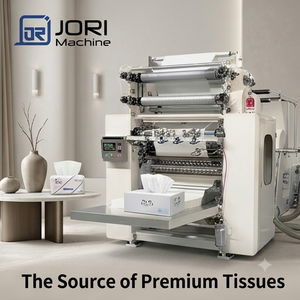
Full Automatic Facial Tissue & Napkin Small Roll Machine
Multifunctional high-speed line capable of processing facial tissues, small tissue rolls, and folded napkins with minimal tooling changeover time.
Engineered by China's leading paper converting machinery factory. Designed for continuous 24/7 operation, lower scrap rates, and exact fold-and-print consistency.
Multifunctional high-speed line capable of processing facial tissues, small tissue rolls, and folded napkins with minimal tooling changeover time.
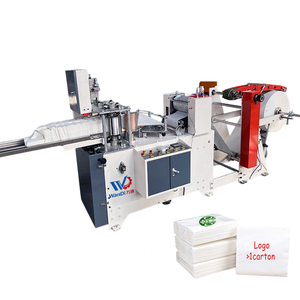
Compact, low-maintenance napkin folding machine designed for growing tissue converters, restaurant suppliers, and boutique packaging plants.
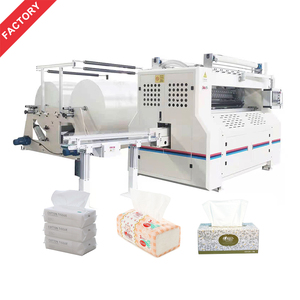
Ultra-high capacity 7-lane output interfolding system fitted with PLC web control, auto-counting, and inline slit cutting systems.
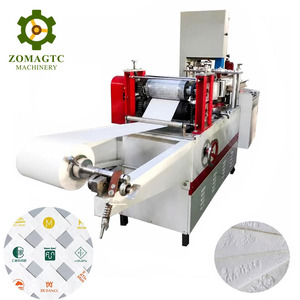
Integrated flexographic 2-color printing, steel-to-rubber embossing, and vacuum folding for premium hotel, cafe, and commercial serviettes.
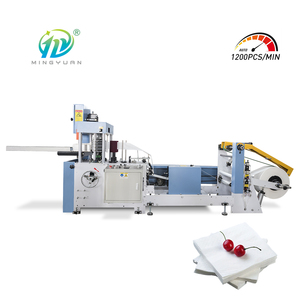
Industrial power-horse running at speeds up to 1,200 sheets/min with servo-assisted tensioning and vibration-damped rotary cutters.
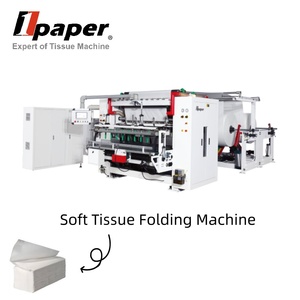
Turnkey system connecting parent roll unwinding, embossing, folding, log saw cutting, transfer conveying, and flow-wrap packing.
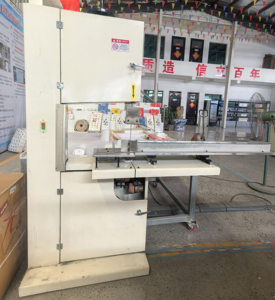
High-precision band saw cutting unit engineered for tissue logs, toilet rolls, and napkin stacks with automatic blade grinding.
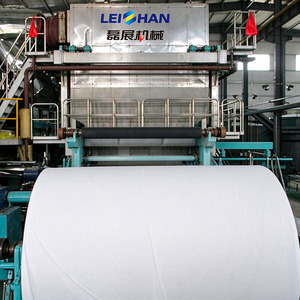
Full-scale factory line designed for high-tonnage output, severe continuous duty cycles, and flexible multi-size product switching.
We bridge raw engineering capability with deep industry expertise. Here is how our production facility delivers quantifiable competitive advantages to global buyers.
Unlike suppliers who outsource key mechanical parts, our factory operates a dedicated CNC processing center. All folding cylinders, embossing steel rollers, doctor blade assemblies, and core shafts are precision-machined in-house to guarantee micron-level tolerances and extended operational lifespans.
We design complete tissue paper lines where unwinding, multi-color flexographic printing, heating/drying, steel-to-rubber embossing, folding, high-speed slitting, and flow wrapping operate under a unified PLC servo system—eliminating bottle-necks and mismatched line speeds.
Every napkin folding and printing machine undergoes rigorous fat testing (Factory Acceptance Testing) with client-specified paper GSM, ink formulations, and folding dimensions. Live HD unedited operating videos are delivered to buyers prior to balance payment and export dispatch.
The global demand for customized, high-quality disposable printed napkins—spanning 1/4 fold, 1/8 fold, book-fold, cocktail serviettes, and dinner napkins—is undergoing a rapid technological shift. Modern paper converters face dual pressures: rising raw jumbo roll paper costs and strict commercial buyer demands for high-definition multi-color branding without paper linting or ink bleed. As a leading manufacturer in China, our engineering focuscenters on solving the physics of high-speed flexo-printing on low-GSM tissue paper while maintaining high Overall Equipment Effectiveness (OEE).
Printing on high-porosity base tissue paper (13–24 gsm per ply) requires precise hydrodynamic ink metering. Traditional rubber-fountain roller systems often suffer from uneven ink distribution and dot-gain at high linear speeds exceeding 250 meters per minute. Our advanced printed napkin machines incorporate ceramic anilox rollers with laser-engraved cell geometry (200 to 400 LPI) alongside enclosed chamber doctor blade systems.
By controlling water-based ink viscosity through continuous recirculation pumps and inline hot-air drying tunnels, our lines eliminate web sogginess, color distortion, and web snaps. This engineering setup guarantees crisp vector logo reproductions for hotel chains, airline catering services, and QSR (Quick Service Restaurant) packaging networks.
| Machine Parameter | Standard Entry-Level Machine | Advanced China Factory High-Speed Line | Procurement Advantage |
|---|---|---|---|
| Printing Unit Type | Open fountain rubber roller system | Enclosed doctor blade with ceramic anilox | 98% reduced ink evaporation & exact color density |
| Embossing System | Single steel-to-rubber roller | Dual pneumatic steel-to-rubber / steel-to-steel | Deeper tactile bulk, higher absorbency, longer roller life |
| Web Tension Control | Manual brake tension adjustment | Multi-axis servo motor auto-tension sensor | Prevents tissue tearing on low GSM raw paper |
| Folding Speed | 300 - 500 pcs/min | 800 - 1,200 pcs/min | Over 200% yield gain per operational shift |
| Scrap & Trim Waste | 3.0% - 5.0% average | Less than 0.5% guaranteed | Direct reduction in raw material expenditure |
Embossing serves a dual purpose: it bonds multiple plies together mechanically without chemical glues and imparts visual texture. Our machines offer custom laser-etched embossing patterns ranging from full-edge borders to complex floral center designs. Utilizing hardened alloy steel-to-rubber or micro-patterned steel-to-paper embossing rollers, the paper web gains tactile softness and enhanced liquid absorption volume.
Downstream from embossing, paper webs enter the vacuum-assisted folding section. Our suction-wheel folding head ensures consistent 1/4 or 1/8 folds without paper jamming or edge crimping, even at maximum production rates of 1,200 pieces per minute. Variable frequency drives allow operators to micro-adjust fold lengths via a centralized Siemens touchscreen PLC interface.
A primary bottleneck in legacy tissue converting plants is manual counting and manual bag packing. Our high-speed printed napkin production lines integrate automatic electronic counting sensors that push finished napkin stacks in exact pre-set counts (e.g., 50, 100, or 250 napkins per pack) directly into soft-pack poly bag packaging machines or carton box packers.
This closed-loop automated layout ensures zero human contact during folding and packing, complying fully with international food-grade hygiene standards (ISO 22000, CE, and FDA compliance guidelines).
Key technological directions every business owner, factory procurement director, and tissue converter must evaluate before investing in capital equipment.
Global environmental mandates are pushing tissue converters away from solvent-based inks toward non-toxic, food-grade water-based inks and non-bleached bamboo or recycled pulp paper. Future-proof napkin converting machinery must be equipped with anti-corrosion stainless steel ink delivery pipes and advanced infrared (IR) drying units to dry water-based inks instantly on virgin or non-virgin fibers without causing web expansion.
Modern napkin factories are integrating IoT vibration sensors, thermal monitoring on main drive bearings, and real-time cloud-connected OEE dashboards. Our latest machine generations feature remote diagnostics modules that allow our engineers in China to assist your factory technicians worldwide, troubleshooting PLC parameters, updating motion logic, and preventing unexpected mechanical downtime.
Changing market demands mean converters must offer cocktail napkins (23x23cm), lunch napkins (30x30cm), and dinner napkins (40x40cm). Procuring dedicated individual machines for each size is capital inefficient. Sourcing trends prioritize modular napkin converting lines equipped with fast-change folding heads and adjustable web-guide slitters that allow size changeovers in under 45 minutes.
Traditional gear-driven machines suffer from backlash, gear wear, and mechanical noise over prolonged high-speed running. The industry standard is shifting toward multi-axis direct servo motor configurations where unwinding, printing rollers, embossing units, and folding arms are electronically synchronized via motion controllers. This lowers power consumption by up to 25% and reduces lubrication oil usage.
Expert technical answers addressing real-world operational, mechanical, and purchasing queries for tissue converting installations.
For most medium-to-large tissue converters, payback is achieved within 8 to 14 months of commercial operation. Factors driving rapid ROI include our competitive machinery acquisition costs compared to European alternatives, minimal raw paper scrap loss (< 0.5%), low energy consumption via servo motor drivers, and the high market margin commanded by custom-printed 2-color or 1-color logo napkins sold to HORECA (Hotel, Restaurant, Catering) clients.
When requesting a quote or engineering review, provide three core data points: 1) Base paper GSM and ply count (e.g., 1-ply 18gsm, 2-ply 13.5gsm), 2) Unfolded sheet dimensions (e.g., 230x230mm, 300x300mm, or 400x400mm), and 3) Target fold format (1/4 fold square, 1/8 fold rectangle, or N-fold). Our engineers will configure the exact cylinder circumference, slitting blade position, and embossing roller width matched to your specs.
Routine maintenance requires daily dusting of paper lint from folding heads, weekly cleaning of flexographic printing ink channels, and monthly lubrication of drive chains and bearings. Key wearable parts include circular slitting blades, doctor blades, rubber printing plates, and vacuum suction cups. We supply a comprehensive 2-year spare parts kit with every shipped machinery line to ensure zero downtime.
Yes. Our converting machines are built with adjustable pneumatic unwinding brake tension controls and adjustable embossing clearance knobs. This allows seamless transitions between 1-ply heavy tissue paper (18–24 gsm) and 2-ply light tissue paper (13–15 gsm per ply) without changing rollers or mechanical gears.
We provide full factory support options: 1) On-site technician deployment for physical installation, electrical wiring, fine-tuning, and staff operational training, or 2) Comprehensive remote digital commissioning supported by complete electrical schematics, step-by-step video manuals, and live 24/7 video support with senior English-speaking tissue machinery engineers.