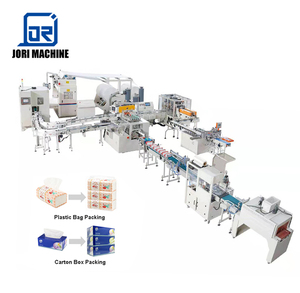
Industrial Tissue & Napkin Converting Equipment
High-precision rewinding, folding, embossing, and automated packaging systems engineered for maximum overall equipment effectiveness (OEE).
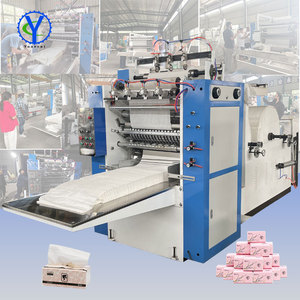
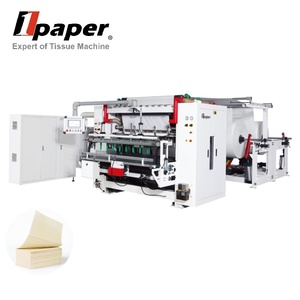
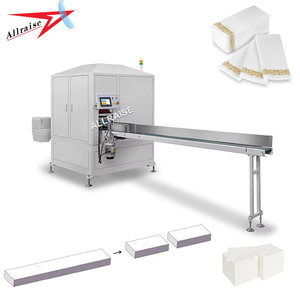
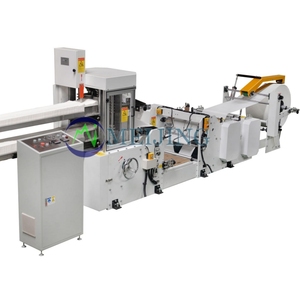
3,500+
Sheets/Min Mechanical Speed
±0.5mm
High-Precision Cutting Tolerance
99.2%
Operational Line Efficiency
65+
Countries Exported Worldwide
China Paper Napkin Machinery Supply Chain: Engineering & Export Market White Paper
The global tissue paper converting sector is undergoing a massive technological shift. Industrial tissue mills, commercial converters, and private-label paper manufacturers face increasing pressure to balance operational efficiency, raw material flexibility, energy consumption, and product differentiation. As a premier hub for pulp and paper machinery engineering, China has evolved into the dominant global supplier of automated paper napkin making machines, interfolded tissue production lines, and turnkey finishing systems.
Modern paper napkin production requires precise tension control, accurate mechanical folding heads, dynamic flexographic color registration, and automated log saw transfer. China's industrial tissue equipment manufacturers have bridged the gap between ultra-expensive European machinery and entry-level semi-automatic equipment. By integrating advanced PLC servo-drive systems, hardened tungsten carbide slitting knives, and heavy-duty steel-to-rubber embossing units, Chinese paper napkin machine exporters offer high-capacity solutions with rapid return on capital investment (ROI).
Strategic Engineering Insight: Selecting a paper napkin making line demands a holistic analysis of basis weight tolerance (13 g/m² to 28 g/m²), parent roll web tension, flexographic ink drying speed, and folding geometry. Modern high-speed lines eliminate manual intervention from parent roll unwinding to final flow wrapping.
Substrate Handling Versatility: Virgin vs. Recycled Fibers
A critical engineering consideration for commercial napkin converters is substrate adaptability. Leading paper napkin machinery lines are engineered to handle a broad spectrum of tissue paper stock—ranging from 100% virgin wood pulp to high-percentage recycled kraft fiber, bamboo pulp, and sugarcane bagasse paper. Unwind stands are equipped with pneumatic continuous tension control and automatic edge-alignment sensors (EOG/LPC systems), ensuring smooth feeding without web breakage even at operational speeds exceeding 800 meters per minute.
Key Engineering Innovations in Modern Napkin Machines
Discover how advanced mechatronics elevate napkin converting output, print quality, and fold accuracy.
Servo-Driven Synchronization
Independent servo motors drive the unwinding, embossing, printing, and folding rollers. Multi-axis PLC motion controllers guarantee zero phase drift, maintaining perfect print-to-emboss-to-fold registration during high-speed acceleration and deceleration.
High-Definition Flexo Printing
Integrated 1-color to 4-color flexographic printing stations feature ceramic anilox rollers and enclosed doctor blade systems. Water-based food-grade inks dry instantly under warm air blowers without color bleeding or web distortion.
Precision Embossing Units
Custom-engraved steel-to-rubber or steel-to-steel embossing cylinders create deep, tactile patterns (border-embossed, full-embossed, or 3D point-to-point) that significantly enhance napkin bulk, absorbency, and visual appeal.
Technical Specifications Matrix: Enterprise Paper Napkin Production Lines
Below is an engineering benchmark table detailing standard configurations for industrial napkin, facial tissue, and towel converting lines sourced from top Chinese suppliers:
| Machine Model Series | Parent Roll Width (mm) | Finished Fold Types | Design Speed (Pcs/Min) | Air Consumption | Total Power (kW) |
|---|---|---|---|---|---|
| NP-330 Standard Napkin Line | 330 mm | 1/4 Fold, Cocktail (230x230 to 330x330 mm) | 2,200 – 3,200 | 0.4 – 0.6 MPa | 5.5 kW – 8.5 kW |
| NP-400 High-Speed Dinner Line | 400 mm | 1/4 Fold, 1/8 Fold, Book Fold | 3,000 – 4,500 | 0.6 MPa | 11.0 kW – 18.5 kW |
| FT-200 V-Fold Facial Tissue Line | 1200 – 2800 mm | V-Fold / Interfold (Interleaved) | 1,200 sheets/lane/min | 0.8 MPa (Vacuum pumps) | 22.0 kW – 45.0 kW |
| TR-2200 Toilet Paper Rewinder | 2200 mm | Perforated Roll / Center-Pull Log | 180 – 230 m/min | 0.6 MPa | 15.0 kW – 30.0 kW |
Future Procurement Trends in Paper Napkin Machinery (2025–2030)
As tissue converting plants scale operations, procurement teams are transitioning from buying standalone machines to procuring fully integrated, intelligent manufacturing cells. Understanding upcoming engineering trends ensures long-term capital protection and operational dominance.
1. Automated In-Line Packaging Integration
The manual transfer of folded napkin stacks to packing stations creates significant labor bottlenecks and hygiene risks. Next-generation procurement specs emphasize direct line connection: Napkin Folding Head → Automatic Electronic Counting → Servo Pushers → Automated Flow Wrapper / Bagging Unit. Single-pass automation reduces labor headcount by up to 75% while achieving sanitary standards required for QSR (Quick Service Restaurant) supply chains.
2. Quick-Change Embossing Cylinder Systems
Private-label manufacturers require rapid changeover between custom branded logos, hotel monograms, and standard floral embossing patterns. Modern Chinese paper napkin machines incorporate hydraulic cassette quick-change systems, allowing operators to swap heavy embossing cylinders in under 30 minutes—a task that previously consumed an entire shift.
3. Eco-Friendly Water-Based Ink & Energy Recovery Drives
Global sustainability mandates necessitate machinery capable of handling non-woven substrates, bio-degradable inks, and ultra-thin tissue weights without tearing. Furthermore, regenerative inverter drives capture kinetic braking energy from heavy folding drums, feeding electricity back into the factory grid and lowering total kilowatt-hour consumption per ton of paper processed.
Our Enterprise Advantages & Factory Capability
Why leading global converters choose us as their long-term equipment supplier and OEM engineering partner.
In-House Machining & Quality Control
Our facility houses high-precision 5-axis CNC machining centers, dynamic balancing rigs, and laser alignment tools. By manufacturing critical rollers, gearboxes, and folding jaws internally, we guarantee stringent structural tolerances and rapid spare parts dispatch.
Custom Engineering & Turnkey Layouts
No two converting plants are identical. Our engineering team provides custom line CAD layouts, electrical schematic integration, local voltage/frequency customization (380V/415V/480V, 50/60Hz), and tailor-made fold pattern tooling.
Global On-Site Commissioning & Training
We deploy experienced field engineers worldwide to manage mechanical installation, PLC debugging, operator safety training, and OEE optimization, backed by 24/7 remote diagnostic support over secure IoT gateways.
Frequently Asked Questions (FAQ) for Tissue Machinery Procurement
Expert answers to essential technical, financial, and operational questions asked by plant managers and procurement professionals.
Q1: What is the main difference between 1/4 fold, 1/8 fold, and cocktail napkin machines?
The folding geometry dictates the internal mechanical structure of the folding head. A 1/4 fold machine folds the square tissue sheet twice at right angles (e.g., 330x330 mm open sheet yields a 165x165 mm product). A 1/8 fold machine adds an extra fold for long rectangular dinner napkins. Cocktail napkin machines are optimized for smaller sheet sizes (typically 230x230 mm or 250x250 mm) running at significantly higher mechanical rotation speeds.
Q2: How do I calculate net production output versus gross machine speed?
Gross speed refers to the theoretical maximum mechanical rotation of the machine (e.g., 3,000 sheets/min). Net real output accounts for Overall Equipment Effectiveness (OEE), including parent roll changeovers (approx. 3–5 min per roll), ink replenishment, blade sharpening, and routine web break clearance. A well-engineered line operates at 85%–92% practical OEE efficiency over an 8-hour shift.
Q3: What raw paper specification is ideal for soft, non-tearing napkins?
We recommend using 100% virgin tissue pulp with a basis weight of 14 to 18 g/m² per ply for 2-ply napkins, or 18 to 24 g/m² for 1-ply napkins. Tensile strength in both machine direction (MD) and cross direction (CD) must be balanced to withstand high-speed embossing without perforation tears.
Q4: Can one napkin making machine produce multiple napkin sizes?
Mechanical folding heads are manufactured for specific opened sheet dimensions. However, width adjustments within a narrow range can be accomplished via adjustable slitting knives and web guides. For drastically different product dimensions (e.g., switching from 230mm cocktail to 400mm dinner napkins), specialized modular converting heads or dedicated lines are recommended to avoid compromised fold accuracy.
Q5: How does the automatic counting and stacking system operate?
An optical photo-sensor counts folded napkins exiting the folding vacuum cylinder. Once the preset stack count (e.g., 50 or 100 pieces) is reached, a pneumatic kicker finger shifts the stack slightly or pushes it directly onto the downstream conveyor belt leading to the flow wrapper.
Ready to Upgrade Your Tissue Converting Capacity?
Contact our engineering specialists today for custom line quotes, factory layout designs, and complete technical specifications tailored to your production goals.
Get a Quote