High-Efficiency Tissue Paper Converting Production Equipment
Explore our flagship interfolding, rewinding, and automatic packaging machinery lines built to precision engineering standards for global tissue converters.
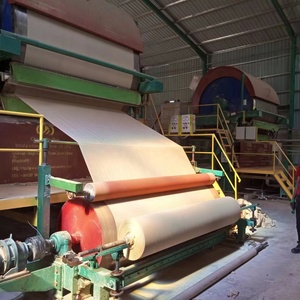
Industrial Bamboo Pulp Tissue Toilet Paper Making Machine
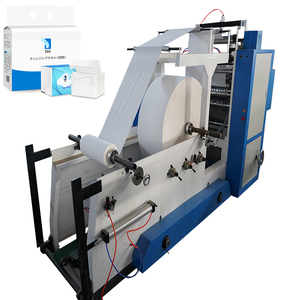
Pocket Facial Tissue Machine Mini Portable Automatic Production Line
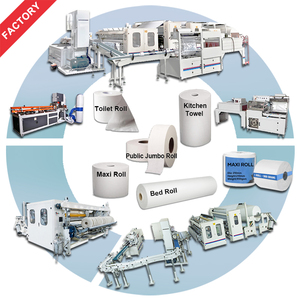
High-Speed Automatic Tissue Manufacturing Line for Toilet Rolls & Kitchen Towels
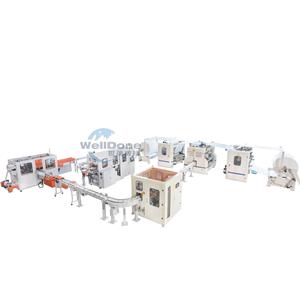
Welldone Automatic Multifold Paper Towel & Facial Tissue Folding Machine
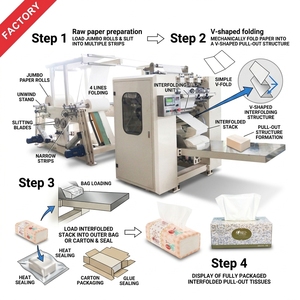
Facial Tissue & Toilet Paper Converting Making Machine Line
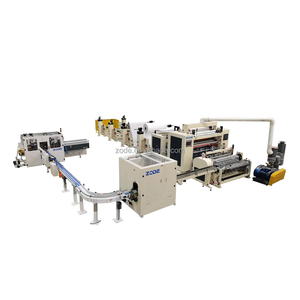
Factory Production Line Automatic Facial Tissue & Towel Making Machine
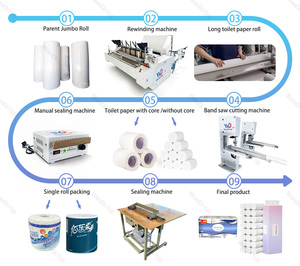
High Efficiency 2200mm Small Toilet Tissue Paper Manufacturing Lines
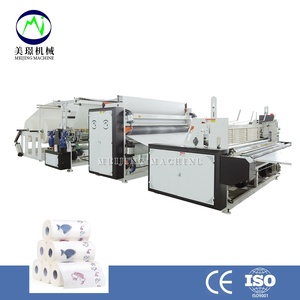
Siemens PLC Glue Lamination Kitchen Towel & Tissue Converting Machine
Facial Tissue Interfolding Machinery Architecture & Mechanics
A comprehensive analysis of vacuum interfolding systems, tension synchronization, and mechanical shear precision for modern high-speed tissue paper factories.
Vacuum Absorption Folding Mechanics
Modern interfolding machinery relies on advanced vacuum suction technology rather than outdated mechanical folding fingers. Dual air-channel suction rolls pull the cut paper web synchronously, creating clean V-fold (1/2 fold), Z-fold (1/3 fold), or W-fold (1/4 fold) geometry without tearing delicate fiber structures or disrupting web stability.
Servo-Driven Unwind Synchronization
Each parent roll unwind stand incorporates independent AC servo motors linked via high-speed Ethernet to the main PLC controller. Real-time ultrasonic web sensors continuously measure parent roll diameter and auto-adjust tension parameters to maintain constant web tension within ±0.5 N/m, preventing paper breakage during web acceleration.
Precision Slitting & Embossing Modules
Helical shear slitting knives constructed from micro-grain tungsten carbide deliver clean, dust-free edges across multi-lane configurations. Optional point-to-point or steel-to-rubber embossing rollers feature air-cylinder loading for uniform ply bonding, enhancing bulkiness, absorbency, and tactile softness.
Facial Tissue Interfolding Machine Specification Matrix
Evaluate production capacity, web width options, and power configurations to align machinery selection with your plant's target output requirements.
| Specification Model | Working Width | Folding Lanes | Design Speed | Parent Roll Dia. | Paper Basis Weight | Control System |
|---|---|---|---|---|---|---|
| AICC-FT-2L (Starter) | 420 - 500 mm | 2 Lanes | 800 - 1000 sheets/min | Max 1200 mm | 13 - 18 gsm (2 ply) | Inverter + Touchscreen |
| AICC-FT-4L (Standard) | 840 - 1050 mm | 4 Lanes | 1800 - 2200 sheets/min | Max 1500 mm | 12 - 20 gsm (2-3 ply) | Siemens PLC + Servo Drive |
| AICC-FT-6L (High Output) | 1260 - 1500 mm | 6 Lanes | 3000 - 3600 sheets/min | Max 1500 mm | 12 - 22 gsm (2-4 ply) | Full Servo Motion Controller |
| AICC-FT-10L (Industrial) | 2100 - 2400 mm | 10-12 Lanes | 5000 - 6500 sheets/min | Max 1800 mm | 11 - 22 gsm (2-4 ply) | Siemens S7-1500 Motion Servo |
Why Global Converters Partner With China's Leading Interfolding Machinery Manufacturer
Choosing an industrial tissue converting machine requires more than comparing initial equipment purchase prices. It requires an engineering partner with verified precision manufacturing capabilities, reliable spare parts availability, and robust quality control standard operating procedures.
Our state-of-the-art manufacturing facility combines in-house CNC machining centers with world-class electrical automation components to build production machinery engineered for continuous 24/7 operation with minimal downtime.
- ✓ In-House CNC Precision Tooling & Frame Stress Relief Treatment
- ✓ Standardized Siemens S7-1500 PLC & Motion Control Architecture
- ✓ Pre-Shipment Video Commissioning & Rigorous 72-Hour Continuous Testing
- ✓ Turnkey Production Line Integration (Unwind to Auto-Packing)
- ✓ Lifetime Global Technical Remote Diagnostics & Emergency Parts Dispatch
Manufacturing Quality Commitments
All high-speed folding rollers undergo dynamic balancing at 1.5x working speed to guarantee vibration-free operational longevity.
Variable frequency drive (VFD) vacuum pump management reduces plant power consumption by up to 22% compared to conventional air blowers.
Fully compliant with CE directives, ISO9001 quality management, and international electrical safety standards.
Future Procurement Trends in Facial Tissue Converting Equipment
Market dynamics, raw material transitions, and Industry 4.0 technological evolutions shaping the next decade of tissue converting investments.
1. Transition to Non-Wood & Bamboo Fiber Pulps
Escalating consumer demand for sustainable tissue products has accelerated the market adoption of 100% bamboo pulp, sugarcane bagasse, and recycled fiber blends. Sustainable raw materials present variable tensile strengths and fiber lengths. Future-ready interfolding equipment must feature responsive pneumatic web tension adjustments and specialized embossing micro-geometries to process non-wood fibers without web breakage or excessive lint formation.
2. High-Speed Soft-Pack Packaging Integration
While traditional box facial tissues remain commercial staples, plastic soft-pack facial tissues have experienced explosive double-digit growth in international markets due to lower transport volume and reduced unit packaging costs. Buyers are increasingly prioritizing direct inline integration between interfolding machines, log saws, auto-transfer systems, and high-speed automatic soft-pack wrapping units to eliminate labor-intensive manual transfers.
3. IoT Remote Diagnostics & Predictive Maintenance
Unplanned machine downtime directly degrades converter profit margins. Next-generation machinery incorporates IoT edge gateways and cloud analytics. Vibration sensors mounted on folding roll bearings, temperature monitors on servo drivers, and web dust accumulation counters provide early-warning maintenance notifications via mobile dashboard apps, shifting plant maintenance protocols from reactive repair to scheduled predictive care.
Frequently Asked Questions for Tissue Converting Machinery Buyers
In-depth answers to technical, operational, and financial questions commonly raised by paper converting plant owners and engineers.
Q1: How do I determine the optimal number of folding lanes for my factory?
Selecting the lane count (e.g., 2, 4, 6, 8, or 10 lanes) depends primarily on your target monthly output (in tons or finished packs) and available parent roll web widths from your paper mill suppliers. A 4-lane machine is ideal for small-to-medium enterprise startups producing 2-4 tons per shift, while 6-lane and 10-lane lines serve industrial converters producing 8-20+ tons daily. Ensure your downstream packaging machinery matches the total lineal output of the interfolding head.
Q2: What paper basis weight (GSM) ranges can these interfolding machines process?
Our facial tissue interfolding lines process paper basis weights ranging from 12 gsm to 22 gsm per ply, accommodating 2-ply, 3-ply, and 4-ply tissue configurations. The machine features precise magnetic powder brake tension control and pneumatic unwinds, allowing seamless processing of both 100% virgin wood pulp and high-elongation bamboo pulp blends without sheet perforation or web drift.
Q3: What is the difference between V-Fold, Z-Fold, and W-Fold interfolding mechanisms?
V-Fold (1/2 fold) creates a single fold where pulling one tissue pulls out the leading edge of the next sheet. Z-Fold (1/3 fold) adds an extra fold layer, providing higher sheet count capacity within compact box or soft-pack dimensions. W-Fold (1/4 fold) is common for premium thick facial tissues and towel products. Our machines feature interchangeable folding board cassettes or modular vacuum roll adjustments to accommodate different folding styles.
Q4: Can glue lamination and embossing units be added to an existing line?
Yes. Our modular machine frames are engineered with pre-drilled mounting interfaces and synchronized drive shafts, allowing point-to-point or color glue lamination modules and custom steel-to-rubber embossing rollers to be integrated during initial factory assembly or retrofitted in the field as product lines expand.
Q5: What are the typical power and compressed air requirements for operation?
A standard 4-lane automatic facial tissue line requires a 380V/50Hz 3-phase power supply with a total installed motor capacity of approximately 15 kW to 22 kW (depending on vacuum pump options). Compressed air consumption averages 0.6 to 0.8 MPa at 0.4 m³/min for pneumatic web loading and counting knife actuators.
Q6: How long is the equipment lead time, and what installation support is provided?
Standard machine manufacturing lead time is 35 to 45 days following technical drawing sign-off and deposit receipt. Custom multi-lane full turnkey lines require 60 days. Every line includes complete user manuals, foundation wiring schematics, and options for factory engineer deployment for site installation, commissioning, and local operator training.
Ready to Upgrade Your Tissue Converting Plant Capacity?
Consult with our senior mechanical engineers to request custom machine technical drawings, production line layout designs, and competitive direct factory quotations tailored to your operational budget.
Get a Quote