Whitepaper: Strategic Engineering & Procurement Blueprint for Tissue Converting Machinery
The global tissue manufacturing and paper converting industry is undergoing a massive paradigm shift toward high-speed automation, zero-waste energy efficiency, and material-versatile production lines. As buyers evaluate machinery suppliers from China—the world’s epicenter for advanced machinery manufacturing—understanding the technical parameters, total cost of ownership (TCO), and mechanical synchronicity of tissue converting systems is paramount to achieving long-term profitability.
Key Takeaway for B2B Purchasing Managers & Plant Directors:
A machine’s catalog speed (m/min) rarely equals its actual saleable output. Operational profitability relies heavily on web-tension stability, quick roll changeover times, minimal trim waste, and seamless line integration between rewinding, log cutting, and primary packaging units.
Understanding the Tissue Converting Value Chain
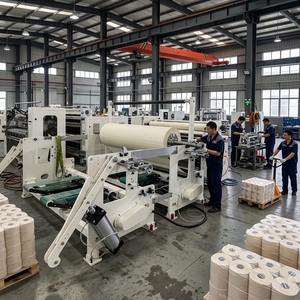
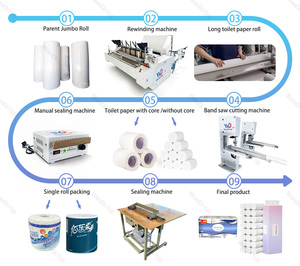
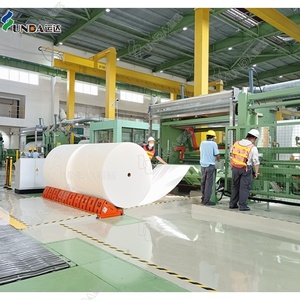
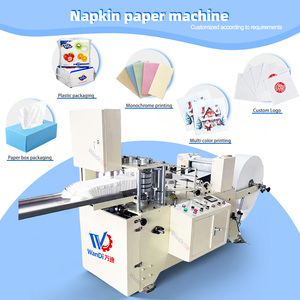
Tissue converting is the mechanical process of transforming large parent jumbo rolls (produced by pulp and paper mills) into finished, consumer-ready products such as toilet rolls, kitchen towels, facial tissue soft-packs, napkin sheets, and commercial hand towels. The process demands intricate control over physical paper dynamics:
- Unwind Stand & Tension Control: Constant tension management using pneumatic brake systems and servo-driven unwinding belts prevents web breakage when processing low-GSM, multi-ply tissue papers.
- Embossing & Lamination: Micro-embossing, nested embossing, or steel-to-rubber patterning increases tissue bulk, enhances softness, and improves liquid absorption without compromising tensile strength.
- Perforation Mechanics: High-precision rotary helical perforating knives guarantee uniform sheet tearing lengths across operational speeds exceeding 250 to 800 meters per minute.
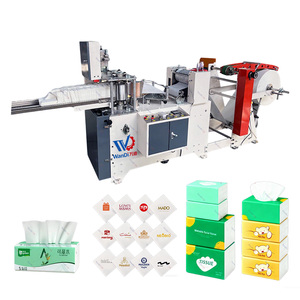
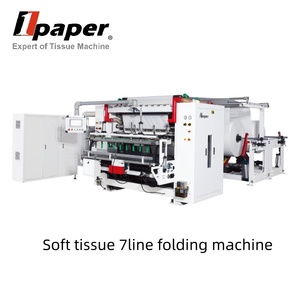
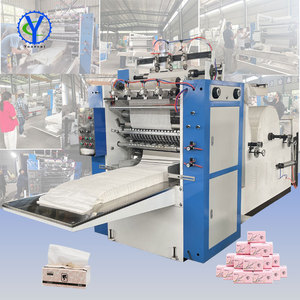
- Interfolding Dynamics: For facial tissues and hand towels, vacuum-assisted or mechanical interfolding drums fold tissue webs into continuous 'V', 'Z', or 'C' fold configurations without static friction accumulation.
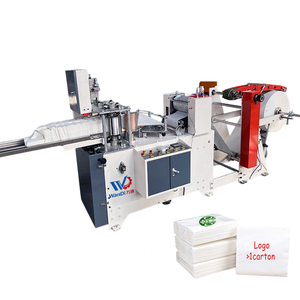
- Log Slicing & Packaging: High-speed orbital band-saw log cutters synchronize with automated bundle wrappers or cartoning machines to eliminate bottlenecking.
Technical Specification Benchmark Matrix: Line Configurations
| Performance Metric |
Semi-Automatic Entry Line |
Fully Automatic Standard Line |
Ultra High-Speed Servo Line |
| Operating Web Speed |
120 - 180 m/min |
200 - 350 m/min |
500 - 800+ m/min |
| Parent Roll Diameter |
Max 1200 mm |
Max 1500 mm |
Max 2200 mm |
| Drive Technology |
Inverter + Mechanical Gears |
Multi-Axis PLC + Servo Motors |
Full Motion Controller + Direct Servo Drive |
| Target Output / Shift (8h) |
8,000 - 15,000 rolls |
30,000 - 60,000 rolls |
120,000 - 250,000+ rolls |
| Labor Requirement |
3 - 4 Operators |
1 - 2 Operators |
1 Supervisory Operator |
| Recommended Use Case |
Startup factories, niche products |
Growing regional brands |
National market brand owners |
Technological Evolution in Modern Tissue Manufacturing Equipment
Achieving superior tissue hand-feel, high absorption capacity, and crisp visual branding requires sophisticated mechanical innovations integrated into the converting line. Key technological breakthroughs pioneered by top Chinese manufacturers include:
Advanced 3D Steel-to-Rubber & Glue Lamination Systems
Modern converting equipment utilizes point-to-point or point-to-flat embossing coupled with precision glue lamination units. By applying microscopic adhesive droplets on the raised nodes of the embossed tissue web, two or three plies are permanently bonded. This traps air pockets inside the tissue matrix, increasing overall thickness, softness, and liquid absorbency while enabling lower GSM raw paper utilization.
Helical Rotary Log Saw Slicing Technology
Old-generation guillotine cutters caused roll end deformities, ragged edge cuts, and core crushing. Modern high-speed production lines incorporate continuous orbital rotary log saws featuring continuous automatic blade sharpening and servo-driven log feeding. This achieves clean, burr-free perpendicular cuts on logs at speeds of up to 200 cuts per minute.
Vacuum Adsorption High-Speed Facial Tissue Interfolding
In soft-pack facial tissue production, traditional mechanical finger folding limits line speed and causes frequent paper jams on lightweight tissue. Vacuum adsorption interfolding technology employs hollow perforated folding drums driven by high-vacuum blowers. The paper webs are drawn onto the drum surface cleanly, folded into interlocking sheets with exact precision, and counted electronically without physical contact.
Formula: Calculating Realized Daily Output Yield for Toilet Roll Lines
Plant managers can calculate realistic daily output using the following industrial engineering formula:
Daily Output (Rolls) = [Line Speed (m/min) × 60 min × Operating Hours × Efficiency Factor (%) × Plies] / [Sheet Length (m) × Sheets per Roll]
Where Efficiency Factor accounts for parent roll loading downtime (typically 82% to 92% on fully automated lines).