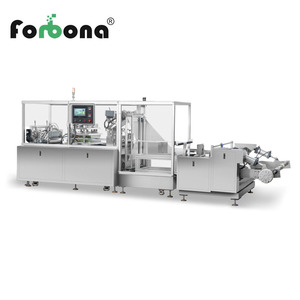
Featured Industrial Tissue Machinery Equipment
High-precision rewinding, interfolding, embossing, core making, and automated packaging systems tailored for global tissue converters and paper processing enterprises.
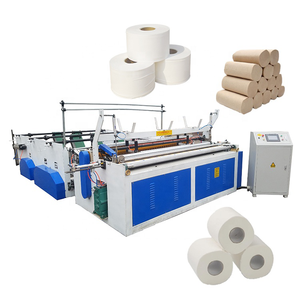
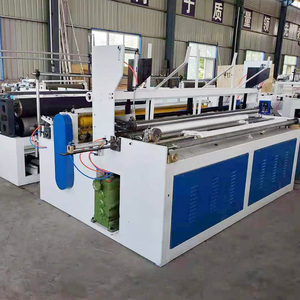
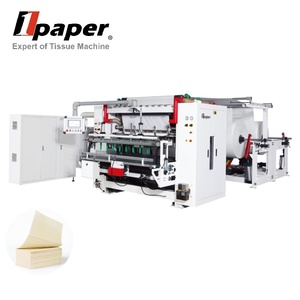
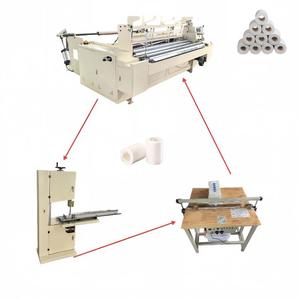
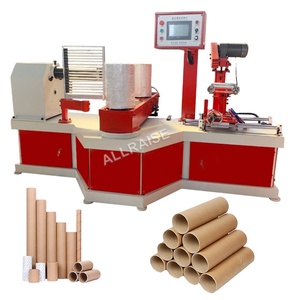
25+
Years Engineering Excellence
85+
Global Export Markets
600
Pcs/Min Max Speed Capacity
99.4%
Operational Uptime Reliability
Engineering Excellence: In-House Manufacturing & Infrastructure Supremacy
In the highly competitive landscape of industrial tissue converting equipment, the distinction between a premier OEM manufacturer and an assembly-only workshop lies in structural precision, component durability, and control over core machining processes. As a premier Chinese manufacturer of high-performance tissue machinery, our manufacturing plant operates an extensive, state-of-the-art in-house CNC machining center.
Unlike commercial suppliers who outsource core structural components, we maintain complete control over raw material selection, heavy-duty frame milling, precision roller dynamic balancing, and hardened steel-to-steel embossing cylinder grinding. This direct manufacturing capability drastically reduces operational tolerances to ±0.02mm, guaranteeing that under continuous high-speed rewinding and interfolding operations, machinery vibration is virtually eliminated while mechanical service life is extended beyond 15 years.
Information Gain Insight: Sourcing tissue converting machinery directly from a true Chinese OEM facility with in-house heavy machining capabilities provides tissue converters with up to a 35% reduction in Total Cost of Ownership (TCO). This advantage stems directly from matched gear-to-servo ratios, elimination of component misalignments, and immediate spare parts availability.
In-House Machining & Milling
Every critical frame, rewind mandrel, and perforation roll is fabricated using multi-axis CNC machine tools, ensuring absolute mechanical alignment and zero-defect concentricity.
Matched Line Integration
From parent roll unwinding through point-to-point embossing, high-speed log sawing, to single-roll or bundle wrapping, our lines operate under a synchronized PLC system.
International Quality Certification
All production lines strictly adhere to European CE safety mandates, ISO9001 quality management systems, and undergo 72-hour continuous operational test runs prior to export shipment.
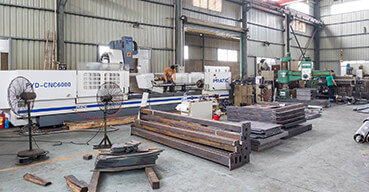
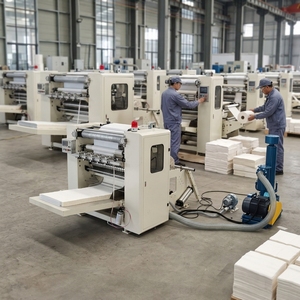
Heavy-Duty Machinery Assembly Center
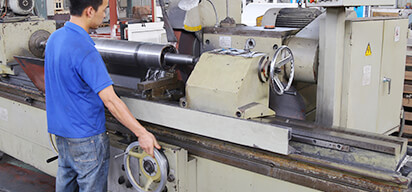
Precision CNC Component Machining
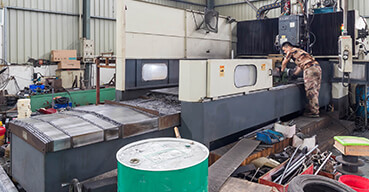
Automated Line Testing & Integration
Technological Evolution Trends in Tissue Converting Equipment
The global tissue manufacturing and paper converting industry is undergoing a structural paradigm shift driven by rising raw material costs, energy efficiency targets, and consumer demand for premium, ultra-soft multi-ply tissue products. Chinese tissue machine manufacturers are at the forefront of this revolution, incorporating advanced mechatronics and artificial intelligence into standard equipment architectures.
1. Full-Servo Motor Kinematic Drives vs. Legacy Mechanical Cam Systems
Traditional tissue converting machinery relied heavily on line shafts, complex mechanical cams, and manual gearboxes. Modern procurement standards prioritize full-servo motor architectures (utilizing Siemens, Mitsubishi, or Delta servo drives). Servo-driven systems allow micro-second adjustments of web tension during parent roll unwinding and high-speed rewinding. This eliminates web breakage when processing ultra-light virgin pulp (11-13 gsm) or high-recycled content tissue papers, raising overall machine efficiency (OEE) by up to 22%.
2. Smart Point-to-Point & Nested Embossing Technologies
To produce high-loft, premium toilet rolls and kitchen towels without sacrificing paper tensile strength, machine designs now incorporate advanced 3D steel-to-rubber or steel-to-steel embossing units with micro-ply gluing systems. By embossing only the outer plies or using nested point-to-flat configurations, tissue manufacturers can create bulkier, more absorbent products while reducing paper fiber usage per roll by 8% to 12%.
3. High-Speed Helical Band Saw Log Cutting Innovations
The transition from slow manual cutters to fully automated high-speed orbital log saws and servo-guided band saws has revolutionized tissue converting yield. Modern log saws feature automatic blade sharpening systems, real-time optical cutting height detection, and servo-driven trim evacuation. This ensures precise, burr-free roll edges at cutting speeds of up to 180 to 200 cuts per minute.
Global Tissue Machine Procurement Trends (2025–2030)
Procurement directors and paper manufacturing entrepreneurs must analyze multi-year market dynamics when investing in new production capital. The following macro procurement trends define successful tissue converting factory setups worldwide:
| Procurement Pillar | Legacy Sourcing Paradigm | Next-Generation (2025+) Standard | Converter Business Impact |
|---|---|---|---|
| Automation Level | Semi-automatic line with manual log transferring | Fully integrated modular turnkey lines (Unwind to Bundle) | Reduces labor headcount by 60%-70%; minimizes contamination. |
| Energy Consumption | High energy pneumatics; unoptimized AC motors | Regenerative servo drives & vacuum-assisted folding | Lowers power consumption per ton of paper converted by 18%. |
| Product Versatility | Single-format fixed-width machines | Quick-change tooling for multiple sizes/folds | Enables rapid product pivoting (e.g., standard roll to jumbo maxi roll). |
| Quality Control | Post-production manual sampling | Inline machine-vision web defect inspection | Guarantees 100% finished product compliance for retail brands. |
Modular Scalability for Small to Mid-Sized Converting Operations
A major trend observed across emerging markets in South America, Southeast Asia, Africa, and the Middle East is the demand for flexible modular lines. Factories often begin with a fundamental automatic toilet paper rewinding machine and log cutter, subsequently adding automatic core winders, color-printing napkin machinery, and soft-pack facial tissue wrappers as market demand expands. Modular machinery engineering ensures that initial capital investments are protected while offering effortless plug-and-play expansions.
Frequently Asked Questions: Industrial Tissue Machinery Procurement
Clear, engineering-backed answers to the most common technical and operational inquiries submitted by commercial tissue equipment buyers.
Which specific tissue products can your production machinery lines manufacture?
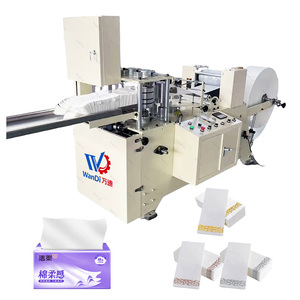
Our complete machinery portfolio covers the full spectrum of sanitary paper conversion. This includes household toilet paper rolls, center-pull industrial rolls, maxi/jumbo commercial rolls, kitchen towels, single-sachet wet wipes, 1/4 and 1/8 fold restaurant napkins with multi-color printing, soft-pack and box facial tissues, folded hand towels (Z-fold, V-fold, N-fold), and pocket handkerchief tissues. Additionally, we engineer secondary equipment such as spiral paper core makers, orbital log saws, and automatic bundle packing machines.
How should a tissue converting factory calculate and select the right machine capacity?
Capacity planning should always begin with target saleable finished packs or finished roll volume per 8-hour shift, rather than relying solely on peak mechanical machine speed. Calculate the required output by considering parent roll paper basis weight (GSM), roll diameter, sheet count per roll, log cutting cuts per minute, waste percentage (typically 1.5%-2% on automated lines), and shift changeover times. Our technical engineering team provides custom production output matrix calculations based on your specific local market product specifications.
What is the difference between full-servo and semi-automatic tissue paper production lines?
Full-servo production lines feature independent electronic motors for parent roll unwinding, tension control, embossing, perforating, rewinding, and log loading. This allows instantaneous touchscreen adjustments of sheet length and perforation pitch without changing physical gears. Semi-automatic lines rely on mechanical gearboxes and manual log transfer to cutting units. Full-servo lines yield higher output, require fewer operators, and significantly reduce paper web breaks on low-GSM tissue paper.
What essential technical parameters are required to receive a formal quotation?
To provide an exact line configuration and pricing proposal, our engineering team requires: (1) Parent roll maximum width and outer diameter; (2) Paper raw material type (100% virgin pulp, mixed, or recycled paper) and ply count (1-ply, 2-ply, or 3-ply); (3) Finished product specifications (roll diameter, sheet dimensions, napkin fold type, or facial tissue pack size); (4) Desired packaging method (single roll flow-wrap, 4/8/12 roll bundle, soft pack nylon wrap, or carton box); and (5) Local factory power voltage and frequency (e.g., 380V 50Hz 3Phase).
Can international buyers inspect equipment operations prior to contract finalization?
Yes. We encourage full transparency under E-E-A-T procurement standards. Prospective buyers can review comprehensive high-definition running videos of confirmed line configurations, schedule live video factory audits via online conferencing, or visit our manufacturing plant in China to observe live factory FAT (Factory Acceptance Testing) run-throughs using your specific paper raw material samples.
Ready to Upgrade Your Tissue Converting Factory?
Partner with China’s premier tissue machinery manufacturer. Contact our senior engineering directors today for a custom line layout blueprint, technical specification review, and competitive factory-direct quote.
Inquire Now