High-Efficiency Facial Tissue & Paper Converting Lines
Engineered for maximum operational throughput, seamless interfolding precision, and multi-ply structural integrity. Directly sourced from top-tier Chinese manufacturing facilities.
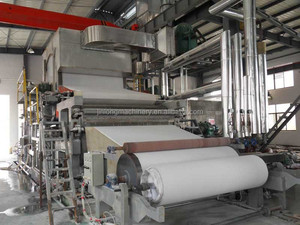
Factory Direct Sale Automatic Facial Tissue & Toilet Paper Making Machine Jumbo Roll Complete Line
View Technical Specs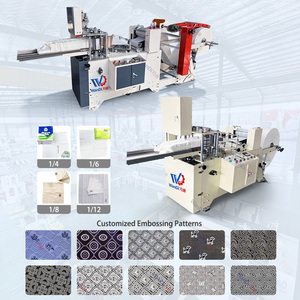
Small Business Ideas Tissue Paper Manufacturing Machine Napkin Tissue Paper Making Machine
View Technical Specs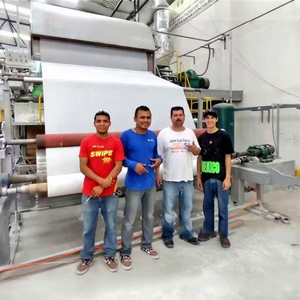
High Quality Full Automatic Facial Toilet Tissue Paper Machine with Waste Paper As Raw Material
View Technical Specs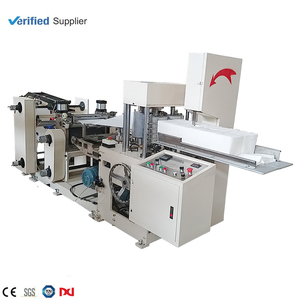
Tissue Making Machine Paper Manufacturing Machine Production Plant
View Technical Specs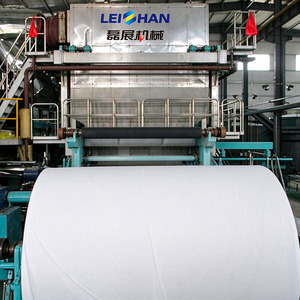
5 Ton Per Day Paper Mill Face Tissue Production Line, Tissue Paper Making Plant
View Technical Specs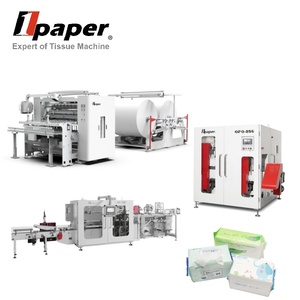
Complete Soft Pack Tissue Production Line Bottom Draw Type Function 150 Pcs/Min
View Technical Specs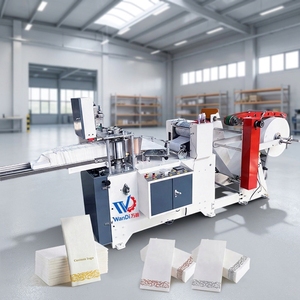
1200pcs/min Automatic Toilet Paper Machine High-speed Tissue Paper Making Machine
View Technical Specs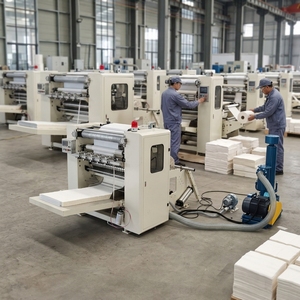
High Speed 400x400mm Automatic Paper Napkin Machine 2-Color Printing 500-600 PCS/Min
View Technical SpecsUnderstanding Box Facial Tissue Machine Architecture: Mechanical vs. Vacuum Interfolding
In the global tissue converting sector, box facial tissue manufacturing represents one of the highest-margin, quality-sensitive segments. Chinese equipment manufacturers have transformed the competitive landscape by closing the technological gap with European machinery while maintaining a 35% to 50% Total Cost of Ownership (TCO) advantage. Selecting the ideal box facial tissue machine requires a deep understanding of parent roll unwinding mechanics, vacuum absorption folding lanes, pneumatic web tensioning, and automatic cartoning integration.
Vacuum Interfolding Technology (V-Fold / Interleave)
High-speed box facial tissue lines utilize continuous vacuum absorption cylinders to fold tissue webs into an interconnected "V" configuration. As sheets are drawn off parent rolls, alternating vacuum suction valves handle the tissue edges, ensuring flawless interleaving even at linear speeds exceeding 200 meters per minute. This prevents paper jams, reduces static buildup, and maintains sheet alignment across 2 to 14 multi-lane configurations.
Automatic Box Cartoning & Sealing Integration
Modern box facial tissue converting requires inline synchronization between the interfolding log cutter and the automatic box packaging machine. Fully automatic box feeders utilize servo-driven pusher arms to insert cut tissue logs into pre-folded paperboard boxes, applying Nordson hot-melt adhesive or mechanical tuck-in flaps at rates up to 150 boxes per minute without operator intervention.
Key Engineering Insight: Overall Equipment Effectiveness (OEE)
A common pitfall for tissue converters is sizing line capacity solely based on theoretical mechanical speeds. Real-world OEE is governed by parent roll changeover time, web break recovery, dust extraction efficiency, and blade wear rate. Top-tier Chinese manufacturers now incorporate automatic web-splicing unwinding stands and dual-blade rotary log saws to sustain OEE levels above 88%.
Box Facial Tissue Machine Specifications & Line Benchmarks
Compare machine configurations across key performance indicators to align equipment selection with your plant's production capacity and ROI targets.
| Machine Specification | Entry-Level Line (2-4 Lanes) | Mid-Tier Commercial (6-8 Lanes) | High-Speed Industrial (10-14 Lanes) |
|---|---|---|---|
| Daily Capacity (8 Hours) | 1.5 – 3.0 Tons | 5.0 – 8.0 Tons | 12.0 – 18.0 Tons |
| Unfolding Width Range | 420 – 840 mm | 1260 – 1680 mm | 2100 – 2940 mm |
| Interfolding System | Mechanical / Pneumatic Vacuum | Continuous Vacuum Cylinder | Dual-Chamber High Vacuum + Auto Splice |
| Cartoning Machine Linkage | Semi-Auto Box Stuffer | Fully Automatic Hot-Melt Box Cartoner | Robot Pick & Place + High-Speed Cartoner |
| Pulp Fiber Compatibility | Virgin Wood Pulp (13-18 gsm) | Virgin, Bamboo, Sugarcane Bagasse | All Fiber Grades including 100% Recycled |
| Operator Requirement | 2 – 3 Technicians | 1 – 2 Technicians | 1 Supervisor (Line Fully Automated) |
Future Procurement Trends in Box Facial Tissue Machinery (2025–2030)
Global procurement teams and tissue converting executives must anticipate shifting industry drivers when evaluating Chinese box facial tissue equipment manufacturers. The convergence of sustainability mandates, labor costs, and smart automation is reshaping specification requirements across international markets.
1. Energy Efficiency & Low-Noise Vacuum Systems
Traditional vacuum folding pumps consume up to 40% of a plant's electrical load. Next-generation Chinese facial tissue machines integrate variable frequency drive (VFD) Roots blowers and multi-stage air recirculation, reducing power consumption per ton of paper by over 22% while dropping ambient noise below 78 dB.
2. Sustainable Fiber Adaptability (Non-Wood Pulps)
With global ESG mandates tightening, converters are increasingly running 100% bamboo fiber, wheat straw, and agricultural residue pulps. Advanced tissue converting equipment now features self-adjusting tension rolls and specialized surface treatment on folding cylinders to prevent lint clogging and web breaks caused by shorter non-wood fibers.
3. Industry 4.0 Telematics & Predictive Maintenance
Leading Chinese wholesalers now equip box facial tissue converting lines with cloud-connected IoT gateways. Remote diagnostic modules allow engineers to monitor bearing temperatures, vibration signatures, and servo torque profiles in real-time, preventing unplanned downtime through AI-driven predictive maintenance alerts.
Technological Development Trends in Box Facial Tissue Manufacturing
The engineering evolution of box tissue manufacturing equipment focuses on high precision, minimal manual intervention, and multi-format versatility. Key technology breakthroughs pioneered by Chinese machine builders include:
A. Full-Servo Direct Drive Motion Control
Legacy mechanical lines relied on complex gearboxes, timing belts, and jackshafts, which suffered from mechanical wear and cumulative timing errors. Modern high-speed lines utilize independent servo motors for each folding cylinder, slitting unit, and pusher mechanism. This motion synchronization allows dynamic web tension adjustment and recipe-driven format changes via touch-screen HMI within minutes.
B. Steel-to-Rubber and Point-to-Point Embossing Units
Premium facial tissue brands require superior softness and structural loft. Modern converting machines integrate CNC laser-engraved steel-to-rubber or steel-to-steel embossing rollers with micro-ply lamination. Pneumatic pressure controls ensure even emboss depth across parent web widths exceeding 2.8 meters without damaging tensile strength.
C. AI Vision Inspection and Automatic Dust Cleanout
High-speed paper folding creates micro-dust that can compromise optic sensors and carton glue adhesion. Advanced lines integrate continuous negative-pressure dust extraction hoods alongside inline camera vision inspection systems that detect web tears, pinhole defects, and sheet count discrepancies prior to cartoning.
Our Manufacturing Capabilities & Strategic Advantages
As a leading Chinese manufacturer and global exporter of tissue converting machinery (leveraging robust engineering heritages such as Xinyou Machinery and Arabia Industrial Equipment), our production facilities stand at the forefront of precision engineering, strict quality compliance, and comprehensive customer support.
In-House CNC Precision Machining Center
Unlike assemblers who outsource critical components, we machine our own folding cylinders, wallboards, and log saw frames in-house using heavy-duty 5-axis CNC machining centers. This guarantees strict concentricity, eliminates vibration at high speeds, and dramatically extends machine lifespan.
Turnkey Engineering & Line Matching
We design complete end-to-end lines tailored to your raw paper specifications and packaging goals. From parent roll unwinding stands and embossing rollers to interfolders, log saw cutters, box cartoners, and automated bundle shrink wrappers—every unit is synchronized by output speed to eliminate bottlenecks.
Strict Quality Certification & Compliance
All machinery meets stringent CE safety directives, ISO9001 quality management standards, and international electrical codes (UL/Schneider/Siemens). Every line undergoes a 72-hour continuous trial run with customer-supplied paper rolls prior to shipment.
Global Commissioning & Spare Parts Support
With operational equipment deployed across the Middle East, South America, Africa, Southeast Asia, and Europe, our experienced field engineers provide on-site installation, staff training, and lifetime spare parts supply with 24/7 technical hotline access.
Frequently Asked Questions for Tissue Converting Machinery Buyers
Clear, authoritative technical answers to assist factory owners, plant managers, and equipment buyers during procurement evaluation.
What is the key difference between box facial tissue machines and soft-pack tissue machines?
While both machine types utilize interfolding vacuum technology to fold paper sheets into interleaved V-fold or Z-fold formats, the primary distinction lies in downstream packaging. Box facial tissue lines discharge cut tissue stacks into automatic cartoning machines that open, insert, and seal rigid paperboard boxes using hot-melt adhesive or tuck-in flaps. Soft-pack lines direct tissue stacks into automatic film wrapping machines that pack tissues in flexible plastic/polyethylene film pouches.
How do I calculate the correct lane count and capacity requirements for my factory?
Machine capacity calculation starts with your target saleable finished units per shift rather than nominal machine speed. Multiply target boxes per shift by sheet count per box (e.g., 100 sheets/box) to determine total required sheets per minute. Then divide by single-lane interfolding linear speed (typically 800-1000 sheets/min per lane). For instance, producing 30,000 boxes of 100-sheet tissue per 8-hour shift requires a 6-lane or 8-lane continuous vacuum interfolding line linked with an inline cartoner operating at 65-80 boxes/min.
What raw paper parameters (GSM, Ply, Roll Diameter) are required for optimal machine operation?
Most facial tissue interfolding machines accept parent paper rolls with basis weights ranging from 13 to 18 gsm per ply (2-ply or 3-ply configuration). Maximum parent roll diameters typically range from 1200 mm to 1500 mm with standard 3-inch (76 mm) inner core shafts. Tensile strength and moisture content (6-8% optimal) are crucial to prevent web breaks when running at high linear speeds.
Can one box facial tissue machine handle multiple box dimensions and sheet counts?
Yes. Sheet length is fixed by the circumference of the folding cylinder (commonly 190 mm, 200 mm, or 210 mm), but sheet width can be adjusted by moving slitting blade positions across the parent web. The automatic cartoning unit features adjustable guide rails and servo pusher strokes, allowing fast format changeovers across small cube boxes, standard flat boxes, and family pack sizes.
What pre-requisites are needed in my facility before installing a high-speed tissue converting line?
Plant managers should prepare: (1) Level concrete foundation capable of supporting 8 to 15 tons of localized machine weight; (2) Three-phase electric power supply (380V/415V/480V, 50/60 Hz depending on region); (3) Industrial air compressor providing 0.6–0.8 MPa clean dry air; (4) Dust collection ducting space; and (5) Dedicated raw material and finished product buffer storage areas.
Request a Customized Box Facial Tissue Line Quotation
Connecting directly with our engineering sales team ensures your tissue converting machinery is custom-configured for your market's exact paper specifications, box dimensions, and production targets.