Featured Automatic Napkin & Tissue Converting Machinery
Explore our specialized equipment portfolio engineered for commercial tissue processing plants, high-yield tissue mills, and flexible packaging facilities.
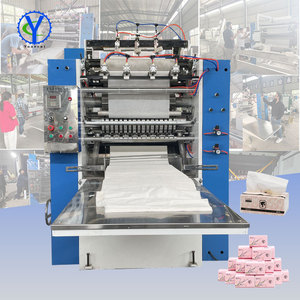
Low Cost Soft Facial Tissue Production Line Facial Tissue Paper V Fold Machine
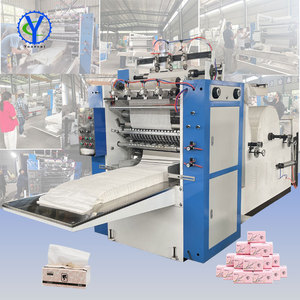
Small Business Ideas PLC Control Facial Tissue Production Line Tissue Paper Machine
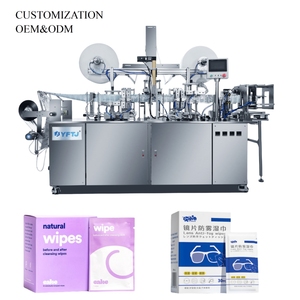
Full Automatic Wet Tissue Line Single Sachet Wet Wipes Making Machine
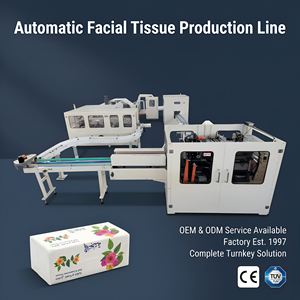
Facial Tissue Converting Machine Line High Efficiency Bundle Packing Line
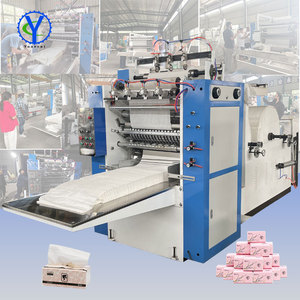
Full Automatic Multi Size Tissue Paper Converting Machine Line
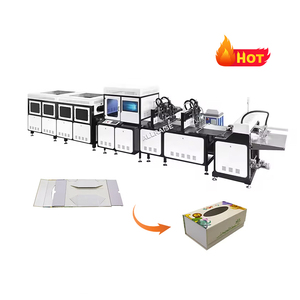
Automatic Facial Tissue Gift Box & Rigid Box Packaging Machine
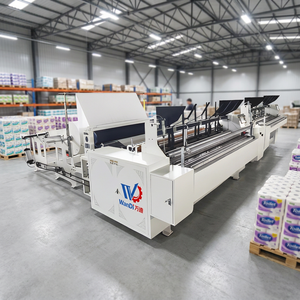
Mini Automatic Toilet Tissue Paper Rewinding & Converting Machine
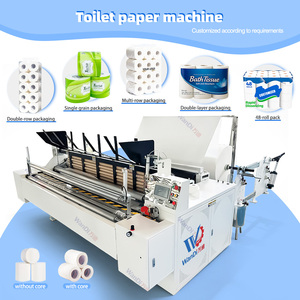
High Speed Fully Automatic Rewinding & Slitting Toilet Tissue Machine
Engineering Authority: China's Next-Generation Napkin Converting Technology
In the modern tissue converting ecosystem, operational efficiency is governed by mechanical precision, web tension stability, and automated downstream synchronization. As a pioneer among China automatic napkin machine manufacturers and exporters, our engineering philosophy bridges heavy-duty structural rigidity with sub-millisecond servo control. The market transition from mechanical cam-driven folders to multi-axis synchronized electronic motion control has transformed paper napkin manufacturing into an exact science.
Our proprietary manufacturing facilities integrate an in-house CNC precision machining center. By controlling key manufacturing processes—including steel-to-steel embossing cylinder grinding, dynamic balance calibration, and laser-guided slitting tool alignment—we eliminate common web break causes, uneven ply embossing, and dimensional variance. Unlike assembly-only suppliers, maintaining complete vertical integration over key mechanical components ensures rigid quality control, lower total cost of ownership (TCO), and accelerated lead times for international converters.
Integrated In-House CNC Machining
Key structural plates, embossing rollers, and folding cylinders are machined internally on 5-axis CNC centers, maintaining mechanical tolerances under ±0.01mm.
Multi-Axis Servo Synchronization
Siemens & Delta motion logic controls web unwinding, flexo color printing, continuous embossing, folding, and log slitting in a closed-loop system.
Global Compliance & Inspection
Certified under ISO 9001:2015 and European CE safety standards. Every line undergoes a mandatory 72-hour continuous trial run before global export delivery.
Technical Breakdown: Embossing, Flexographic Printing & Mechanical Kinematics
Paper napkin converting involves three fundamental process phases: raw unwinding and tension regulation, surface micro-texturing (embossing/printing), and geometric mechanical folding (1/4 fold, 1/8 fold, or custom cocktail folds). Achieving a defect-free finished product at linear web speeds exceeding 350 meters per minute requires balancing several engineering parameters:
- Automatic Web Tension Control: Magnetic powder brakes coupled with ultrasonic edge sensors maintain constant web tension regardless of parent roll radius degradation, preventing sheet stretching or diagonal folding distortion.
- Flexographic Printing Units: Equipped with doctor blade chamber systems and ceramic anilox rollers to ensure precise ink metering for multi-color logos without bleed-through or solvent smudging on delicate 13–20 GSM tissue substrates.
- Steel-to-Rubber / Steel-to-Steel Embossing: Laser-engraved heating embossing units increase tissue bulkiness and hand-feel softness while anchoring multiple paper plies together without chemical adhesives.
Technical Performance Matrix: Machine Architecture Comparison
Selecting the optimal automatic napkin production line requires aligning paper converting parameters with target output requirements. Below is an engineering comparison matrix designed to assist plant operations managers in choosing between baseline semi-automated lines and fully integrated high-speed servo manufacturing lines.
| Performance Specification | Entry-Level Semi-Automatic Line | Commercial Automatic Line | Ultra High-Speed Servo Full Line |
|---|---|---|---|
| Mechanical Output Speed | 600 - 1,000 sheets/min | 1,800 - 2,500 sheets/min | 3,000 - 4,200 sheets/min |
| Supported Folding Formats | 1/4 Fold (Square) | 1/4, 1/8 Fold, N-Fold | 1/4, 1/8, Book-Fold, Custom V-Fold |
| Embossing System Type | Single Steel-to-Rubber | Dual Steel-to-Rubber / Heating Unit | Point-to-Point Steel-to-Steel / Thermo |
| Printing Capability | Optional 1-Color Flexo | Integrated 2-Color Flexo | Synchronized 4-Color High-Precision Flexo |
| Raw Material GSM Range | 14 - 28 g/m² (1 or 2 Ply) | 13 - 35 g/m² (1, 2, or 3 Ply) | 12 - 45 g/m² (Multiplied & Non-Woven) |
| Power Consumption Efficiency | 5.5 kW - 7.5 kW | 11 kW - 18 kW | 22 kW - 35 kW (Servo Energy Recovery) |
| Automated Downstream Integration | Manual Band Saw Cutting | Automatic Rotary Slitter | Auto In-line Wrapping & Bundle Packing |
Future Sourcing & Manufacturing Trends in Automatic Napkin Machinery (2026–2030)
The global tissue paper converting market is undergoing structural shifts driven by eco-friendly material policies, labor cost escalation, and demand for personalized commercial branding. Paper napkin machinery manufacturers in China are evolving past isolated machine supply toward smart, interconnected, and eco-flexible production systems. Key technology trends shaping procurement decisions include:
1. Substrate Flexibility: Virgin Pulp, Bamboo & Recycled Non-Wovens
Environmental legislation and fluctuating virgin wood pulp prices are driving converters to process alternative fibers, such as bamboo pulp, bagasse, recycled kraft, and airlaid non-woven materials. Future-proof automatic napkin machines must feature adaptive tension load cells and adjustable folder nip clearances to accommodate varying tensile strengths and elongation properties without causing web rupture.
2. AI-Assisted Defect Inspection & Vision Systems
High-speed napkin production lines operating above 3,000 sheets per minute surpass the limit of human visual quality control. Next-generation lines incorporate optical camera systems that scan web registration in real time, automatically detecting printing misalignments, ink spots, ply separation, or fold geometry flaws. Defective stacks are automatically rejected via pneumatic ejectors prior to primary film wrapping.
3. Modular Packaging & Flexible Soft-Pack / Box Bundling
Consumer preferences are bifurcating between low-cost polyethylene soft-pack napkins and premium rigid box facial/table tissues. Converters require modular output lines capable of changing packaging formats—from single-sachet flow wrapping to multi-pack bundle wrapping—within 15 minutes, minimizing idle downtime during short production runs.
Request a Customized Napkin Production Line Engineering Proposal
Planning to establish a new converting factory or upgrade existing production speeds? Connect with our senior machinery specialists for line layout schematics, ROI analysis, and factory-direct quotation.
Send an InquiryWhy Partner with Us: China's Premier Napkin Machinery Exporter
Navigating cross-border machinery procurement requires a manufacturer capable of delivering mechanical reliability, transparent technical communication, and responsive long-term field support. As a trusted China automatic napkin machine manufacturer and exporter, our operations are structured around risk mitigation for international buyers:
- Factory Direct Customization: Every machine configuration is customized according to parent roll web width, sheet fold dimensions (e.g., 230x230mm, 300x300mm, 400x400mm), embossing patterns, and local electrical standards (220V/380V/415V/440V at 50/60Hz).
- Pre-Shipment Video Inspection & Live Testing: Before dispatch, your line is tested with your specified paper substrate. We provide comprehensive, unedited operational videos detailing high-speed running, folding precision, automatic counting, and packaging unit synchronization.
- Comprehensive Spare Parts & Remote Tele-Diagnostics: Machine control panels feature Ethernet/Wi-Fi remote connection modules, allowing our software engineers to diagnose PLC logic, update system firmware, and assist your technicians remotely in real time.
Frequently Asked Questions (FAQ) for Global Machinery Buyers
Clear, engineering-backed answers to essential technical, operational, and commercial questions asked by tissue converting plant managers prior to finalizing purchase orders.
Which paper napkin sizes and fold patterns can your machines produce?
Our automatic napkin machinery handles a wide spectrum of open sheet dimensions ranging from 200mm x 200mm up to 400mm x 400mm. Folding options include standard 1/4 square fold, 1/8 rectangular dinner fold, book fold, and custom dispenser V-folds. Folder cylinder heads can be equipped with quick-interchange vacuum suction plates or mechanical claw folding boards based on paper GSM.
How do you ensure printing alignment and ink drying at high linear speeds?
Our multi-color flexographic printing modules utilize ceramic anilox rollers coupled with synchronized gear-ratio drive systems to guarantee tight registration color matching (±0.15mm). To prevent ink transfer or offset during high-speed folding, forced hot-air drying hoods or UV curing units are integrated directly between the printing plate cylinder and the embossing station.
Can one napkin machine handle both single-ply and double-ply tissue raw materials?
Yes. The unwinding stand features pneumatic parent roll loading with independent web tension adjustments. By adjusting the gap settings on the embossing unit and folder nips, operators can switch smoothly between single-ply (18–28 GSM) and double-ply (13–18 GSM x 2) raw tissue rolls without causing paper jamming or surface scuffing.
What is the estimated delivery lead time and international packaging standard?
Standard machine models ship within 30 to 45 working days following order confirmation. Custom lines featuring specialized embossing pattern engraving or multi-color flexo units take 50 to 60 days. All machinery is sealed with anti-rust protective oil, wrapped in moisture-proof vacuum membrane, and securely anchored inside export-grade wooden cases suitable for ocean freight.
What installation and operator training services do you provide overseas?
We offer both on-site field installation and comprehensive remote commissioning support. Our field engineering team can be dispatched to your plant to supervise assembly, perform final line calibration, and train your operators on daily maintenance, parameter setup, and wear-part replacement. Full digital manuals, electrical schematics, and video guides are included with every delivery.
How is overall equipment effectiveness (OEE) maintained on your automated lines?
OEE is maximized through robust mechanical build quality, integrated automatic lubrication systems, and self-diagnostic PLC controls. By reducing unscheduled maintenance downtime and minimizing web breakage through dynamic tension balancing, our commercial customers achieve average operational efficiency rates exceeding 95% during continuous 24/7 production shifts.
Partner with China's Top Automatic Napkin Machinery Exporter
Join hundreds of successful tissue converters worldwide. Contact our engineering team today to receive detailed technical specifications, factory direct pricing, and custom line layout diagrams.
Send an Inquiry