High-Performance Tissue Converting Equipment
Explore our CE-compliant tissue paper production lines engineered for optimal web tension, precision perforation, and seamless downstream packaging integration.
Enterprise Advantages & Quality Assurance Standards
Building high-yield tissue converting machinery requires precise mechanical tolerances, robust electrical engineering, and full safety compliance for European and global market entry.
Rigorous CE Certification Compliance
Every processing unit adheres strictly to EU Machinery Directive 2006/42/EC, Low Voltage Directive 2014/35/EU, and EMC Directive 2014/30/EU. Equipped with dual-channel safety interlocks, optical light curtains, and zero-energy emergency stop circuits.
In-House CNC Precision Tooling
Critical mechanical components—including embossing rollers, dynamic slitting shafts, and log saw knife mounts—are manufactured in our internal 5-axis CNC machining center, guaranteeing micro-level concentricity and long fatigue life.
Global Turnkey Project Execution
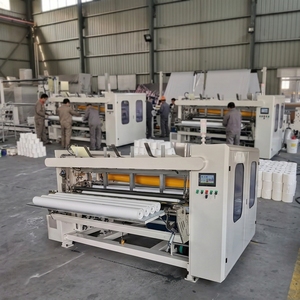
From initial mill layout design and utility sizing (compressed air, vacuum systems, power factor correction) to overseas installation, operator training, and lifetime spare parts delivery, we ensure seamless factory startup.
Technical Whitepaper: Engineering High-Efficiency Tissue Converting Lines
The global tissue paper processing market has shifted dramatically from basic mechanical line operations toward high-speed, multi-servo synchronized converting plants capable of handling variable raw material furnish—including 100% virgin wood pulp, deinked recycled fiber (DIP), and non-wood bamboo fiber. For global importers and tissue product brand owners, evaluating machinery requires understanding the physics of paper web behavior, dynamic rewind tension control, and overall equipment effectiveness (OEE).
1. Kinematics of High-Speed Toilet Paper Rewinding
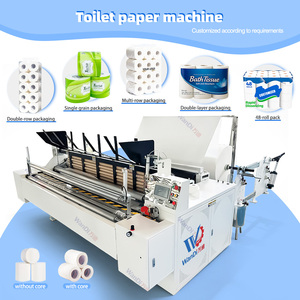
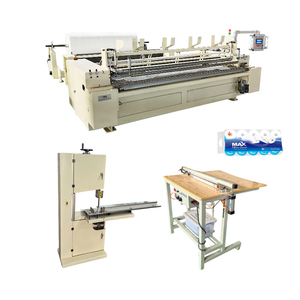
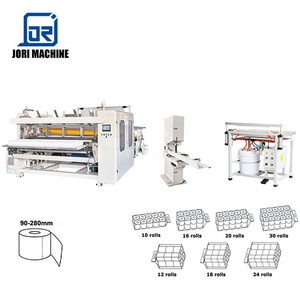
In modern automatic toilet paper rewinders (such as our XY-TQ-Series), converting paper logs involves three interconnected kinetic phases: unwinding, perforating & embossing, and surface rewinding. Parent rolls ranging from 13 to 22 gsm (1-ply or 2-ply) are unwound using flat belt unwind stands driven by independent AC servo motors. The paper web travels through a precision-machined perforating cylinder equipped with helical anvil blades. The pitch of the perforation slits is digitally adjusted via HMI by modifying the relative phase angle between the perforation roll and the web feed rate.
Surface rewinding utilizes a three-roller system (rider roll, lower winding roll, and winding mandrel) to build logs with controllable bulk density. By applying an S-curve air pressure profile to the rider roll, the machine achieves uniform roll hardness from core to tail—preventing "soft core" collapse or "tight tail" dispensing issues in commercial dispensers.
2. Interfolding Physics in Facial Tissue & Hand Towel Lines
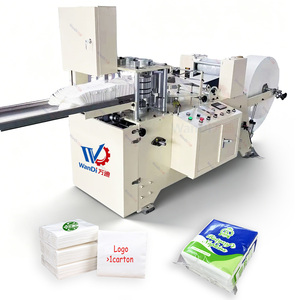
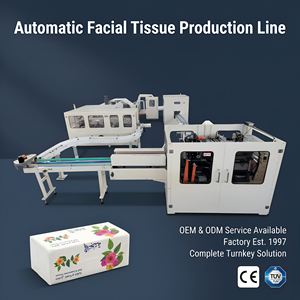
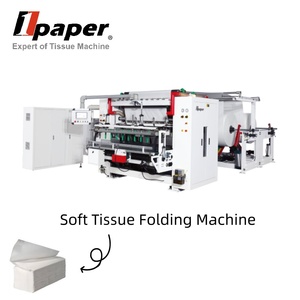
Facial tissue processing relies on continuous rotary interfolding mechanisms (V-Fold, Z-Fold, or W-Fold configurations). The web is drawn from multiple unwinding stands, passes through embossing nips (steel-to-rubber or steel-to-steel), and enters the folding head. High-speed folding cylinders utilize synchronized vacuum suction pockets and mechanical tucking jaws to alternate paper overlap.
Maintaining equal tension across all folding lanes is paramount. Any lateral web drift or differential tensile stretch causes sheet misalignment, leading to jam-ups at the high-speed log cutting section. Our advanced facial tissue lines incorporate pneumatic edge-alignment sensors (EPC) and servo-driven interfolder rollers, maintaining web alignment tolerances within ±0.5 mm at production speeds exceeding 200 m/min per lane.
3. Technical Specifications Matrix Across Converting Categories
Comparing technical specifications helps procurement officers align machine parameters with target daily production volumes and factory space requirements:
| Equipment Category | Parent Roll Width | Production Speed | Control System | Finished Product Format |
|---|---|---|---|---|
| Automatic Toilet Roll Rewinder | 1200 mm – 2800 mm | 180 – 300 m/min | Siemens PLC / Servo Drives | Standard Rolls, Jumbo / Maxi Rolls |
| Interfolded Facial Tissue Line | 420 mm – 2100 mm (2-10 Lanes) | 800 – 1200 sheets/min/lane | Multi-axis Motion Controller | Soft-Pack, Box Facial Tissue (V/Z Fold) |
| Automatic Napkin Folding Machine | 230 mm – 400 mm | 600 – 1000 pcs/min | Frequency Inverter / PLC | 1/4 Fold, 1/8 Fold, Cocktail/Dinner |
| High-Speed Log Saw Cutter | Log Length up to 2800 mm | 120 – 200 cuts/min (Double Lane) | Servo Drive Blade Infeed | Clean-Cut Toilet Rolls, Hand Towels |
Future Procurement Trends in Tissue Converting Equipment
Key technological shifts driving global tissue equipment capital expenditure decisions for the 2025–2030 horizon.
1. Transition to Glue-Free & Ultrasonic Tail Sealing
Environmental regulations and consumer preference for chemical-free products are accelerating the adoption of water-pinching and ultrasonic tail sealing technology. Modern converting lines eliminate chemical adhesives during log tail closure, reducing operating costs and machine cleanup downtime.
2. Multi-Servo Direct-Drive Integration
Legacy machines relying on complex mechanical gearboxes, line shafts, and chains suffer from mechanical wear and timing hysteresis. Next-generation tissue equipment utilizes direct-drive servomotors for each functional axis, enabling electronic CAM profile changes for instant sheet length adjustments.
3. IoT Remote Diagnostics & Predictive OEE
Global tissue exporters demand real-time visibility into machine availability, performance, and quality metrics. Integrated edge gateways stream vibration, temperature, and motor current telemetry to cloud dashboards, permitting predictive maintenance before bearing failure occurs.
Technological Innovations in Embossing & Web Handling
Embossing serves a dual purpose in tissue converting: enhancing hand-feel softness and increasing sheet bulk volume. However, conventional steel-to-rubber embossing rollers often suffer from pattern degradation and uneven nip pressure when operating at elevated speeds.
Micro-Embossing & Point-to-Point (Nested) Lamination
Advanced tissue lines incorporate nested embossing units where top and bottom webs pass through synchronized steel rollers with precise micro-pins. Glue application units deposit micro-dots of water-soluble adhesive on the laser-engraved pin tips, bonding 2-ply or 3-ply sheets together without compromising absorption capacity.
Automated Band Saw and Log Saw Sharpening Kinematics
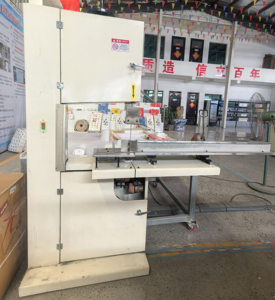
Log cutting equipment is frequently the bottleneck of tissue production lines. Traditional band saw blades suffer from heat accumulation and burr generation on roll edges. Modern high-speed log saws incorporate continuous diamond sharpening stones with auto-feed compensation. As the circular knife diameter decreases due to wear, the PLC automatically calculates blade velocity compensation to ensure clean cut faces without core crushing.
Frequently Asked Questions by Technical Buyers
Detailed engineering and commercial answers to help procurement teams evaluate tissue converting machinery investments.
Q: What CE safety standards apply to tissue paper machinery?
A: CE compliance requires full adherence to the EU Machinery Directive 2006/42/EC, EN ISO 12100 for risk assessment, EN 60204-1 for electrical safety, and specific standards for paper converting equipment (such as EN 1010-1/2). Essential safety components include dual-circuit safety relays, locked guard switches, emergency stop pushbuttons, and noise enclosure paneling to keep ambient acoustic levels below 78 dB(A).
Q: How do I calculate the required parent roll width and diameter for my plant?
A: Parent roll specification depends on your target finished product spectrum. Standard toilet roll machinery typically accepts parent roll widths of 1200 mm to 2800 mm with diameters up to 1200 mm (or 1500 mm for jumbo unwind stands). To calculate daily yield: multiply web width by line speed (m/min), tissue basis weight (gsm), and operational uptime factor (typically 85% OEE).
Q: What is the difference between pneumatic surface rewinding and center rewinding?
A: Surface rewinding drives the roll via contact rollers pushing on its outer perimeter, ideal for high-speed household toilet rolls where uniform roll structure and high throughput are required. Center rewinding drives the central core shaft directly, making it suitable for delicate industrial wiper rolls or nonwoven materials that cannot withstand external surface friction.
Q: How does the machine handle variations in low-quality recycled tissue raw material?
A: Recycled furnish often exhibits non-uniform tensile strength and basis weight variance (GSM fluctuation). Our machines mitigate web tears through active load-cell dancer rolls, automatic edge alignment (EPC), variable-pitch perforation rollers, and gentle pneumatic tension controls that smooth out web surge during rapid acceleration cycles.
Q: What is the average ROI timeframe for a fully automatic facial tissue converting line?
A: Return on Investment (ROI) generally ranges between 12 to 18 months, depending on local raw material paper costs, utility rates, and packaging formats. Fully automated lines reduce labor requirements from 6–8 manual operators down to 2 supervisory technicians while simultaneously decreasing film waste by over 4%.
Q: Can one machine line produce both toilet paper rolls and kitchen towel rolls?
A: Yes. Multi-functional rewinding lines feature dual unwinding stands (for 2-ply kitchen towel production), point-to-point embossing systems, and adjustable perforation gearboxes or servo parameters. Converting between standard toilet rolls and laminated kitchen towels takes approximately 30 to 45 minutes with modular roller sets.
Ready to Upgrade Your Tissue Converting Capacity?
Contact our application engineering team today for technical line layouts, CE compliance documentation, custom embossing design options, and detailed cost proposals.