Industrial Tissue Machinery Directory
Engineered for seamless integration with high-speed rewinding, folding, log saw cutting, and secondary overwrapping packaging lines.
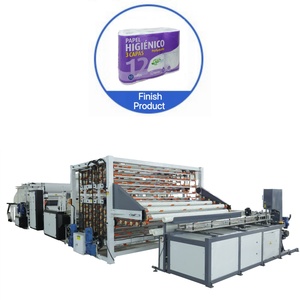
China Factory Buy Fully Automatic Toilet Tissue Paper Roll Production Making Equipment Machine With Price
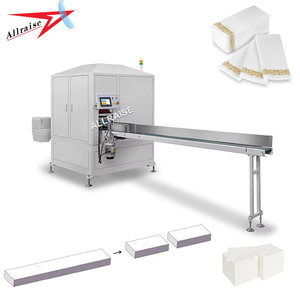
Automatic Single Channel Napkin Tissue Cutter Making Machine Disposable Soft Dinner Facial Tissue Paper Log Saw Cutting Machine
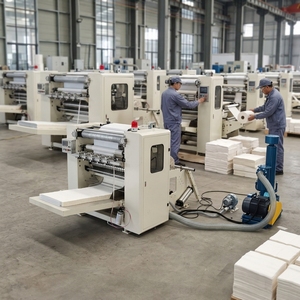
High Speed 400x400mm Automatic Paper Napkin Making Machine 2Color Printing Tissue Serviette Production Equipment 500-600 PCS/Min
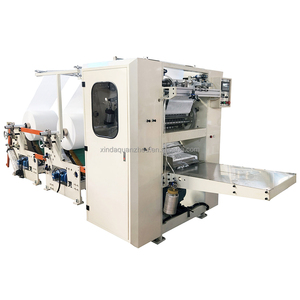
Full Automatic V Fold Facial Tissue Paper Making Machine Color Printing with Core PLC Gear Engine Components
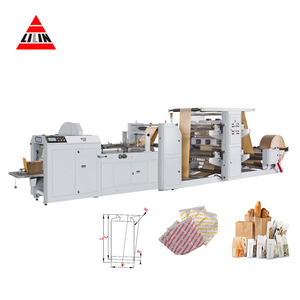
Toilet Tissue Paper Making Machine Paper Product Making Machinery v Fold Tissue Production Line
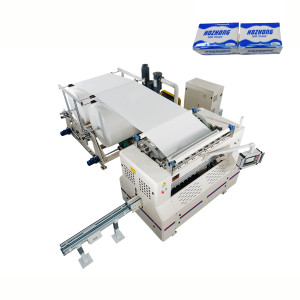
Automatic Small/mini Z/N Fold Facial Tissue Paper Making Counting Machine 200 Sheets for Small Business
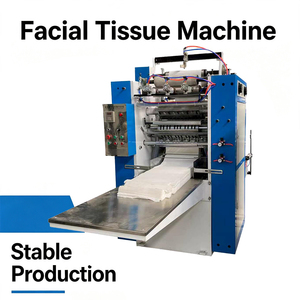
Business Ideas With Small Investment 2023 With Embossing Roller Face Tissue Machine Facial Tissue Paper Production Line Machines
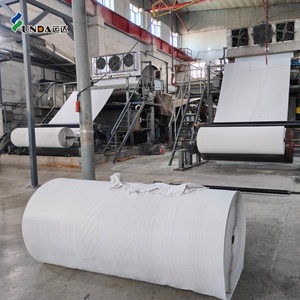
New Yunda Automatic Toilet Paper Tissue Making Line 30-100 T/D Capacity Soft/Hard Wood Virgin Pulp Sheets 220V/380V 1 Year
Executive Technical Whitepaper: Advanced Tissue Bundling Engineering & Factory Sourcing Guide
In modern industrial paper converting plants, secondary packaging—specifically automated poly-bundling and overwrapping—serves as the critical bridge between primary tissue converting (rewinding, folding, cutting) and final warehouse logistics. As consumer demand for soft-pack facial tissues, multi-roll toilet tissue bundles, kitchen towels, and folded serviettes expands globally, converting plants must overcome significant packaging bottlenecks. Selecting high-performance, CE certified tissue bundling machine manufacturers and factories is no longer merely an equipment procurement decision; it is a strategic capital asset investment that dictates Overall Equipment Effectiveness (OEE), operational safety, material yields, and total unit cost structure.
1. Deciphering CE Certification Mandates for Industrial Tissue Machinery
Within European regulatory frameworks and expanding international trade zones across North America, the Middle East, and Asia-Pacific, mandatory CE marking guarantees that secondary packaging machinery adheres to stringent health, safety, and environmental protection benchmarks. For global plant managers and procurement officers, verifying CE compliance requires auditing a manufacturer’s engineering compliance against three foundational European Directives:
- Machinery Directive 2006/42/EC: Demands holistic risk assessments (EN ISO 12100:2010), structural rigidity calculation of moving kinematic mechanisms, dynamic safety interlocks, optical light curtains at feed zones, and redundant emergency stop circuits operating on Safety Performance Level d (PL-d) or higher.
- Low Voltage Directive (LVD) 2014/35/EU: Governs electrical enclosure safety, insulation resistance, thermal dissipation, ground bonding, and protection against direct electrical contact under EN 60204-1 standards.
- Electromagnetic Compatibility Directive (EMC) 2014/30/EU: Ensures high-frequency servo drives, PLC microprocessors, pulse encoders, and PID temperature controllers maintain high immunity to industrial electromagnetic interference while suppressing radiated noise back to the factory grid.
Legitimate CE certified tissue bundling machine manufacturers provide verifiable Declarations of Conformity (DoC), full Technical Construction Files (TCF), and complete circuit schematics. Buying uncertified machinery exposes factory owners to catastrophic liability, uninsurable downtime, workplace safety violations, and costly retrofits during municipal factory audits.
Multi-Axis Servo Motion
Replaces failure-prone mechanical linkage cams with independent, synchronized multi-axis electronic servo drives for vibration-free high-speed positioning.
PID Thermal Sealing
Micro-step pulse temperature control prevents film burning on ultra-thin 15-micron PE, CPP, and eco-friendly post-consumer recycled (PCR) films.
Dynamic Tension Tracking
Optical photocell sensors dynamically adjust film unwind brake torque, eliminating film deformation, wrinkles, or jamming during rapid format changes.
2. Architectural Innovations in Modern Tissue Overwrapping Systems
High-speed bundling systems must execute four mechanical operations simultaneously within split-second intervals: product grouping/stacking, film feeding/cutting, envelope wrapping, and heat sealing/thermal shrinkage. Leading engineering factories utilize modular architectural frameworks to optimize these stages:
A. Servo-Driven Stacking & Infeed Pushers: Whether handling soft-pack facial tissue bricks (e.g., 2x5 or 2x6 bundle configurations) or toilet paper rolls (e.g., 4-roll, 6-roll, or 12-roll packs), flight-bar pushers driven by absolute encoder servos ensure smooth deceleration, preventing compression distortion on soft tissue edges.
B. Precision Rotary Film Cutting & Static Eliminators: Static electricity generated by high-speed poly film unspooling causes film curling and misfeeds. Top-tier machinery integrates active ion bar static neutralizers alongside titanium-coated rotary cutting knives, delivering razor-sharp cuts across polyethylene (PE), polypropylene (CPP), and poly-laminated paper wraps.
C. Dual-Temperature Zone Side Sealing Belts: To achieve tight, aesthetically flawless side-gussest seals without thermal shrinkage distortion, modern bundlers feature dual-stage Teflon heating pads followed immediately by chilled air or liquid cooling blocks. This sets the molten plastic polymer instantly, securing structural rigidity for palletizing.
3. Machinery Classifications & Performance Engineering Benchmarks
Selecting the appropriate bundling framework depends on factory footprint, primary tissue line output speed, and target sales channels (commercial Away-From-Home vs. retail consumer multipacks). Below is an operational matrix comparing primary machine classes:
| Machine Architecture | Target Products | Max Rated Speed | Film Thickness Range | Changeover Time |
|---|---|---|---|---|
| Semi-Automatic Single-Lane Bundler | Hand towels, small facial tissue packs | 15 – 30 bundles/min | 25 – 45 Microns (PE/CPP) | 20 – 30 Minutes |
| Automatic Rotary High-Speed Overwrapper | Toilet rolls, kitchen towel 2-packs | 50 – 90 bundles/min | 18 – 35 Microns (PE) | 10 – 15 Minutes |
| Multi-Axis Servo Bundle Packing Line | Soft-pack facial tissue (multipacks) | 80 – 150 bundles/min | 15 – 30 Microns (PE/PCR) | < 8 Minutes (Recipe HMI) |
| Integrated Shrink Tunnel Bundling Line | Jumbo rolls, institutional maxi rolls | 30 – 60 bundles/min | 35 – 70 Microns (POF/PE) | 15 – 20 Minutes |
4. Global Market Dynamics & Future Procurement Trends (2025–2030)
The global tissue paper machinery landscape is undergoing a structural shift driven by environmental regulation, energy efficiency imperatives, and digital factory automation. Forward-thinking tissue converters must align their equipment procurement strategies with these prominent industry trends:
1. Shift Toward Sustainable & Ultra-Thin Packaging Substrates: Extended Producer Responsibility (EPR) legislation across Europe and North America is forcing converting plants to reduce plastic packaging mass. Modern CE certified bundlers are now engineered to process ultra-thin 15-micron PE film, post-consumer recycled (PCR) resins up to 50% blend, and fully bio-degradable PLA films without tearing or heat-seal failure.
2. Paper-Wrap Secondary Bundling Alternatives: To achieve 100% plastic-free retail branding, tier-1 tissue converters are introducing paper-overwrapping lines. Advanced bundling machine factories now offer hybrid conversion kits that allow quick swapping between traditional poly thermal sealing and cold/hot-glue paper bundle overwrapping.
3. Industry 4.0 IoT Interoperability & OPC-UA Connectivity: Modern bundling machines no longer function as isolated mechanical islands. Equipment equipped with Siemens S7-1500 or Rockwell Automation PLCs features native OPC-UA industrial communication protocols, enabling real-time transmission of OEE metrics, temperature profiles, servo motor torque anomalies, and preventative maintenance alerts directly to plant-wide SCADA and MES networks.
5. Enterprise Manufacturing Infrastructure & Quality Control Standards
Our manufacturing and engineering capability is anchored by a dedicated, state-of-the-art processing facility dedicated to precision component machining, strict metallurgy testing, and comprehensive assembly QA. By maintaining complete control over crucial mechanical components, drive shafts, sealing jaws, and structural steel frames, we ensure tight tolerance alignment and long-term operating stability.
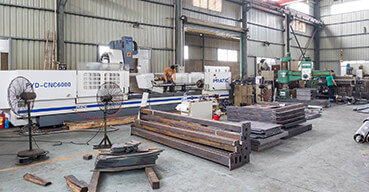
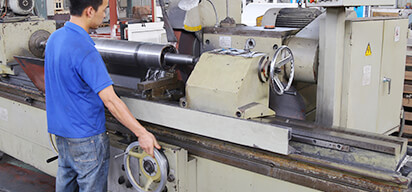
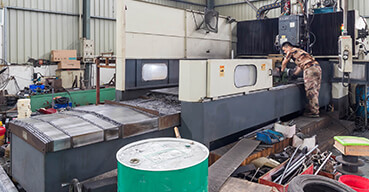
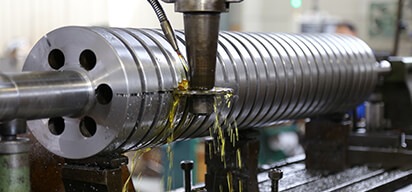
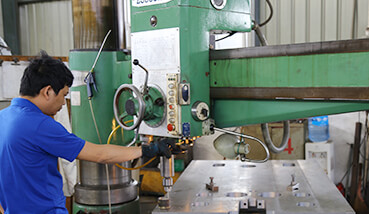
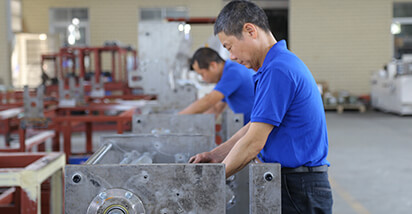
Every tissue bundling system undergoes 72 hours of continuous dry-run testing and full-load trial runs using customer-supplied parent tissue rolls and film rolls prior to factory acceptance testing (FAT) sign-off. This rigorous protocol minimizes field commissioning cycles and guarantees immediate production ramping upon site delivery.
6. Total Cost of Ownership (TCO) & Financial ROI Modeling
When evaluating quotes from industrial equipment factories, procurement specialists must look beyond initial sticker price and calculate Total Cost of Ownership over a 10-year service life. Key financial metrics include:
- Electrical Efficiency: High-efficiency IE3/IE4 AC motors combined with regenerative servo drives reduce kilowatt-hour energy consumption by up to 22% compared to legacy mechanical bundlers.
- Film Yield Optimization: Precise optical registration marks and servo film feeding prevent over-length wrapping, saving up to 1.5–2.5mm of film web per bundle. In a high-volume factory producing 50,000 bundles daily, this yields over $18,000 USD in annual film savings alone.
- Downtime Mitigation via Quick-Changeover Tooling: Modular, tool-less adjustment handles and digital mechanical position indicators reduce product format changeovers (e.g., switching from a 6-roll bundle to a 12-roll bundle) from hours down to under 10 minutes, protecting critical production schedules.
7. Frequently Asked Technical & Procurement Questions (FAQ)
Genuine CE compliance requires the manufacturer to supply a formal Declaration of Conformity (DoC) referencing relevant harmonized European standards such as EN ISO 12100:2010 (Machinery Safety) and EN 60204-1 (Electrical Safety). Additionally, request third-party verification audit reports from accredited European Notified Bodies (NB) and confirm that electrical componentry (PLCs, contactors, safety switches) carries authentic CE and UL marks.
Our advanced bundling machinery processes Polyethylene (LDPE/LLDPE), Cast Polypropylene (CPP), Polyolefin (POF), PCR (Post-Consumer Recycled) PE films, and coated paper wraps. Standard thickness ranges from 15 to 45 microns for soft-pack bundles and 25 to 60 microns for heavy jumbo roll bundlers.
To provide an optimal technical layout, our engineering team requires: (1) Single pack dimensions and bundle configuration matrix (e.g., 2x3, 2x5, 3x4 rolls or packs); (2) Desired bundle output speed per minute; (3) Film material specifications and printing registration preferences; (4) Local electrical standard (e.g., 380V 50Hz 3Phase, 415V 50Hz, or 480V 60Hz); and (5) Upstream machine integration specs (log saw output rate, conveyor inline heights).
Our bundlers utilize dual-stage overhead servo-guided compression belts combined with side-guiding flight plates. The compression pressure is digitally regulated via the touch-screen HMI, allowing operators to achieve tight, square bundle geometry while preserving tissue volume, soft emboss texture, and fold alignment.
Yes. Our bundling equipment features standardized mechanical conveyor interfaces and Ethernet-based PLC handshaking (signals for upstream bottle-necking, downstream backlog, emergency line stop, and line speed matching). They fit seamlessly behind existing log saws, rewinding machinery, and interfolders from all major global OEMs.
Accelerate Your Tissue Converting & Packaging Productivity
Consult with our senior machinery engineers to configure a custom, CE certified tissue bundling line optimized for your specific pack formats, target output, and factory layout.