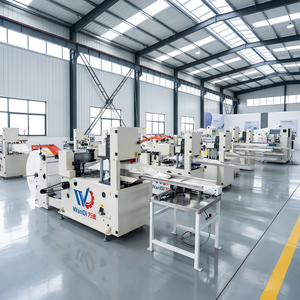
Precision Machinery Portfolio
High-Performance Soft Pack & Tissue Converting Solutions
Explore our CE-certified line of soft pack tissue machines, interfolding lines, and automated packaging equipment designed for maximum OEE and operational profitability.
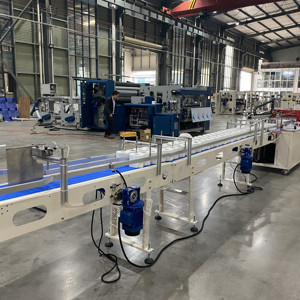
Full Automatic Tissue Paper Machine Price
Get Catalog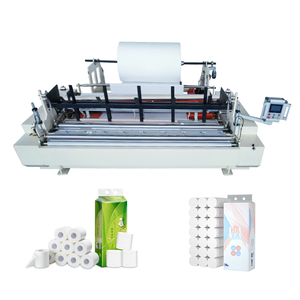
Automatic Toilet Paper Roll Embossing Rewinding Machine for Tissue Paper Converting
Get Catalog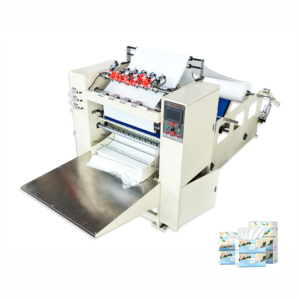
Automatic 3 Lines Facial Tissue Drawing Folding Making Machine
Get Catalog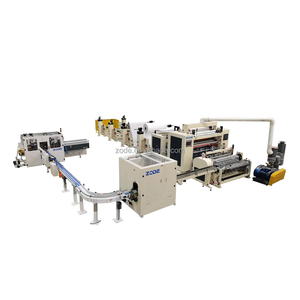
Factory Production Line Automatic Facial Tissue Paper Towel Making Machine
Get Catalog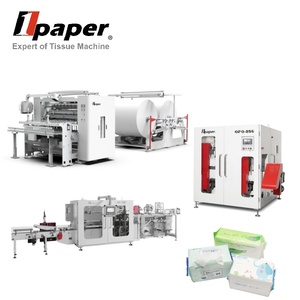
Complete Soft Pack Tissue Production Line Bottom Draw Type Function 150 Pcs/Min Capacity PLC Motor Core for Manufacturing Plant
Get Catalog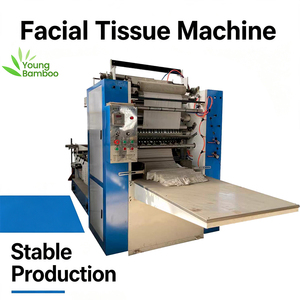
Business Ideas Small Facial Tissue Making Machine Tissue Paper Making Machine
Get Catalog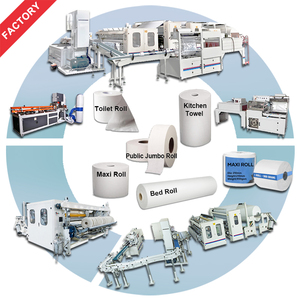
High-Speed Automatic Tissue Paper Manufacturing Line for Toilet Tissue, Kitchen Towels, Jumbo Rolls and Bed Rolls
Get Catalog2,500+
Sheets/Min Interfold Speed
CE & ISO
Certified Compliance
150+
Packs/Min Soft Wrapping
99.2%
Operational Uptime Rate
1. Executive Industry Overview: The Soft Pack Tissue Manufacturing Paradigm Shift
In the global hygiene paper converting sector, soft-pack facial tissue manufacturing has experienced an unprecedented surge in market penetration, rapidly displacing traditional rigid cardboard box packaging. Driven by urban consumer demand for flexible, waterproof, portable, and cost-effective personal hygiene products, tissue converters and commercial paper mills are re-engineering their production assets. Implementing high-speed, CE certified soft pack tissue machines allows manufacturers to dramatically cut unit production costs while escalating operational throughput.
From an engineering standpoint, soft pack tissue processing requires precise mechanical synchronization across multiple stages: pneumatic jumbo roll unwinding, web tension leveling, steel-to-rubber or steel-to-steel embossing, vacuum suction interfolding (V-fold, Z-fold, or W-fold configurations), high-speed log sawing, and automatic poly-film flow wrapping. Achieving seamless execution across these interconnected stages requires a sophisticated integrated control architecture. Leading factories utilize servo-driven motion platforms combined with advanced Programmable Logic Controllers (PLC) to eliminate sheet web tears, minimize raw material scrap rates to under 1.2%, and ensure immaculate pack seal integrity.
Key Procurement Insight: Modern soft pack tissue lines deliver a 35% to 45% reduction in overall packaging material costs compared to traditional box facial tissue lines. Additionally, poly-wrapped soft packs achieve up to 30% higher volumetric density during container transport, yielding substantial freight cost optimization for international distributors.
Core Mechanical Engineering & Architectural Pillars
A premium industrial soft pack tissue machine is evaluated on structural stability, interfolding precision, motion accuracy, and safety compliance. Below are the core technical pillars engineered into our production assets:
Vacuum Suction Interfolding
Equipped with high-flow Roots vacuum pumps and precision-ground helical folding cylinders to ensure accurate sheet separation and overlap at speeds reaching 2,500 sheets per minute per lane.
Full Servo Motion Control
Multi-axis independent servo motors from Schneider or Siemens drive the unwind, folding, feeding, cutting, and wrapping stations, guaranteeing zero-accumulative pitch error across operational shifts.
CE Safety & Guarding Standards
Fully compliant with EU Machinery Directive 2006/42/EC. Features complete safety enclosure housing, magnetic safety interlocks, optical curtain guards, and emergency stop circuits.
Precision CNC Embossing Units
Dynamic wall-board structured embossing stations with micro-gap pneumatic adjusters allow converters to deliver crisp logo designs, border embossing, or edge-nesting patterns without paper degradation.
Automated Log Saw Integration
Continuous dual-lane or orbital band-saw log cutters equipped with automatic knife sharpening, air-blast cooling, and optical sensing ensure smooth, burr-free end-cuts on every tissue stack.
2. Comprehensive Technical Specifications & Engineering Matrix
To assist factory plant managers, machinery procurement officers, and engineering directors in evaluating optimal production configurations, the matrix below details technical parameters across our standard CE-certified soft pack tissue production lines:
| Machine Line Model | Lane Count | Design Speed (Sheets/Min) | Finished Pack Speed | Applicable Base Paper | Control System |
|---|---|---|---|---|---|
| SPT-2L Starter Line | 2 Lanes | 1,200 - 1,500 | 40 - 60 Packs/min | 13 - 20 gsm (2-3 ply) | PLC + Touch Screen + Stepper |
| SPT-4L Commercial Line | 4 Lanes | 2,200 - 3,000 | 80 - 100 Packs/min | 13 - 22 gsm (2-4 ply) | Full Servo Delta / Siemens PLC |
| SPT-6L High-Speed Line | 6 Lanes | 4,500 - 5,500 | 120 - 150 Packs/min | 12 - 20 gsm (2-4 ply) | Full Servo Siemens S7-1500 Motion |
| SPT-8L Industrial Line | 8 Lanes | 6,500 - 7,500 | 160 - 200 Packs/min | 12 - 22 gsm (2-4 ply) | Full Servo Multi-Axis Bus Control |
| SPT-10L Ultra Line | 10 Lanes | 9,000 - 10,500 | 220 - 260 Packs/min | 11 - 20 gsm (2-4 ply) | Full Servo Motion CPU + EtherCAT |
3. Future Procurement Trends in Tissue Converting Equipment
Strategic purchasing of industrial tissue converting machinery requires evaluating market dynamics over a 10-to-15-year operational lifecycle. Equipment buyer intent is shifting toward smart, automated, eco-efficient, and modular machinery platforms. Modern tissue converters are focusing on key macro procurement trends:
A. Integration of Industry 4.0 & Industrial IoT (IIoT)
Machinery buyers no longer evaluate standalone mechanical hardware in isolation. Today's high-capacity tissue manufacturing plants mandate cloud-connected machinery equipped with IIoT telemetry sensors. Real-time tracking of motor temperatures, bearing vibrations, vacuum pump pressures, and instant OEE metric dashboard reporting allow factory managers to transition from reactive maintenance to predictive maintenance routines. Remote diagnostic modules allow OEM engineers to troubleshoot control code via secure VPN connections, reducing costly downtime.
B. Sustainability & Biodegradable Packaging Film Compatibility
Global environmental regulations, particularly within the European Union, North America, and Middle Eastern consumer markets, are driving strict single-use plastic reduction targets. Advanced soft pack tissue flow wrapping equipment must handle thin poly films, bio-based PLA (Polylactic Acid) films, recyclable PE packaging, and paper-based soft wrap wraps without tearing or scorching seam welds. Servo-driven seal jaws with micro-processor temperature management ensure tight, consistent sealing across varying bio-film substrate thicknesses.
C. Modular Flexibility and Rapid Pack Size Changeovers
E-commerce and private-label tissue brands require unprecedented SKU flexibility. Conventional fixed-dimension wrapping machinery leads to operational bottlenecks during product size switches. Next-generation soft pack facial tissue lines feature quick-release modular guides, electronic recipe storage on the operator HMI, and tool-less folding head adjustments. Switching between 80-sheet count compact travel packs and 200-sheet family packs can be completed in under 20 minutes.
D. Energy Conservation and Compressed Air Optimization
With global industrial energy prices escalating, energy consumption per ton of finished paper tissue product has become a critical operational metric. Modern interfolding machine design incorporates variable frequency drives (VFDs) on high-power vacuum pumps, energy-recovery braking systems on heavy unwinds, and optimized pneumatic valve manifolds. These design improvements reduce overall power requirements by up to 22% compared to decade-old mechanical line designs.
5. Strategic Step-by-Step Purchasing Guide for Tissue Converters
Investing in a commercial tissue converting line represents a major capital expenditure. To maximize return on investment (ROI) and prevent costly operational mistakes, procurement teams should follow a structured step-by-step evaluation framework:
01
Define Finished Pack Specifications
Establish exact sheet dimensions (length x width unfolded), tissue fold style (V, Z, or W fold), ply count (2, 3, or 4 ply), sheet basis weight (gsm), and final stack height count prior to requesting machinery proposals.
02
Determine Target Daily Output
Calculate target production capacity in metric tons or finished soft packs per 8-hour shift. Match line speed requirements to parent roll width capabilities (e.g., 1400mm, 2100mm, or 2800mm jumbo roll width).
03
Evaluate Downstream Automation Level
Determine whether to implement semi-automatic manual log loading or fully integrated automatic transfer units connecting the folding head, log saw, soft pack flow wrapper, bundle wrapping machine, and robotic case packer.
04
Audit Manufacturer Production Authority
Verify manufacturer credentials, including CE certification authenticity, internal machining capabilities, quality control protocols, customer references, and availability of global on-site commissioning technicians.
Knowledge Base
Frequently Asked Questions (FAQ) - B2B Buyer Guide
Clear, technical, and practical answers to common engineering and procurement questions regarding soft pack tissue machinery.
What is the difference between V-fold, Z-fold, and W-fold soft pack tissue machines?
The difference lies in the folding pattern and interfolding overlap. V-Fold (Single Draw) tissue plies overlap by half, so pulling one tissue presents the edge of the next. Z-Fold (3-panel) and W-Fold (4-panel) feature multi-panel interfolding, providing higher tissue stack density and smoother single-sheet extraction from soft poly packs. Machine choice depends on target market preference and product positioning.
What makes a soft pack tissue machine fully CE certified under EU Directives?
Full CE compliance requires strict adherence to the EU Machinery Directive 2006/42/EC and Low Voltage Directive 2014/35/EU. This includes mandatory safety enclosures around all moving folding cylinders and high-speed log saws, dual-channel safety relay circuits, interlocked safety doors, noise emission dampening under 78 dB(A), ergonomic operator controls, and complete technical documentation with risk assessment safety audits.
How does vacuum suction stability affect soft pack facial tissue drawing and folding accuracy at high speeds?
At speeds above 1,500 sheets per minute, mechanical grippers can tear delicate, low-gsm tissue paper. Stable vacuum suction generated by Roots blowers holds the lightweight tissue paper web precisely against the rotating interfolding cylinders. Constant, controlled vacuum pressure prevents misfeeds, uneven sheet overlaps, and jam-ups, ensuring crisp interfolds across long production runs.
How do I calculate total shift output capacity for a 6-lane soft pack tissue line?
Output depends on interfold speed, sheet count per pack, and line efficiency. For example: A 6-lane folding unit operating at 5,000 sheets/min producing 100-sheet tissue packs equals 50 packs per minute off the folding head. Connected to an automatic soft pack wrapper running at 120-150 packs/min, the line produces 3,000 packs per hour. Factoring in an 85% Overall Equipment Effectiveness (OEE) rate, expected yield is approximately 20,400 finished packs per 8-hour shift.
What base paper specifications (GSM, Ply, Roll Diameter) are optimal for soft pack converting?
Soft pack facial tissue lines typically utilize 100% virgin wood pulp or high-grade recycled tissue rolls with a basis weight of 13 to 18 gsm per ply for 2-ply products, or 12 to 15 gsm for 3-ply products. Standard parent rolls feature unwind diameters up to 1,200mm – 1,500mm and roll core inner diameters of 3 inches (76.2mm).
Can one soft pack tissue production line produce different pack sizes and sheet counts?
Yes. The folding length is fixed by the cylinder circumference, but the cut width, stack height, sheet count (e.g., 50 to 200 sheets), and packaging dimensions can be adjusted. Modern servo-driven soft pack wrapping machines allow operator configuration via touch screen recipe selection, requiring minimal manual adjustment during format changeovers.
What regular maintenance cycles are required to ensure continuous line uptime?
Key maintenance routines include: Daily air-blast cleaning of paper dust from vacuum ports and optical sensors; weekly inspection and lubrication of log saw drive belts and sharpening wheels; monthly check of vacuum pump oil levels and timing belt tension; and semi-annual inspection of main cylinder bearings and electrical connections. Following these routine maintenance practices ensures equipment lifespan exceeding 15 years.
What post-sales commissioning and technical operator training do you provide?
We provide comprehensive turnkey support. Our senior field engineers conduct on-site factory installation, electrical wiring verification, mechanical alignment, line integration, and operational tuning. We also conduct intensive multi-day hands-on training for client machine operators and electrical technicians covering routine operations, speed tuning, safety protocols, HMI recipe setup, and maintenance troubleshooting.
Ready to Upgrade Your Tissue Converting Factory Capacity?
Contact our engineering experts today to receive customized line design layouts, production output calculations, and a competitive commercial proposal.
Get Catalog