Tissue products may look simple on a shelf, but their softness, absorbency, and strength begin at the paper machine. Grand View Research’s 2024 tissue paper market report forecasts a 5.8% compound annual growth rate from 2024 to 2030. That growth puts practical pressure on mills to match equipment with product demand, fiber quality, energy costs, and available floor space. A Tissue Paper Machine is not one standard design. Its forming and drying systems shape the sheet’s bulk, texture, and production efficiency.
Common configurations include conventional crescent-former machines with Yankee drying, through-air-dried (TAD) machines, and newer structured-tissue systems. Crescent-former lines are widely used for toilet tissue and facial tissue. TAD technology can produce bulky, absorbent towels, though it may require more energy and investment. Structured-tissue designs aim to balance softness, strength, and resource use. Real results depend on furnish, operating conditions, and machine setup; a brochure cannot settle every question. Mills also choose lines for napkins, towels, or multiple grades, with converting needs influencing the decision. Small details matter.
This guide introduces the main machine types and explains what distinguishes them. It considers product quality, output, energy demand, and operational complexity without treating one configuration as universally best. Trade-offs remain. For mill owners and project teams, the useful starting point is clear: define the target product, then compare machine capabilities against measurable production requirements.
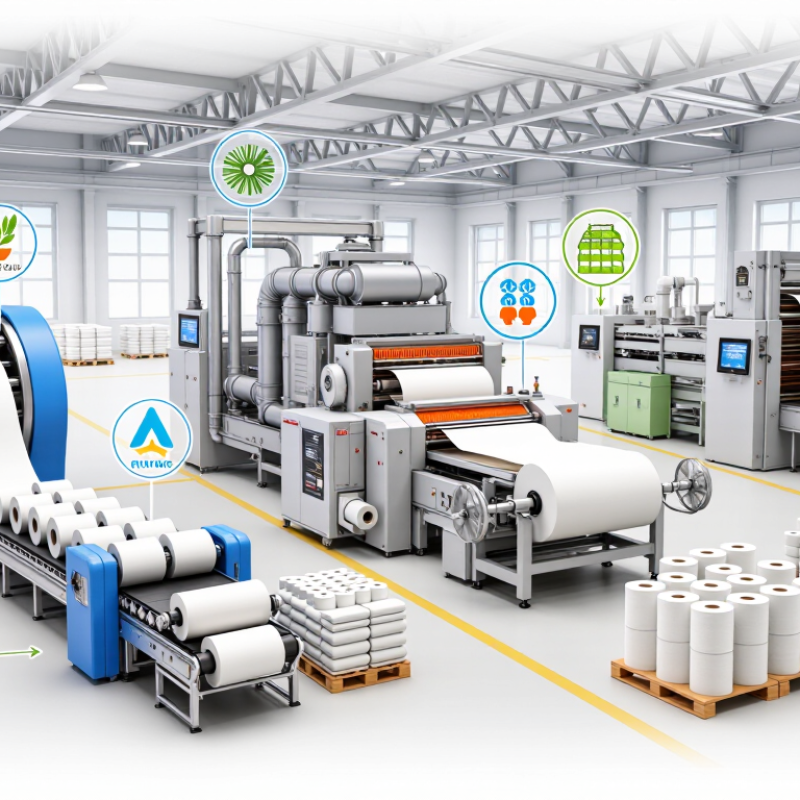
How Tissue Paper Machines Are Classified
Tissue paper machines are commonly classified by their forming section, which shapes the wet fiber web. A crescent former uses a forming fabric and felt around a forming roll, creating a compact layout suited to many tissue grades. Twin-wire designs form the sheet between two fabrics and can support high production speeds. Conventional arrangements use a single forming fabric and may suit mills with different operating priorities. The labels are useful, but real machine designs can overlap.
Machines can also be compared by drying and pressing systems. Many tissue lines use a large heated Yankee cylinder, while some configurations add through-air drying for a bulkier, softer sheet.
Capacity offers another practical category: working width, design speed, and daily output affect the scale of a line. These figures need context. A wide machine may not deliver the desired tissue quality if its furnish, basis weight, or drying setup is poorly matched.
Small details matter. When evaluating a machine type, buyers should consider the intended grade, available utilities, maintenance skills, and converting requirements. No single classification tells the whole story.
Conventional Crescent-Former Tissue Machines
Conventional crescent-former tissue machines use a headbox, forming fabric, and a large Yankee dryer to turn diluted fiber stock into a thin sheet. The stock flows between the fabric and the dryer’s surface, where water drains and the web begins to form. As the sheet transfers onto the heated Yankee, hot air from the hood helps remove moisture. A creping blade then loosens the dried sheet, creating the soft, slightly crinkled texture associated with tissue.
This design is valued for steady operation and a relatively direct sheet-forming path. Operators monitor stock consistency, fabric tension, drainage, and Yankee temperature because small changes can affect softness, strength, and sheet uniformity. The machine can make several tissue grades, though the achievable properties depend on furnish, settings, and finishing conditions. It is not a magic box. Even a well-designed line may need careful adjustment when fiber quality changes.
Tips: Check the sheet edge and surface for uneven formation, pinholes, or breaks. Track moisture before creping, since overly wet or dry sheets can run poorly. Keep notes when adjusting blade pressure or hood conditions; results may differ between grades. One setting rarely suits every furnish.
Through-Air-Dried Tissue Machines
Through-air-dried (TAD) tissue machines use hot air drawn through a porous, newly formed sheet. The web rests on a permeable fabric, then passes through a heated air hood. Unlike conventional pressing, this process applies less mechanical compression. The resulting sheet can retain more bulk and absorbency, useful in premium bath tissue and towels. The difference is visible: a finished sheet feels lofty, with a softer, less compact structure.
That softness carries an energy cost. TAPPI technical literature and industry comparisons commonly report that TAD drying can require roughly two to three times the energy of conventional tissue drying per unit of output. Treat this as an industry range, not a fixed plant guarantee. Furnish, machine speed, heat recovery, and product grade all affect actual use. Operators must also manage airflow and moisture carefully; uneven drying can create weak spots or inconsistent softness. It is an impressive process, though not automatically the better choice for every product. A mill should compare the desired sheet properties with its energy and operating data before selecting a TAD line.
What Types of Tissue Paper Machines Are Available? – Through-Air-Dried Tissue Machines
| Machine configuration |
How it works |
Typical tissue applications |
Key characteristics |
Indicative basis-weight range |
| Single-layer TAD |
Forms a tissue web on a permeable fabric, then passes heated air through the web to dry it while retaining its structured bulk. |
Bath tissue, facial tissue, and towel grades where softness and bulk are priorities. |
A relatively straightforward TAD arrangement; performance depends on furnish, fabric pattern, airflow, and converting design. |
Commonly about 15–40 g/m² per ply, depending on grade. |
| Stratified-headbox TAD |
Uses a layered stock delivery system to place different fiber mixes in distinct regions of the sheet before through-air drying. |
Bath tissue and towel grades designed to combine a soft surface with strength or absorbency. |
Allows fiber placement to be adjusted by layer; requires control of stock consistency and layer formation. |
Often within roughly 15–40 g/m² per ply; grade design determines the target. |
| Multi-ply or multi-layer TAD line |
Makes separate webs or layers that are combined during the papermaking or converting process; through-air drying is used to preserve bulk and texture. |
Premium bath tissue and absorbent towel products. |
Can support different properties in each ply or layer; overall product weight depends on the number and design of plies. |
Approximately 15–40 g/m² per ply is common; finished products can be heavier across multiple plies. |
| Hybrid TAD / conventional-drying line |
Combines through-air drying with conventional drying elements, such as a heated cylinder, in a machine-specific process arrangement. |
Tissue grades balancing bulk, softness, strength, and production economics. |
Offers process-design flexibility; the resulting properties and energy use depend on the configuration and operating conditions. |
Varies by product; tissue grades commonly fall in the approximate range of 15–40 g/m² per ply. |
Note: These are practical design configurations rather than standardized machine categories. Basis-weight ranges are indicative; actual specifications vary by product, furnish, and machine design.
Specialized Machines for Different Tissue Grades and Production Scales
What Types of Tissue Paper Machines Are Available?
Specialized Machines for Different Tissue Grades and Production Scales
Machine choice depends on the grade, target output, and available capital. Crescent-former machines are common for high-speed production of facial tissue, toilet paper, and towels. Conventional wet-press machines can suit producers prioritizing lower investment and dependable operation. Through-air-dried (TAD) machines create bulky, absorbent sheets, often used for premium towels. They also require more energy and process control. There is no universal winner.
Scale matters, too. Compact or pilot machines help smaller mills test furnish blends and product feel before committing to a full line. Large machines support steady, high-volume production, but changeovers and downtime can be costly. Grand View Research’s Tissue Paper Market report estimated the global market at USD 87.4 billion in 2023 and projected a 5.8% compound annual growth rate through 2030. That market estimate signals demand, not a guarantee that any machine will pay back. Grade mix and local energy costs still matter.
Tips: Compare usable output, not just rated speed. Ask for trial data using your intended pulp blend. Check drying capacity, trim loss, and changeover time. Small details add up. A common oversight is choosing for peak capacity while underestimating the cost of running below it.
Tissue Converting Machines for Finished Paper Products
Tissue converting machines turn large parent rolls into finished products for homes, offices, and public facilities. Rewinders wind tissue into smaller rolls, controlling tension and perforation so sheets separate cleanly. A log saw then cuts the long rolls into retail-sized toilet paper or kitchen towel rolls. Small details matter: uneven winding can create loose edges or poorly shaped rolls.
For facial tissues, folding and interfolding machines arrange sheets so one tissue pulls the next into reach. Napkin lines fold and count sheets, then stack them for packing. Some machines add embossing, which can improve texture and help layers hold together. Too much pressure, though, may weaken delicate tissue. It is a trade-off worth checking on the actual paper, not just in a machine brochure.
Finished products may pass through wrapping, bagging, or carton-packing equipment. The right setup depends on sheet size, ply, paper softness, and expected output. A fast line is not always the best fit. Changeovers can take time, and small jams around folding plates are frustratingly common. Operators should inspect samples for cut quality, fold alignment, and pack count during a run. A few imperfect sheets can reveal an adjustment that production figures miss.
Conclusion
A Tissue Paper Machine can be classified by how it forms and dries the paper, the grade it is designed to produce, and the scale of production it supports. Conventional crescent-former machines use a streamlined forming and drying process suited to making a range of everyday tissue grades. Through-air-dried machines use heated air passing through the sheet, helping create tissue with a softer feel and greater bulk. Each approach offers different trade-offs in product characteristics, operating requirements, and output.
Some machines are configured for particular grades or production volumes, from smaller-scale operations to high-capacity mills. Tissue production also includes converting equipment, which turns large parent rolls into finished products such as rolls, folded sheets, or packaged tissue. Together, papermaking and converting machines form a production chain: the first makes the tissue base sheet, while the second shapes and prepares it for use. The right equipment depends on the desired product, quality, and manufacturing scale.